







A digital initiative should move up the investment list only when its expected value is strong enough to justify the resources, disruption, and dependencies needed to deliver it. The practical answer to how to prioritize digital initiatives in a civil engineering company is therefore not to choose the newest technology. It is to compare every candidate against the same evidence. For an engineering firm with ten credible ideas and capacity to fund only three, a transparent scoring method makes the trade-offs visible before budget and management attention are committed.
Why Digital Initiatives Need to Be Prioritized?
Civil engineering companies rarely lack digital ideas. Automated approvals, project databases, client portals, mobile reporting, analytics, AI search, and online calculators may all compete for the same engineers, IT staff, process owners, and management attention.
The Project Management Institute describes strategic portfolio management as selecting and prioritising work against business drivers and limited resources. Engineering digital transformation priorities need the same discipline.
Readiness matters as well. A 2023 construction-industry study identified data fragmentation, weak digital infrastructure, lack of technical personnel, and lack of technical standards among prominent barriers. A valuable idea can still be the wrong first move when its foundations are missing.
What Makes a Digital Initiative a High Priority?
A high-priority initiative combines value with a credible path to delivery. No single criterion is enough. A low-cost dashboard may be easy to launch but strategically unimportant. A central engineering data platform may be harder to deliver but necessary for several later initiatives.
Business Impact
Start with the operational problem, not the technology. Ask what will materially improve if the initiative succeeds. Useful impact measures can include approval cycle time, repeated data entry, report preparation effort, retrieval time, rework exposure, decision latency, or the reliability of project information.
The impact should be specific enough to test later. “Improve collaboration” is too broad. “Reduce manual consolidation of weekly site reports” is a clearer business case because the affected workflow and expected operational change are visible.
Strategic Alignment
An initiative can solve a real problem and still be the wrong investment for the current strategy. A contractor focused on project controls may value connected field and cost data, while a consultancy may prioritise reusable calculation tools or structured technical records.
Strategic alignment asks whether the initiative supports an agreed company objective, not simply one department’s preference. Broader civil engineering digitalization solutions should therefore connect to business priorities rather than become a collection of unrelated software projects.
Feasibility and Readiness
Feasibility asks whether the organisation can deliver and adopt the initiative with its current foundations. Check required data, interfaces, process ownership, internal skills, security constraints, and realistic time for testing and training.
Score readiness independently from value. Otherwise, easy projects can outrank important ones. A high-impact initiative with weak readiness may still be a strategic investment, but it needs explicit prerequisites rather than an immediate pilot.
Cost, Risk, and Time to Value
Cost includes internal engineering time, data preparation, integration, migration, testing, training, support, and ongoing ownership, not only licences or development. Risk covers technical uncertainty, change impact, data exposure, operational disruption, and adoption.
Time to value asks how quickly a useful result can be observed. A focused workflow automation initiative may prove value in one approval process, while a shared data foundation takes longer but enables later capabilities.
A Framework for Scoring Digital Initiatives
A weighted scorecard creates a common basis for digital project prioritization. These weights are illustrative, not an industry standard, and should be adjusted to company strategy and constraints.
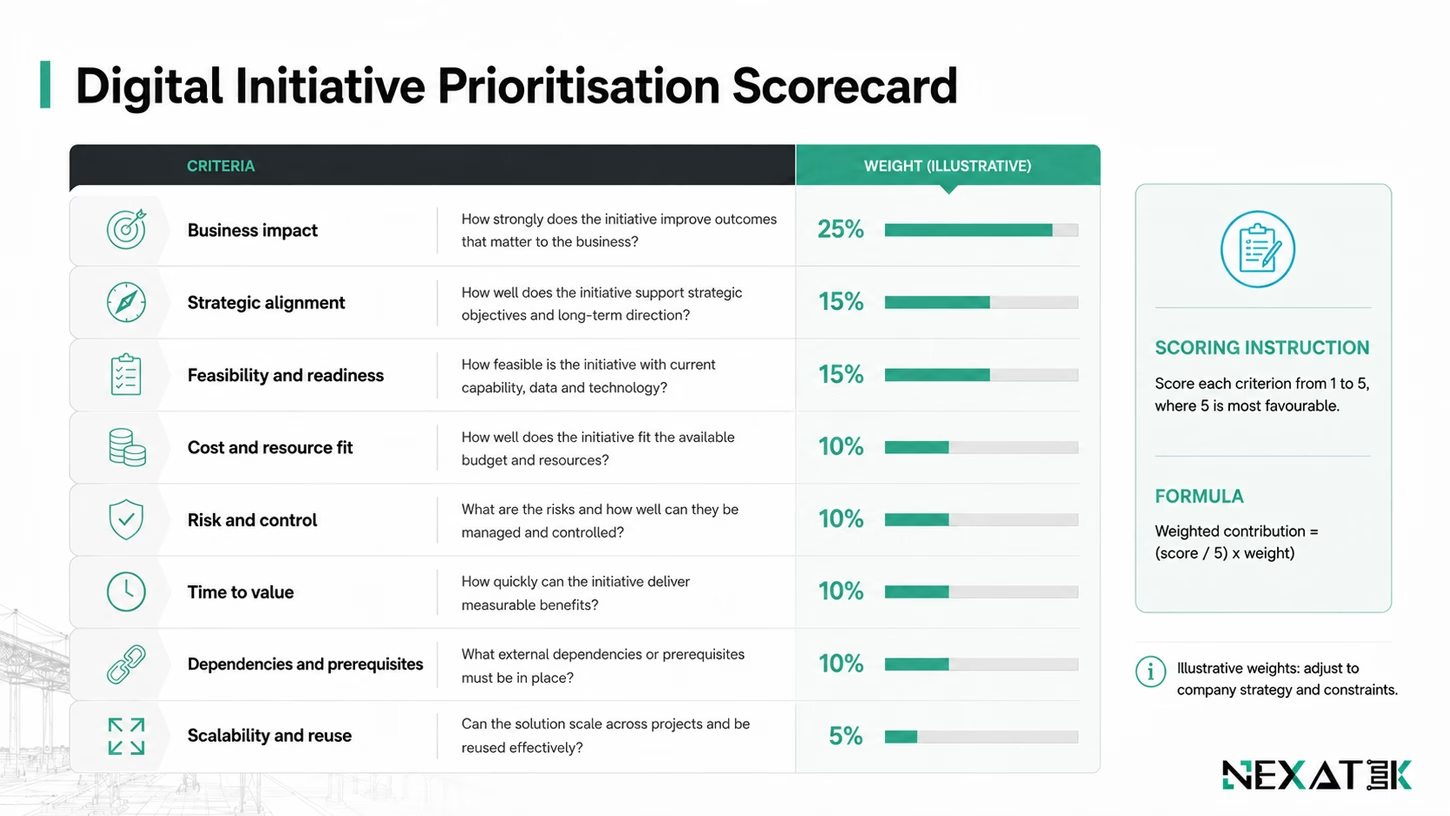
Score each criterion from 1 to 5, where 5 is most favourable. Calculate each weighted contribution as (score / 5) x weight, then total the result out of 100. PMI guidance on portfolio prioritisation also emphasises ranking components against established criteria before balancing the portfolio.
The total is a decision aid, not automatic approval. Critical dependencies or capacity constraints can override a small numerical difference.
NEXATEK
Score value and readiness separately
A low-effort tool can look attractive because it is easy to deliver, while a high-value data foundation appears slower. If value and readiness are merged into one vague score, the easy project tends to win. Keep them separate, then use dependencies to explain why some enabling work must move earlier than its direct benefit would suggest.
Pressure-test your digital shortlist before funding it
NEXATEK can review workflow value, data dependencies, and delivery constraints to help separate ready-to-pilot initiatives from ideas that need prerequisites first.
How to Compare and Rank Initiatives?
Use the scorecard in a controlled comparison rather than scoring proposals in isolation.
- Apply an eligibility gate. Confirm the problem, accountable owner, and any legal, security, or technical showstopper.
- Use the same evidence standard. Document affected users, data needs, expected outcome, and resource demand.
- Calculate the weighted score. Use one scale and documented assumptions.
- Check portfolio balance. Compare near-term wins with initiatives that create reusable foundations.
- Review dependencies. Move enabling work earlier when several higher-value initiatives rely on it.
- Set the cut line by real capacity. Funding six initiatives with capacity for three usually creates six slower projects.
Quick Wins vs. Strategic Investments
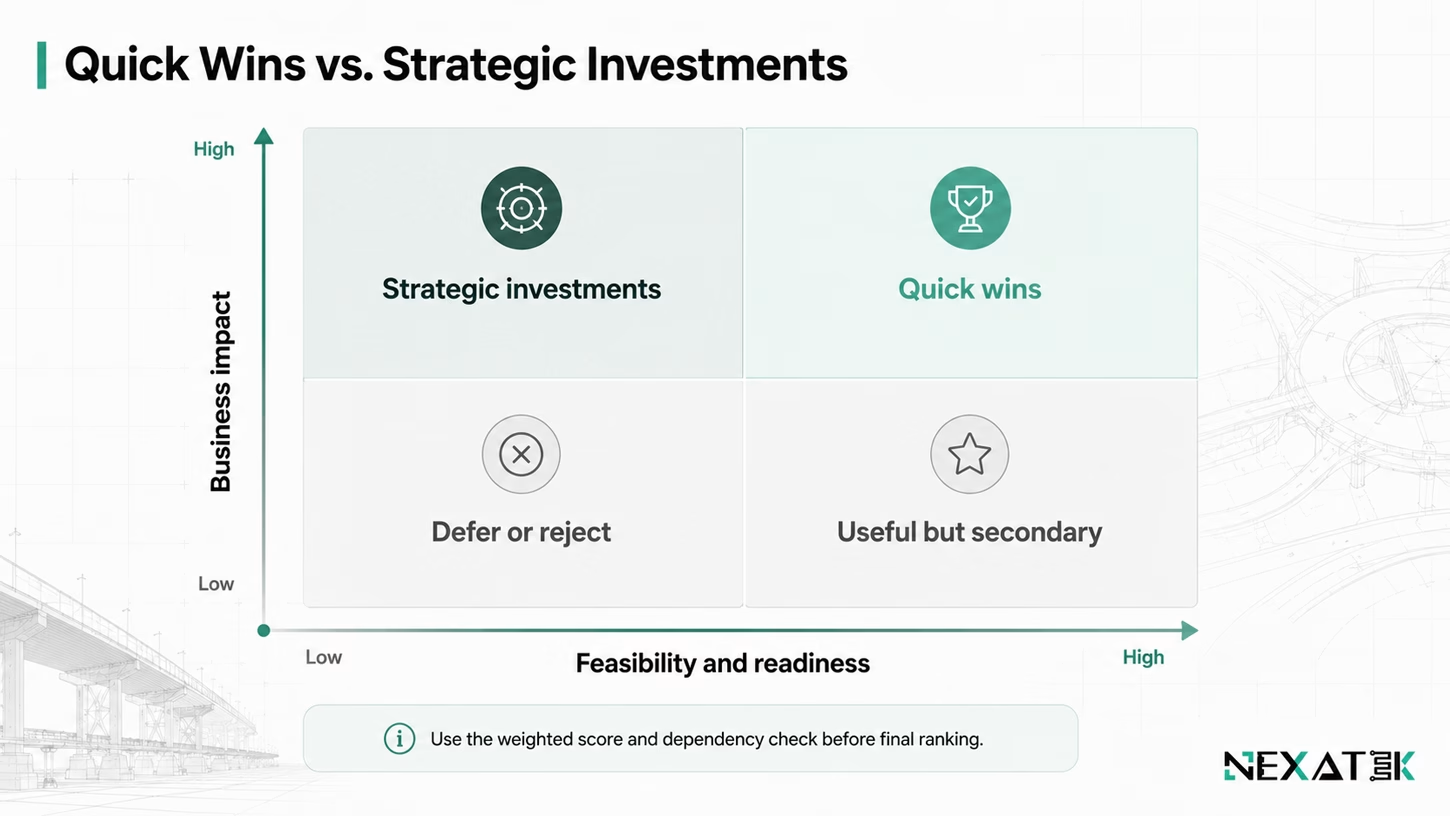
An impact-versus-feasibility view is a useful second filter. High-impact, high-feasibility initiatives are credible quick wins. High-impact initiatives with lower feasibility are strategic investments. They may deserve funding, but only with explicit prerequisites, sponsorship, and a realistic delivery boundary.
Low-impact initiatives should not rise simply because they are easy. A cosmetic dashboard refresh can consume the same management attention needed to establish reliable engineering data. Conversely, a high-value engineering data analytics initiative should not be rushed if source data is inconsistent or ownership is unclear.
The goal is a balanced digital transformation portfolio, not a queue sorted only by speed.
Dependencies and Prerequisites
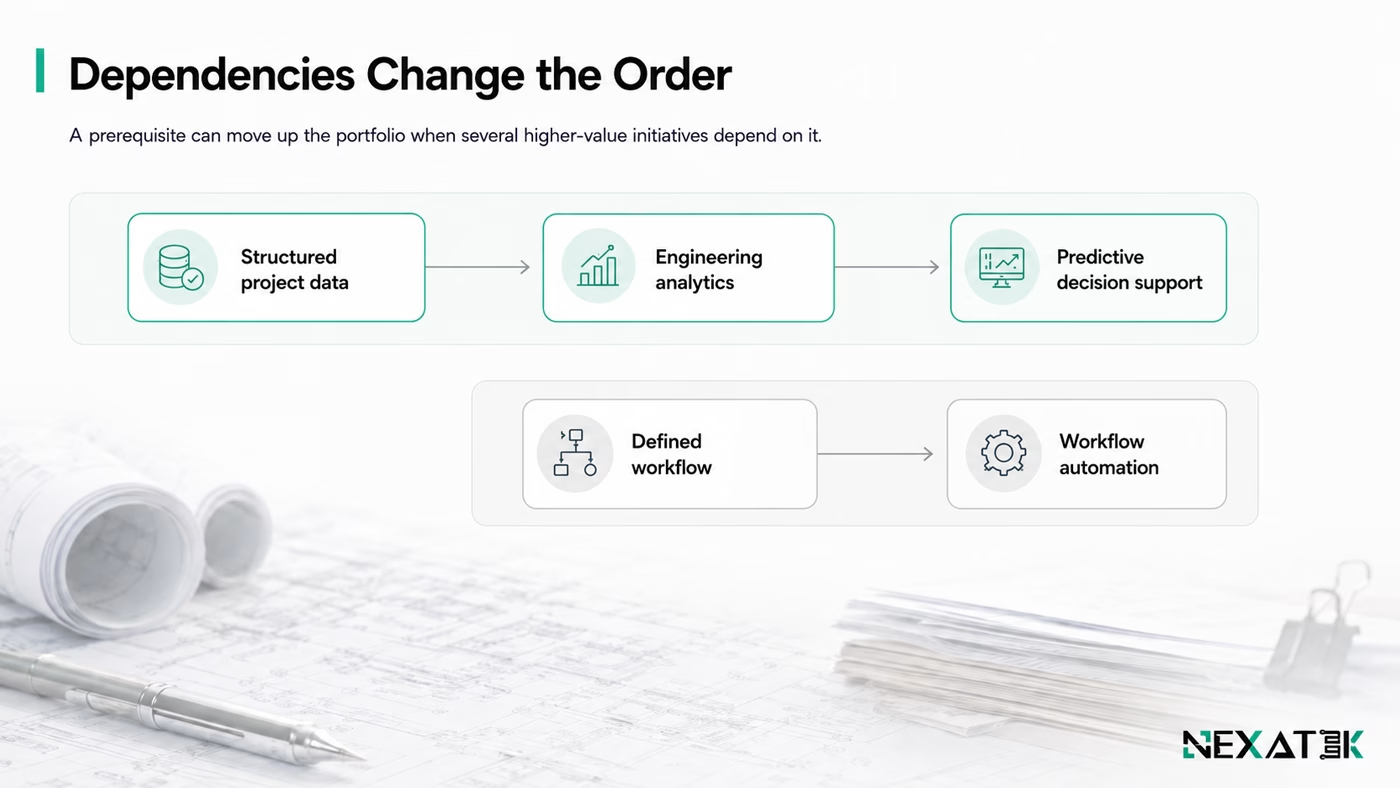
Dependencies often change the order produced by a simple score. Predictive analytics may depend on structured historical data. Workflow automation may depend on agreed process states and approval ownership. A client portal may depend on reliable document metadata and access rules.
Treat those foundations as portfolio relationships. An enabling initiative with moderate direct impact can become high priority when it unlocks several higher-value projects, so dependency chains should sit beside the scores.
Reprioritisation is normal. Completing a prerequisite can move a blocked initiative upward, while a changed strategic objective should change its alignment score.
Common Prioritization Mistakes
Common mistakes can make the ranking look objective while leaving the real decision unresolved:
- Scoring technologies instead of problems. “Implement AI” is not a business case. Define the engineering decision or workflow first.
- Letting urgency replace value. A vocal sponsor can make a limited initiative feel strategic.
- Overweighting low cost. Cheap projects can crowd out foundational work.
- Ignoring dependencies. A strong standalone score can hide missing data, interfaces, or process ownership.
- Treating the ranking as permanent. Review priorities when strategy, capacity, risk, or prerequisites change.
Key Takeaways
- Prioritise digital initiatives against a common set of value, readiness, risk, dependency, and timing criteria.
- Keep business impact separate from feasibility so easy projects do not automatically outrank important ones.
- Use an illustrative weighted score to support judgement, not replace it.
- Balance quick wins with strategic investments that create reusable engineering foundations.
- Revisit the ranking when dependencies, organisational capacity, or strategic priorities change.
Conclusion
Digital project prioritization is a resource-allocation decision before it is a technology decision. The strongest portfolio is the one that makes the best use of limited engineering attention, budget, data, and change capacity.
A defensible ranking shows why one initiative moves now, why another needs enabling work, and why a third should be delayed or rejected. That clarity supports stronger ownership and a more credible path to measurable value.
Turn digital priorities into a focused engineering programme
NEXATEK combines civil engineering workflow analysis, data, software, and project delivery expertise to help teams define a practical sequence of digital initiatives without forcing every idea into one platform.
Frequently Asked Questions
How should engineering companies prioritize digital initiatives?
Use a common scoring framework that compares business impact, strategic alignment, readiness, cost, risk, time to value, dependencies, and scalability, then apply real resource capacity before approving the portfolio.
What criteria should be used to rank digital projects?
The core criteria should cover value, strategic fit, technical and data readiness, resource requirements, risk, dependencies, time to value, and the potential to scale or be reused.
How do you balance quick wins with long-term digital investments?
Fund some high-impact, high-feasibility initiatives to prove value, while protecting capacity for strategic investments that create data, workflow, or platform foundations needed by later projects.
How often should digital initiatives be reprioritized?
Review priorities on a regular portfolio cadence and whenever strategy, budget, key risks, delivery capacity, or major dependencies change materially.




Prioritizing digital transformation initiatives by value and readiness, rather than by technology trends, is a much more practical approach. Dependencies are especially easy to overlook.
Really liked this one. The prioritization part is something a lot of teams can relate to.
Thanks, Mia. Prioritization is often where digital transformation in civil engineering becomes difficult in practice. Teams usually have more ideas than time, budget, or resources, so having a clear framework for evaluating impact, effort, dependencies, and business value can make the process much more manageable.