

Civil Engineering Online Calculators
Develop intelligent web-based engineering calculators that simplify complex calculations, standardize design procedures, and provide instant technical results.
Engineering Calculation Platforms
Automation & Engineering Intelligence

Reporting & Data Management

Enterprise Integration & Scalability

Similar Projects
Discover more innovative projects:





Great
Solutions
Start With A ConversationGreat Solutions Start With A Conversation
Want to Explore How Our Services Can Grow Your Company?
Online Calculators Developing for Civil Engineering
Civil engineering online calculators are browser-based tools that run defined engineering calculations from structured inputs. A pile capacity estimate, a concrete volume takeoff, a pipe flow check: each follows a documented formula, and each can run in a browser within seconds. These tools support preliminary assessments and design checks. They do not replace detailed design or the engineering judgment behind it.
NEXATEK develops calculation tools of this kind for engineering organizations, often as one component of a wider digital transformation program. The sections below define the tool category and follow its use from early design through construction.
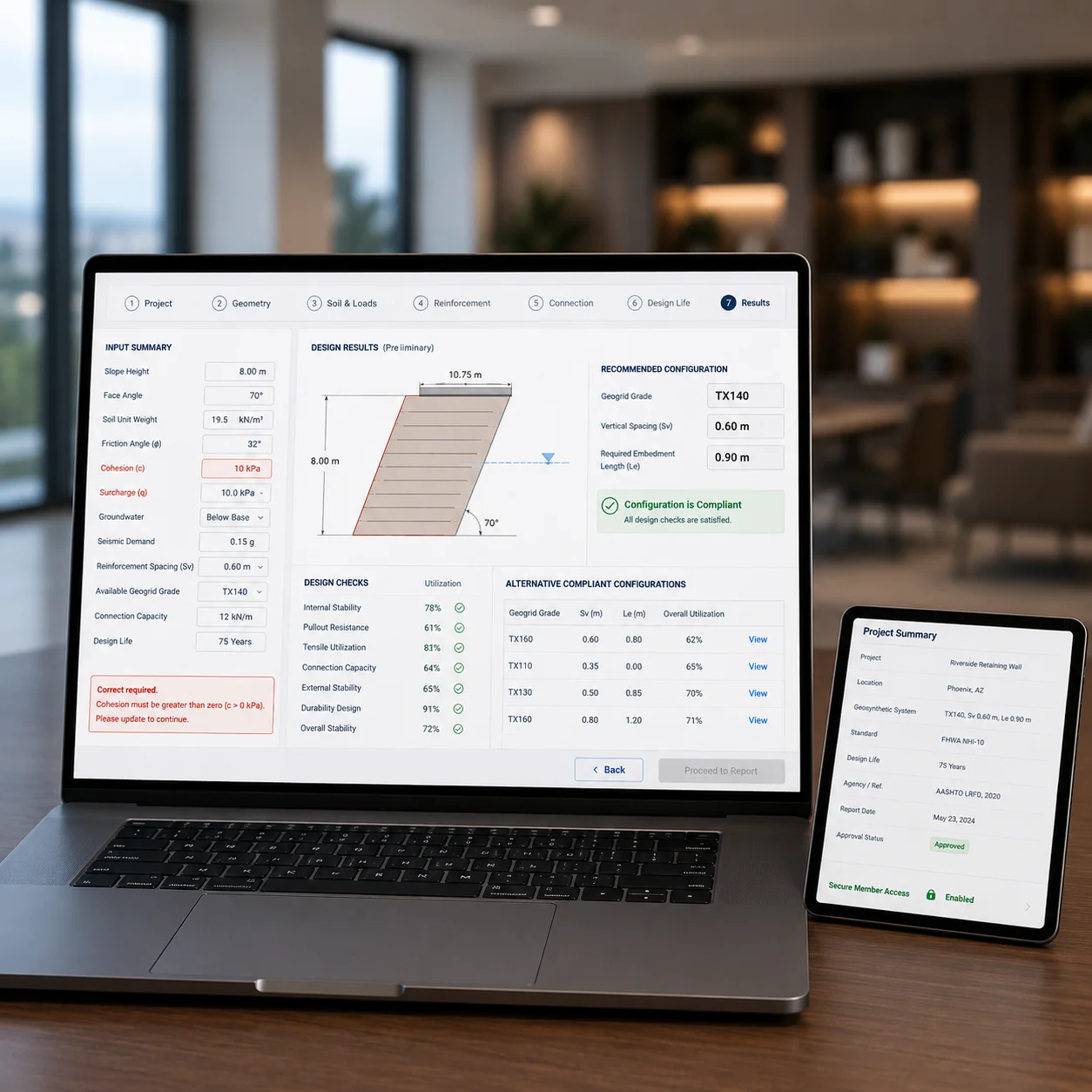
 A focused calculator interface helps engineering teams test defined assumptions before deeper design work begins.
Role of Calculations in Civil Engineering
A mid-size infrastructure project generates thousands of individual calculations before construction starts. Foundation pressures, member sizes, earthwork volumes, drainage capacities: every dimension on a drawing traces back to a number someone computed and someone else checked.
Importance of calculations in engineering decision-making
Calculations carry decisions. A bearing capacity estimate determines whether a structure stands on spread footings or on piles. One runoff figure sets the diameter of every pipe downstream of it. When an assumed soil density is wrong by 10 percent, the error propagates into the retaining wall design and the cost estimate built on it.
Errors found late are expensive. A quantity mistake discovered after tender award becomes a claim. The same mistake caught during estimation costs a few minutes of checking.
Manual calculation workflows in engineering practice
Most engineering offices still run calculations through hand-written calculation sheets and spreadsheets. In a typical workflow, the design engineer prepares the sheet, a senior engineer checks it line by line, and the signed record enters the project file. The method is transparent and flexible.
Spreadsheets add a known failure mode. A formula cell gets overwritten, the file is copied for the next project, and the error travels with it. Version drift between a "final" file and a checker's local copy is a daily reality in many offices.
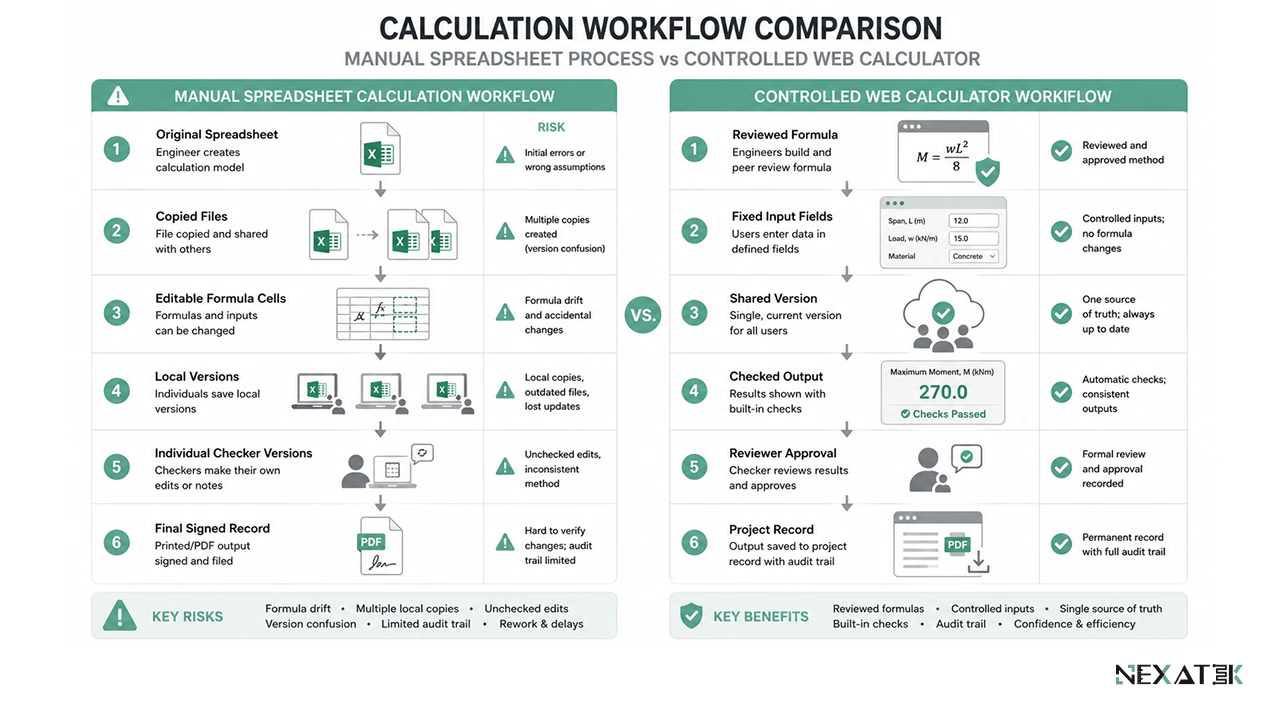 The workflow shows where formula drift, local copies, and unchecked edits can enter a manual calculation process.
What Are Civil Engineering Online Calculators?
An online engineering calculator is a web tool with fixed calculation logic and unit-labeled input fields. Results return immediately. Scope stays deliberately narrow: one tool checks beam deflection, another converts compaction test values. Narrow scope is what makes the logic testable and the results repeatable.
Such tools differ from full structural analysis software. Analysis packages model whole systems with many interacting variables. A calculator answers one defined question, such as the midspan moment of a simply supported beam.
Difference between formulas, spreadsheets, and online tools
A formula is knowledge on paper. Put that formula in a spreadsheet and it becomes a private implementation, editable by anyone who opens the file. An online calculator is a published implementation: one maintained version with validated input ranges. The difference is control. Nobody can overwrite a formula cell in a deployed web tool.
Engineering firms increasingly publish their internal spreadsheets as browser-based engineering tools. Many organizations achieve this through custom web application development tailored to their engineering workflows. The calculation logic gets reviewed once, then served identically to every user.
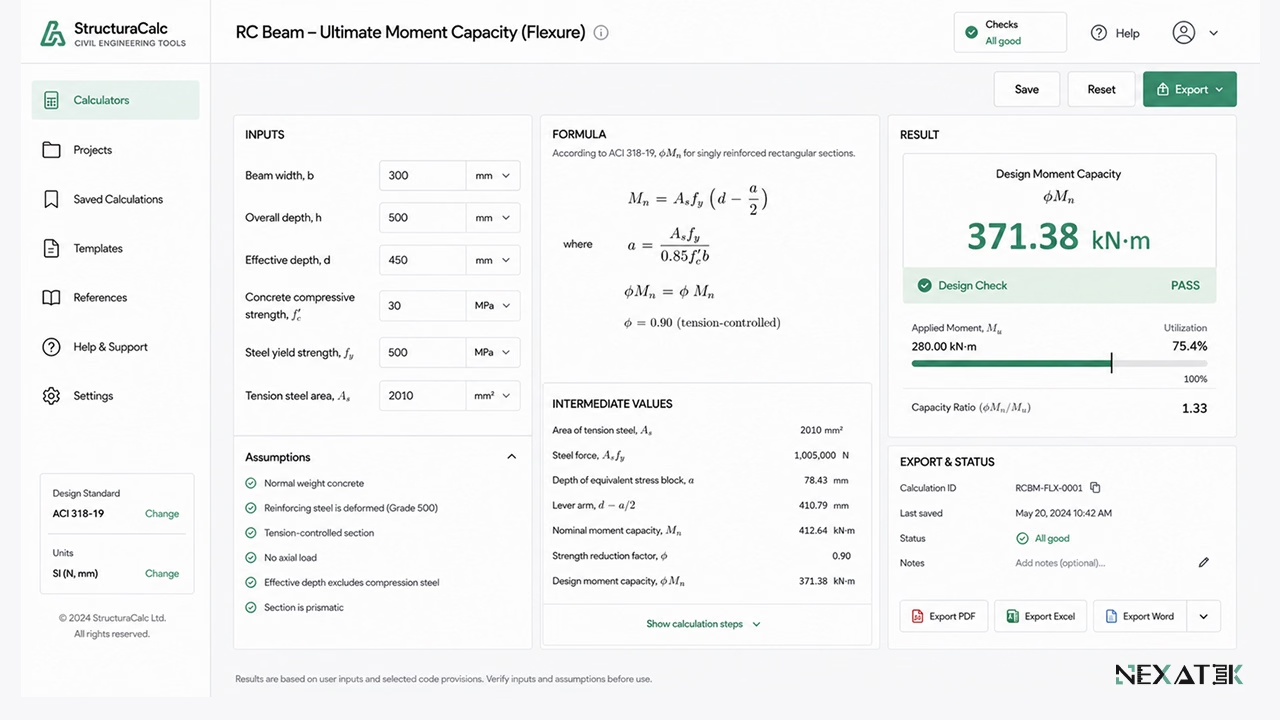 A reviewed calculator interface can keep inputs, formulas, assumptions, and outputs visible in one controlled tool.
Engineering contexts where calculators are commonly used
Design reviews are a typical setting. A checker wants an independent number within a minute, not a rebuilt model. Site meetings are another: a pour volume question gets answered on a phone before the discussion moves on. Tender teams use quantity tools to check subcontractor figures against their own takeoff.
Categories of Civil Engineering Online Calculators
Calculator categories follow engineering disciplines. Four groups cover most of what project teams use day to day.
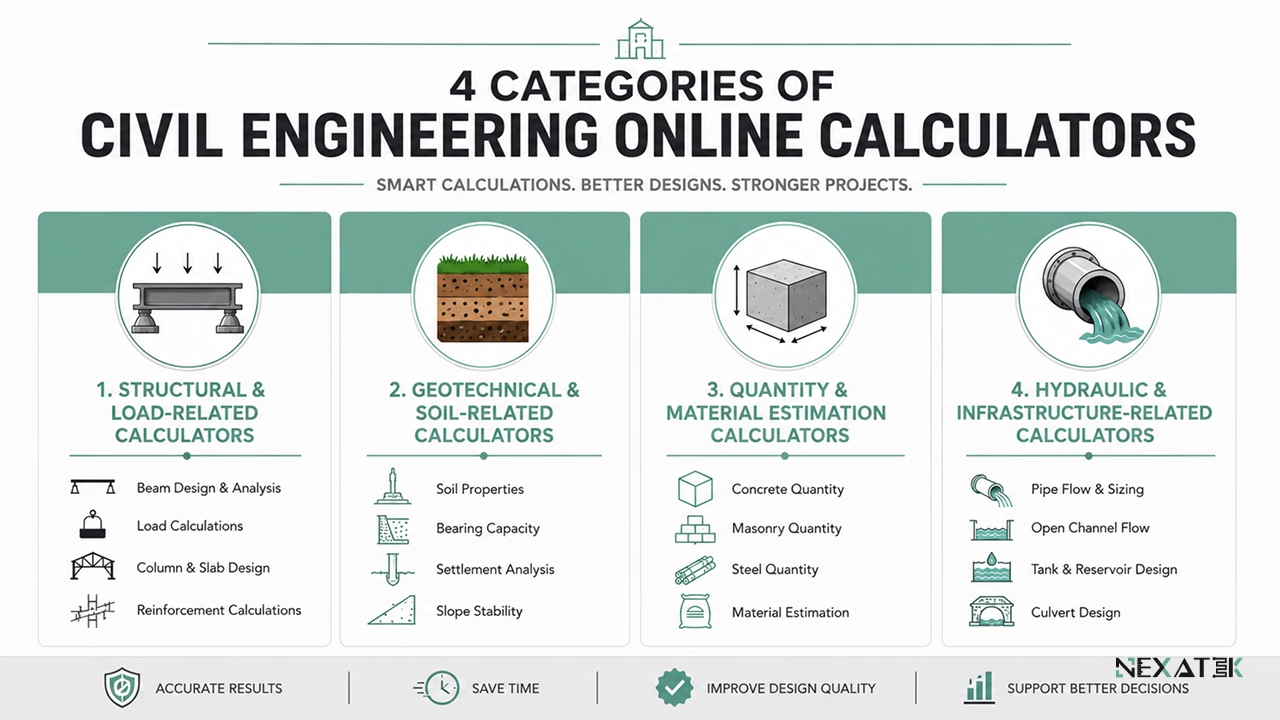 The four calculator groups reflect the main technical questions that appear across civil engineering projects.
Structural and load-related calculators
Structural tools handle member-level checks: beam deflection, bending moment, section properties, and load combinations. The scale is easy to show. A 6 m simply supported beam under 12 kN/m of uniform load carries a midspan moment of 54 kNm. A calculator returns that figure together with the deflection check in seconds.
Geotechnical and soil-related calculators
Soil parameters dominate geotechnical results. Tools in this group estimate bearing capacity, earth pressure coefficients, and settlement from user-entered soil properties. Sensitivity is high. Raising an assumed friction angle from 30 to 32 degrees changes earth pressure results enough to alter a retaining wall section. Good geotechnical calculators state their assumed soil model openly.
Quantity and material estimation calculators
Quantity tools translate geometry into material orders. A 200 m² slab at 0.3 m thickness needs 60 m³ of concrete before waste allowance. Rebar weight, formwork area, asphalt tonnage, and cut-and-fill volumes follow the same pattern. Estimators feed these figures directly into the Bill of Quantities.
Hydraulic and infrastructure-related calculators
Water-related tools estimate pipe flow capacity, surface runoff, culvert sizing, and open channel capacity from catchment and geometry inputs. Pavement thickness screening sits in this group as well. Infrastructure calculation tools of this type support the early sizing work that precedes detailed network modeling.
Online Calculators vs Manual Engineering Calculations
The comparison between civil engineering online calculators and manual calculation work is less about accuracy and more about fit. Each method has defined strengths and defined failure modes.
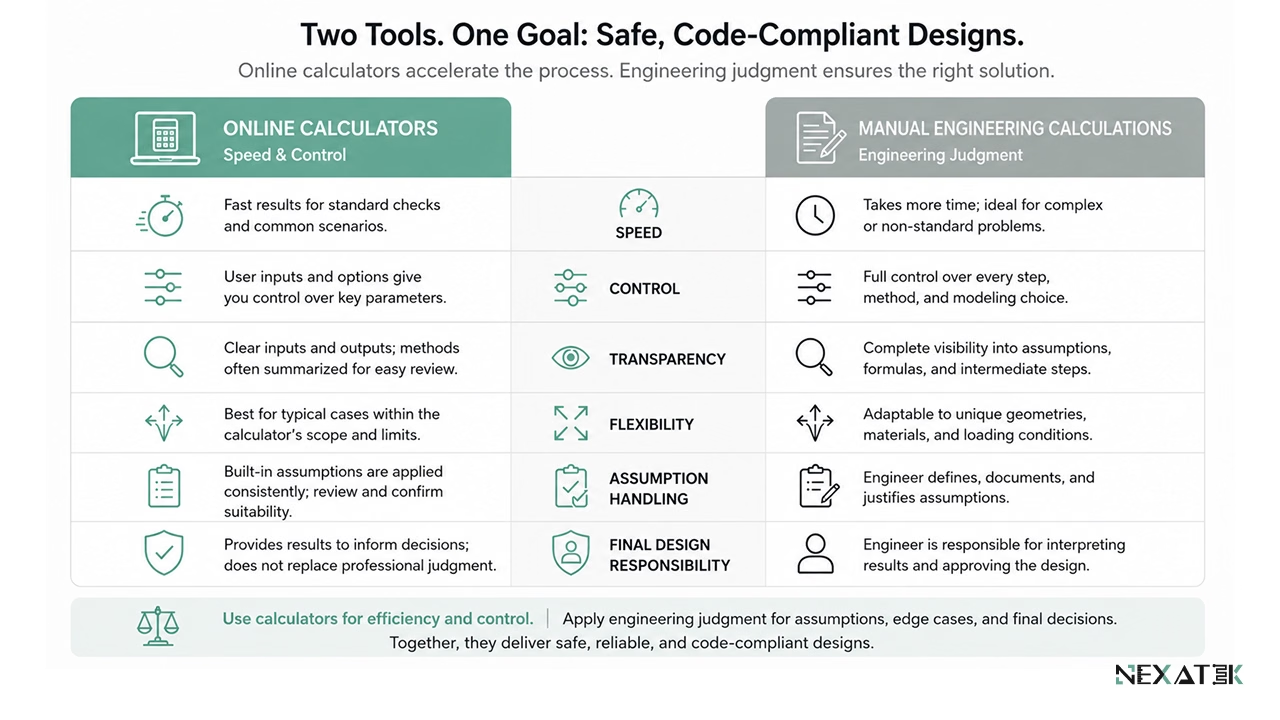 The comparison helps readers see where online calculators support speed and control, and where manual engineering judgment remains necessary.
Accuracy and assumption limitations
A calculator is exactly as accurate as its formula and its inputs. Fixed assumptions are the limitation. A tool built around uniform loading cannot represent a point load at third-span, and a bearing capacity tool assuming homogeneous soil misleads on layered ground. Manual calculation lets the engineer adapt the method to the actual situation. The online tool cannot deviate from its programmed logic.
Transparency of calculation logic
A hand calculation sheet shows every step, which is why checkers value it. Online tools vary widely on this point. Some print only a final number. Others display the governing formula and every intermediate value. Tools in the second group can be verified independently. The first group has to be trusted, which is a weak position in any design check.
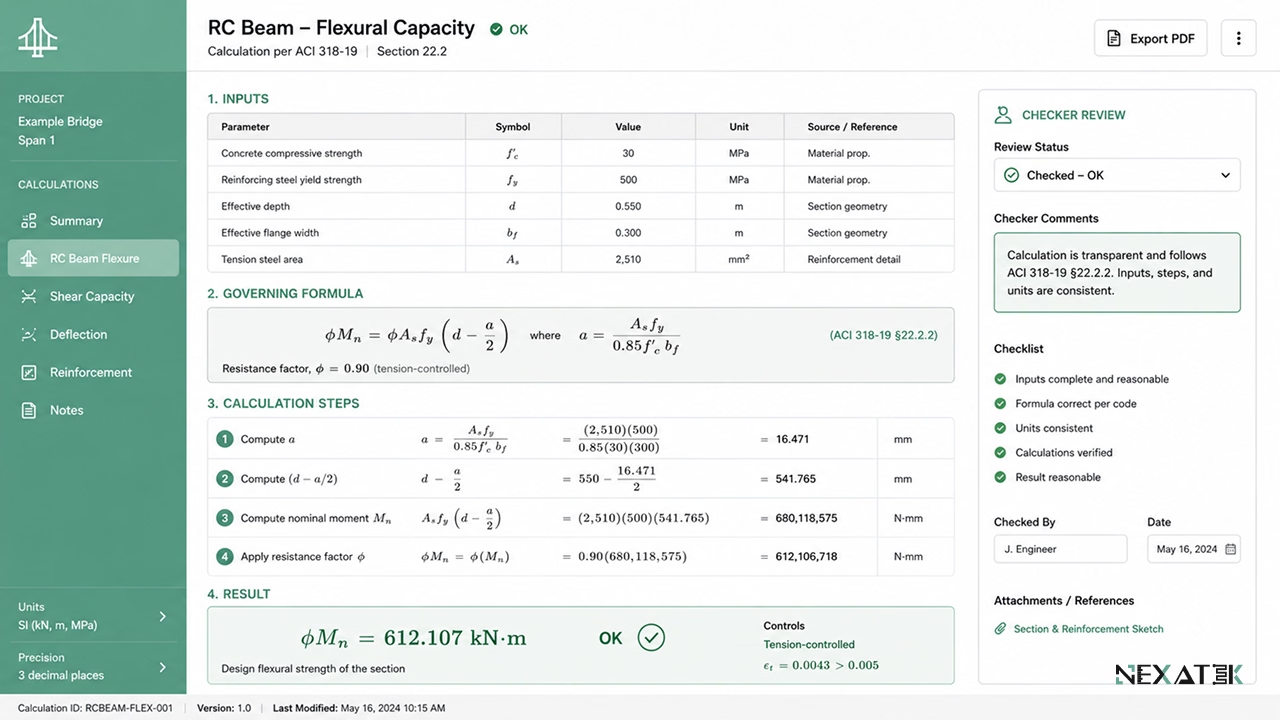 Showing intermediate values makes the calculator output easier for a checker to verify independently.
Appropriate use in engineering workflows
Placement in the workflow defines appropriate use. Screening work and quantity estimation sit inside calculator scope. So does cross-checking. Final design verification does not, because responsibility for a design requires full control over method and assumptions. Many firms formalize this boundary when they document their calculation workflows as part of broader workflow and process optimization initiatives.
Use of Online Calculators Across Project Phases
Preliminary engineering calculations reward speed over precision. At concept stage, a team comparing two foundation options needs member sizes within 20 percent, not final reinforcement drawings. Calculators compress that comparison from days to an afternoon. Design assumptions stay visible because every input field must be filled consciously.
Construction planning and estimation
Construction teams use calculation tools where quantities meet logistics. A pour volume of 61 m³ becomes eight ready-mix trucks at 8 m³ each, ordered for a specific morning. Formwork areas drive crew planning, and earthwork balances decide haul routes. The numbers are simple, but getting them wrong on site costs money the same day.
Verification and cross-checking purposes
Independent cross-checks catch model errors. When detailed analysis software returns a moment ten times larger than a quick independent estimate, the discrepancy usually points to a unit mistake in the model input. An online tool gives the checker that reference number in under a minute. NEXATEK builds verification calculators with intermediate outputs visible for exactly this purpose.
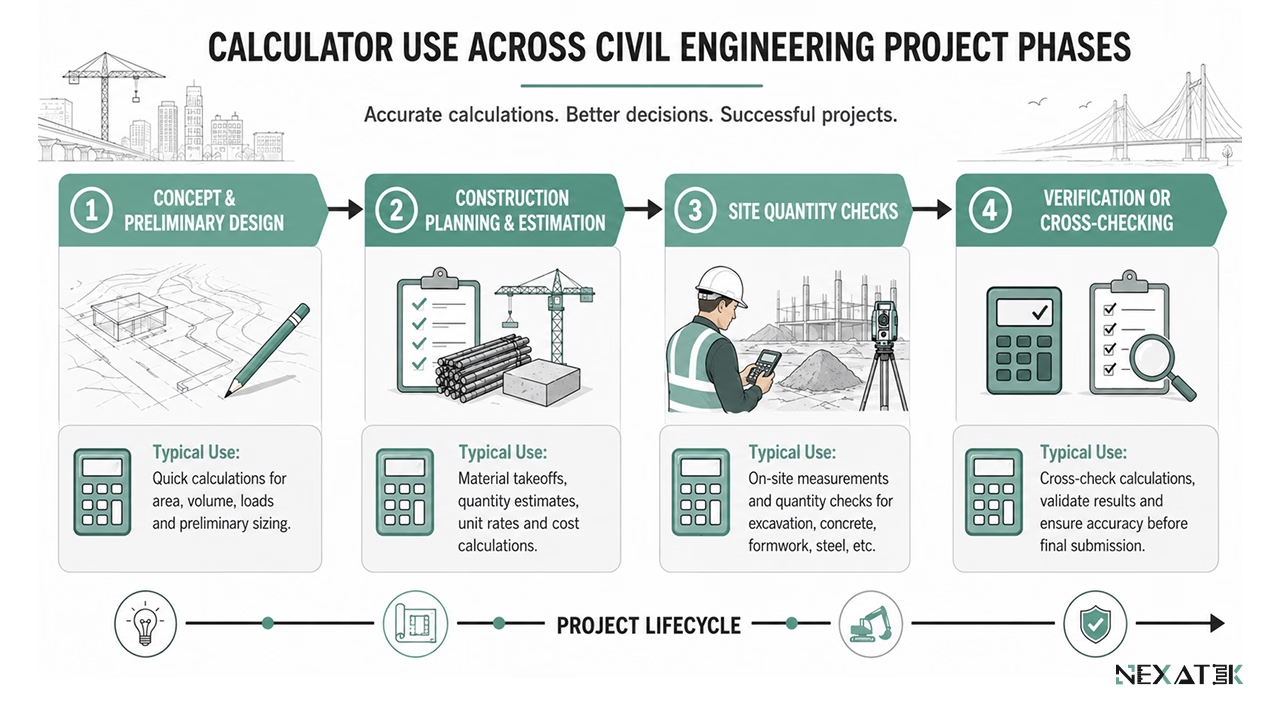 Calculators support different decisions at concept, estimation, construction planning, and verification stages.
Alignment with Civil Engineering Business Types
Manufacturers of precast elements and pipe products receive daily technical questions from customers. A product-specific calculator answers the common ones, such as the required embedment depth for a buried pipe, without an engineer drafting an individual reply. Calculator development for manufacturers usually runs inside custom software development projects, because the calculation logic embeds proprietary product data.
Construction companies and quantity estimation
Estimating departments depend on reliable quantity figures. Construction engineering calculators shorten the path from drawing to Bill of Quantities line item. Site engineers use the same tools for daily checks, such as confirming a concrete order against the pour geometry recorded in the site diary.
Consultant firms and early-stage engineering analysis
Consultants face calculation pressure earliest, at feasibility and proposal stage. Fee proposals often require preliminary sizing before any project budget exists. Online engineering calculators let a consultant screen options at that stage with traceable inputs and documented design assumptions. At NEXATEK, calculator projects for consultants typically start from the firm's own validated spreadsheets and formulas.
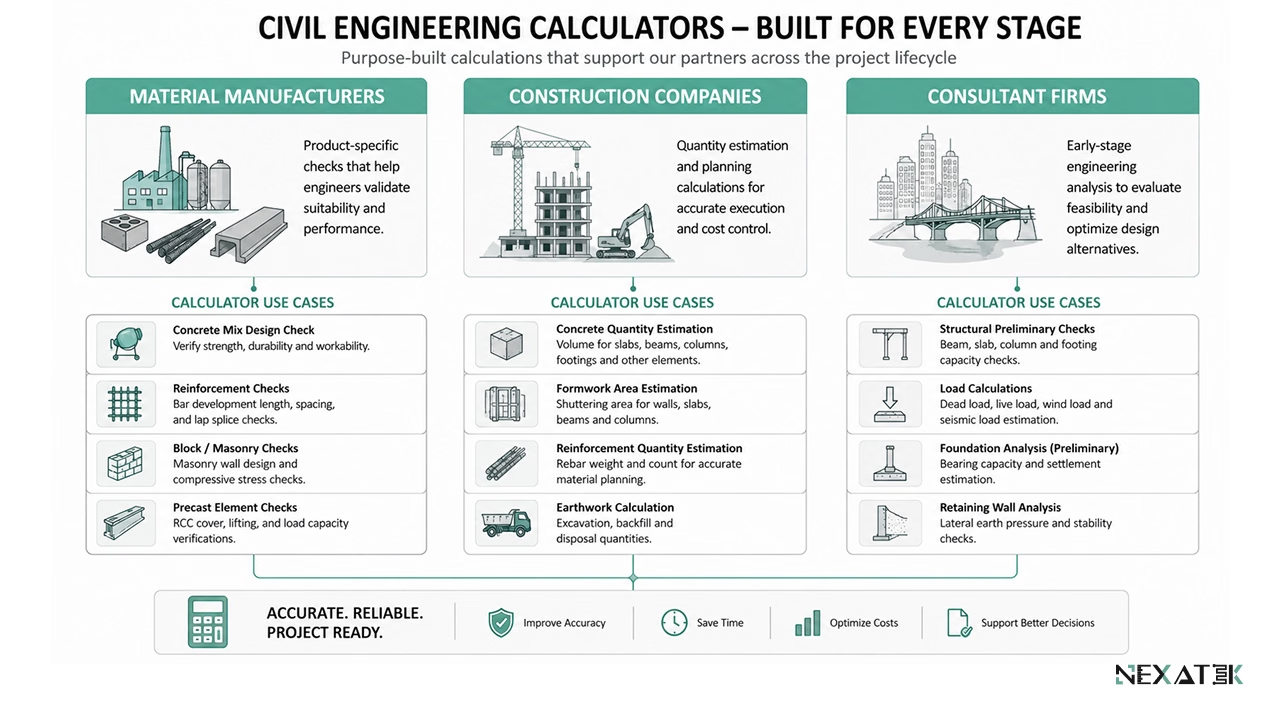 Manufacturers, contractors, and consultants use calculator tools in different ways, but each use case depends on traceable inputs and controlled logic.