




Before the next project review, write down the decision the meeting must produce and who can authorise it. Data-driven decision making in engineering connects evidence to an accountable choice and a subsequent check on what happened. For engineering directors and project managers, that means agreeing which action is possible, what information could change it, and who will judge the result. The method below follows an illustrative drainage-design review backlog from the initial question through to outcome measurement.
What Data-Driven Decision Making Means in Engineering?
Data-driven engineering decision making uses relevant, validated information alongside technical judgement to choose an action, document its basis, and review its consequences.
A report can show that drawings are late. A decision process establishes whether the response should be extra checking capacity, clarification of missing survey information, or a revised issue sequence. It also identifies who can authorise that response.
ISO includes evidence-based decision making among its quality management principles. In engineering, applying that principle requires attention to uncertainty and the limits of the available records. More measurements do not automatically make an option acceptable, and a favourable KPI does not replace a required technical check.
Start With the Decision, Not the Dashboard
For the illustrative backlog, the design manager must decide whether to allocate another qualified checker to the drainage package this week. The alternatives include retaining the allocation while resolving blocked inputs, or changing the sequence of work within agreed project constraints.
Define the decision before commissioning analysis:
- Authority: Who owns the choice, and which approvals constrain it?
- Timing: When must it be made, and what would justify reopening it?
- Criteria: Which delivery, quality, resource and cost consequences matter?
- Evidence threshold: What must be known, and which uncertainty needs escalation?
Agree these criteria before comparing options. Otherwise, a preferred answer can influence which measures receive attention. Engineering dashboards become useful when their information supports this defined choice.
Identify the Data Required for Each Decision
Work backwards from what would distinguish the alternatives. A growing drawing count cannot reveal whether the team lacks checking capacity or has submitted incomplete packages.
| Decision question | Evidence to examine | Why it changes the action |
|---|---|---|
| Is checking capacity the constraint? | Check-ready work, remaining review effort and qualified reviewer availability | Tests whether another checker can do useful work |
| Are packages blocked upstream? | Missing survey inputs, unresolved queries and readiness status | Directs attention to input resolution |
| Would reassignment create another delay? | Other package commitments, deadlines and specialist competence | Makes the consequence of moving capacity visible |
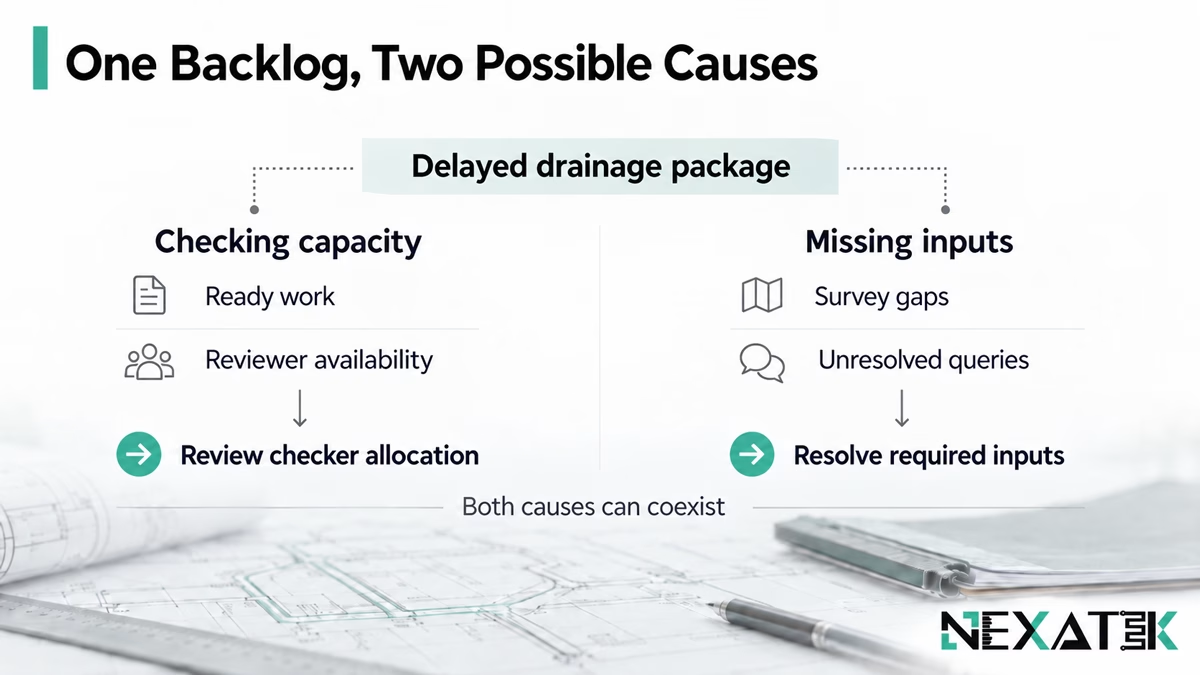
Both causes can coexist. Split the backlog into work ready for checking and work awaiting inputs, then inspect the oldest items in each group. Preserve package identifiers, revision status, source owners and the reporting cut-off so the meeting uses a consistent evidence set.
NEXATEK’s work on building a reliable engineering data foundation supports these relationships between technical records. The immediate requirement is a usable evidence set for this decision, with additional data collected only when it could alter the choice.
NEXATEK
A backlog needs a readiness check
An extra checker can reduce a queue only where work is ready for that checker. Separate missing information from scarce review capacity before changing the staffing plan. Keeping both categories visible also makes the next outcome review more informative.
Build a Repeatable Decision Process
Use this five-step loop for recurring engineering decisions:
- Define the decision, owner, criteria and required evidence.
- Collect the relevant records and validate their fitness for use.
- Analyse the alternatives and interpret uncertainty with specialists.
- Decide, document the rationale and assign the action.
- Measure the outcome, then improve or reopen the decision.
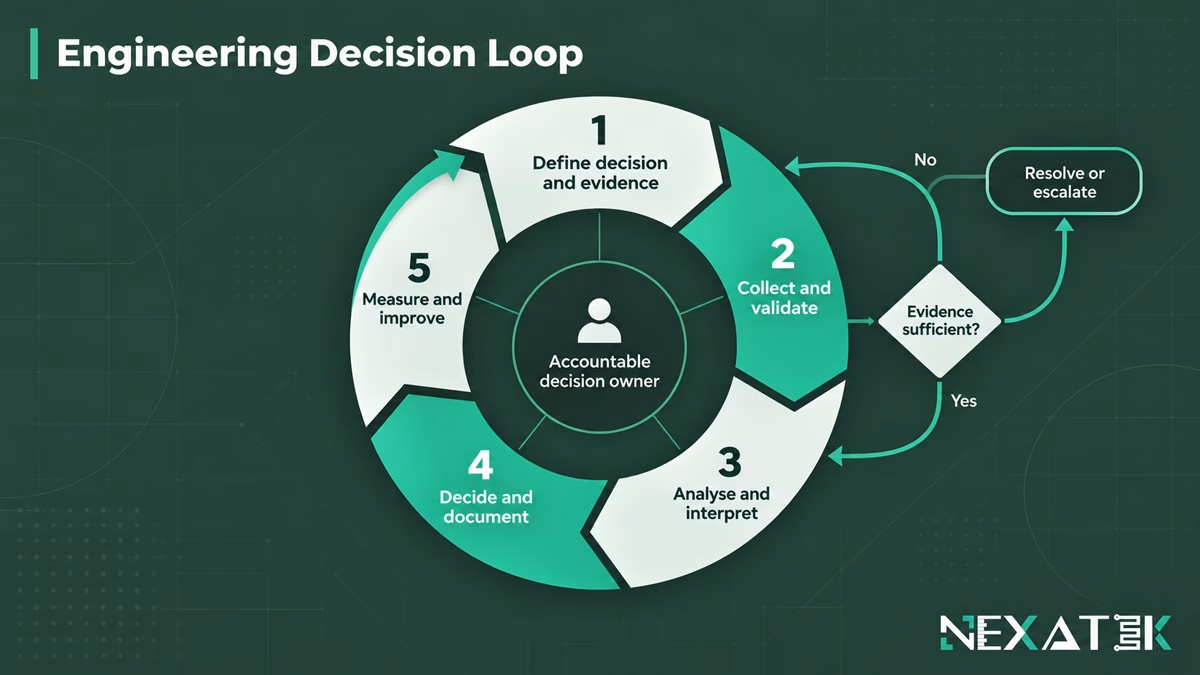
The loop can run within an existing project meeting. Name the person responsible for preparing the evidence and the person authorised to decide. They may be different people.
Collect and Validate
Check that records refer to the same package, current revision and reporting period. Reconcile the review register against the source documents. Agree what ready for checking means, then identify duplicates, missing status updates and work recorded as complete before its required review finished.
Set the depth of validation according to the consequence of error. If a missing input could reverse the decision, obtain it or escalate the uncertainty to the decision owner. Record any interim action and its limits. Unresolved mandatory technical requirements remain constraints on what may proceed.
Analyze and Interpret
Break total delay into waiting for inputs, active checking and subsequent rework. Compare packages with similar complexity and review requirements before drawing conclusions about performance. Discuss unusual cases with the engineers responsible for the work.
NASA’s decision-analysis guidance considers alternatives, evaluation criteria and uncertainty, including whether better information could change their ranking. Applied here, the useful question is whether the preferred staffing action survives a different estimate of how much work is actually ready.
A staffing recommendation also needs the design manager’s assessment of reviewer competence, handover effort and commitments elsewhere. NEXATEK provides engineering analytics for better decisions, including data validation, performance analysis and decision support.
Test the evidence behind one recurring decision
Bring a recurring project decision and the records used to make it. NEXATEK can help identify data gaps and the analysis needed to compare the options.
Decide and Document
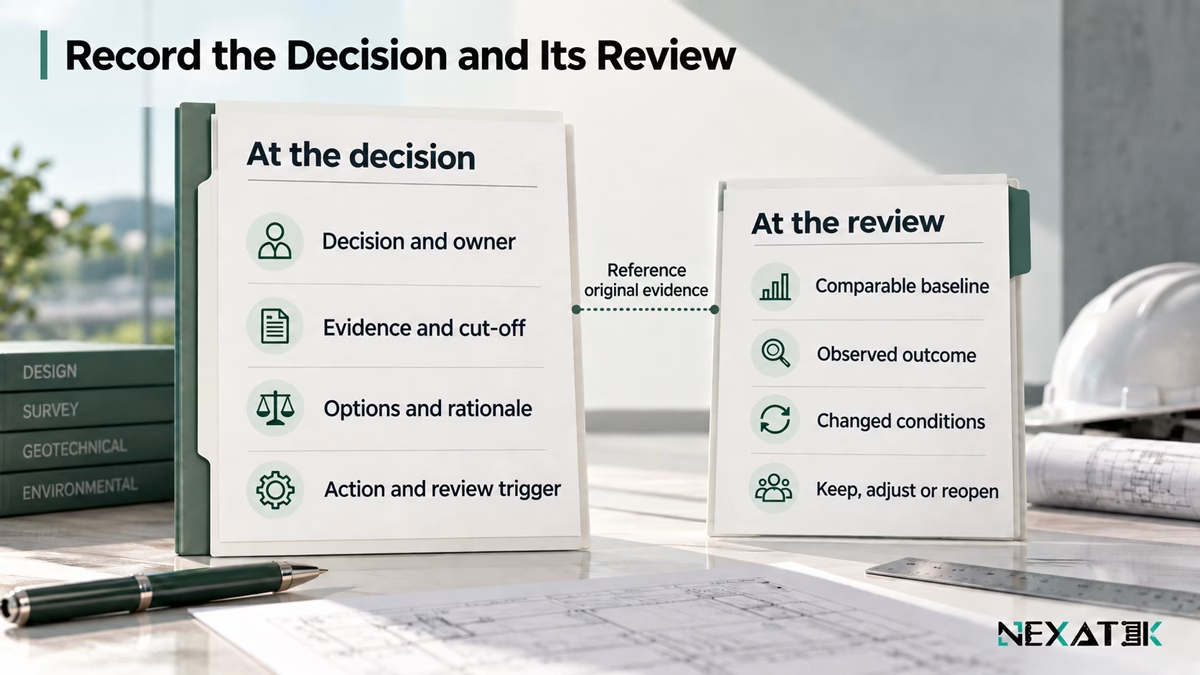
Record the chosen action and why it was preferred. Include the owner, evidence cut-off, source references, alternatives considered, remaining uncertainty and review trigger. Keep the version of the evidence used at the time, since a live dashboard may later show a different position.
If additional checking capacity is approved, identify which ready packages it will cover and the work from which that capacity is released. If the evidence points to missing inputs, assign their resolution instead. In either case, someone must own implementation.
The record can sit in the existing approval process. NEXATEK’s engineering workflow coordination supports responsibility assignment, review routing and traceable decisions.
Measure Outcomes
Choose the outcome measure before acting. For the backlog, establish a baseline for elapsed time from ready-for-check to completed review and the age of still-open ready work. Pair speed with the share of completed reviews reopened for checking-related corrections, using the same agreed follow-up period for each group.
Compare equivalent package types and review periods. Record changes in scope, input completeness and staffing that could also explain the result. A shorter queue after simpler work arrived does not establish that reassignment improved performance.
At the agreed review, retain the action, adjust it or reopen the choice. Measure decision quality as well as delivery: was the evidence available in time, was uncertainty visible, and did the assigned action happen?
Where Data-Driven Decisions Add the Most Value?
Prioritise recurring decisions whose consequences can be observed and whose owners can act on the evidence.
- Design coordination:
Reallocate specialist checking effort using readiness, remaining effort and issue commitments, then review delay and rework together.
- Construction planning:
Review crew deployment against workfront readiness, access and equipment availability. Assess completed quantities alongside quality and changed site conditions.
- Asset management:
Compare maintenance candidates using condition, consequence of failure, service needs and available intervention windows. Revisit priorities when inspections change the evidence.
Engineering KPIs should connect to these choices. An indicator with no possible response, responsible owner or review occasion contributes little to the decision-making process, even if it is easy to chart.
Common Failure Modes
- An average hides the actionable problem.
Overall review duration can combine incomplete submissions with genuinely overloaded checkers. Preserve the distinctions that determine the response.
- A target changes reporting behaviour.
Counting closed reviews alone can encourage premature closure. Retain evidence of completion and inspect reopened work alongside throughput.
- The explanation becomes more certain than the evidence.
Correlation, a small sample or an isolated improvement may suggest a hypothesis. Record competing explanations and test them before extending the action.
- The meeting ends without a review commitment.
Put the outcome check into the operating calendar when the decision is made. Without it, the team cannot use the result to improve the next choice.
Key Takeaways
- Define the choice, authority and criteria before selecting measures.
- Collect evidence that can distinguish the available actions.
- Combine validated data with engineering judgement and explicit uncertainty.
- Preserve the decision basis and compare outcomes on a consistent basis.
Conclusion
A repeatable process leaves a record that the next reviewer can use: the evidence available, the reason for the action and the result observed. Start with one recurring decision and refine the method through successive reviews. The firm can then extend a tested way of making decisions to other teams, with ownership and outcome measurement already built in.
Build a decision process your team can review
NEXATEK connects civil engineering knowledge with data validation, analytics and workflow design. We can help align the evidence, responsibilities and outcome measures around a decision your team already makes.
Frequently Asked Questions
What is data-driven decision making?
It is the use of relevant evidence to select and review an action. Engineers interpret the data using technical judgement and remain responsible for the decision.
How can data improve engineering decisions?
It can reveal which constraint needs attention, help compare alternatives and show what happened after intervention. Its usefulness depends on reliable records and an owner able to act.
What data do engineering managers need?
They need information tied to the specific choice, such as work readiness, current revisions, remaining effort, resource availability and quality history. Collect enough context to distinguish options and identify material gaps.
Can data replace engineering judgement?
No. Engineering decision support can organise evidence and test assumptions, while qualified people remain responsible for interpreting uncertainty and satisfying technical requirements.