







Engineering data governance assigns authority over technical information: who defines it, who maintains it, who may change it and who can approve its use. It gives engineering teams a way to resolve those decisions when project deadlines, discipline boundaries or conflicting records make them difficult.
A useful framework makes responsibilities visible where the work actually happens. For engineering data managers, CTOs and engineering directors, the starting question is concrete: when a disputed value reaches a design review, can the team identify who must resolve it and what evidence permits release?
Why Engineering Data Needs Governance?
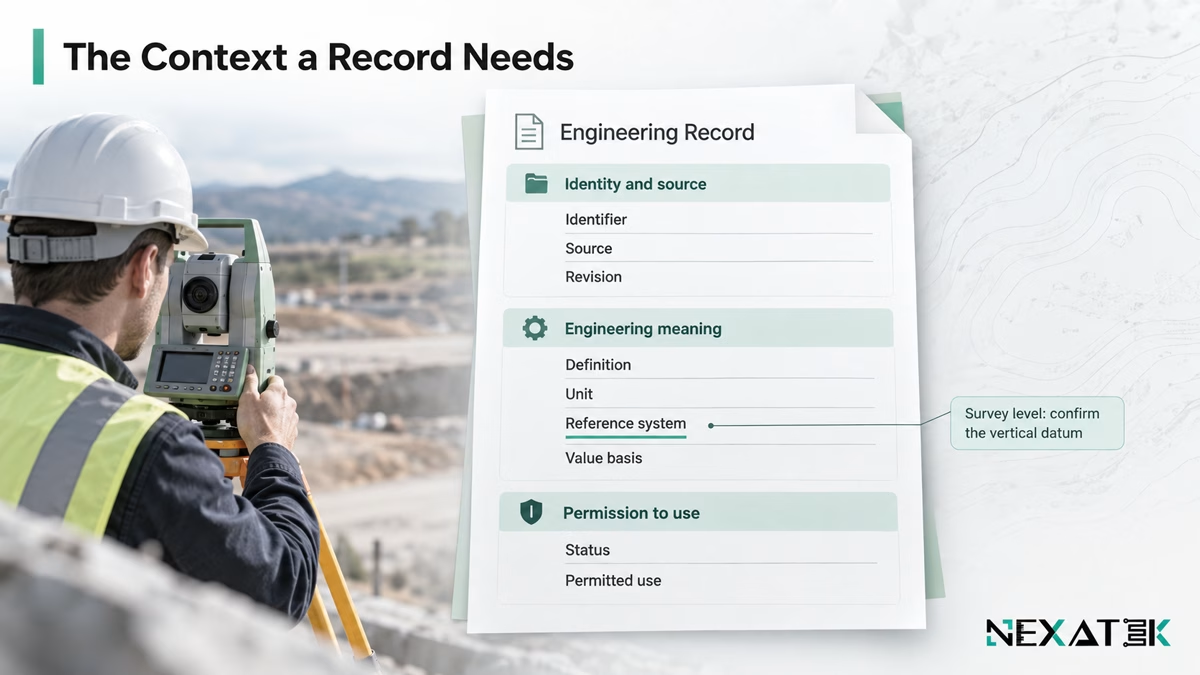
Consider an illustrative survey record with an elevation but no stated vertical datum. The field is populated and the file opens correctly. A designer still cannot establish whether the level is suitable for the intended calculation.
Governance assigns someone to resolve that gap, defines the required metadata and prevents an unresolved record from being released for that use. DAMA International describes governance in terms of accountability, policies and decision rights within the wider discipline of data management.
The wider engineering data strategy sets priorities for how information creates value. Governance translates those priorities into operating rules for drawings, calculations, material records and asset information, including records exchanged with clients and suppliers.
Core Elements of an Engineering Data Governance Framework
Each element should produce an observable control. A policy becomes useful when a team can apply it to a record, identify an exception, and obtain a decision.
Ownership and Stewardship
The data owner is accountable for a defined data domain, such as survey reference information or material specifications. The owner approves definitions and rules, assigns resources and resolves escalated conflicts.
A data steward maintains definitions, investigates issues and coordinates corrections. A system custodian applies agreed permissions and technical controls. Ownership, data stewardship, and system custody need named people, deputies, and allocated time, even where one person holds several roles. Here, ownership means operational accountability, distinct from intellectual property or contractual rights.
Keep data authority separate from technical sign-offAn owner can authorise a rule change or assign its resolution without being qualified to approve every engineering use of the data. Record both authorities. A complete dataset may still need discipline review before it supports a design decision, and a software permission must not be mistaken for that approval.
Standards and Definitions
Engineering data standards should define meaning as well as format. Record the identifier, field definition, unit, reference system, permitted status and authoritative source for each critical dataset. Master data, such as project and asset identifiers, requires controlled change across projects.
In the survey record, the unit describes the measurement scale. The vertical datum identifies its reference, while the survey source and intended use establish the context for review. Document whether a field contains a measured, calculated or assumed value. Version the definitions and record when changes take effect, so historical records retain their original meaning. Agree how unknown values are represented, so an empty field or default zero cannot silently become a valid engineering input.
Quality and Validation
Separate automatic checks from technical acceptance. Software can detect missing units, duplicate identifiers or an unrecognised status. A qualified reviewer must judge whether a value is appropriate for its proposed engineering use.
Define which defects block release, who investigates them and who may approve a documented exception within their authority. Retain the original submission alongside the correction and its reason. A record that passes format checks should not acquire technical approval automatically.
Access and Security
Data access governance should distinguish viewing, editing, approving, issuing and administering records. Give each role the access its work requires, consistent with NIST’s least-privilege principle.
For example, a supplier may upload a test certificate without being allowed to change the company’s acceptance decision. Review access when people change projects or leave, and identify who approves external sharing. IT implements permissions, while the accountable data role agrees permitted use within project sharing rules and relevant security requirements.
Lifecycle and Traceability
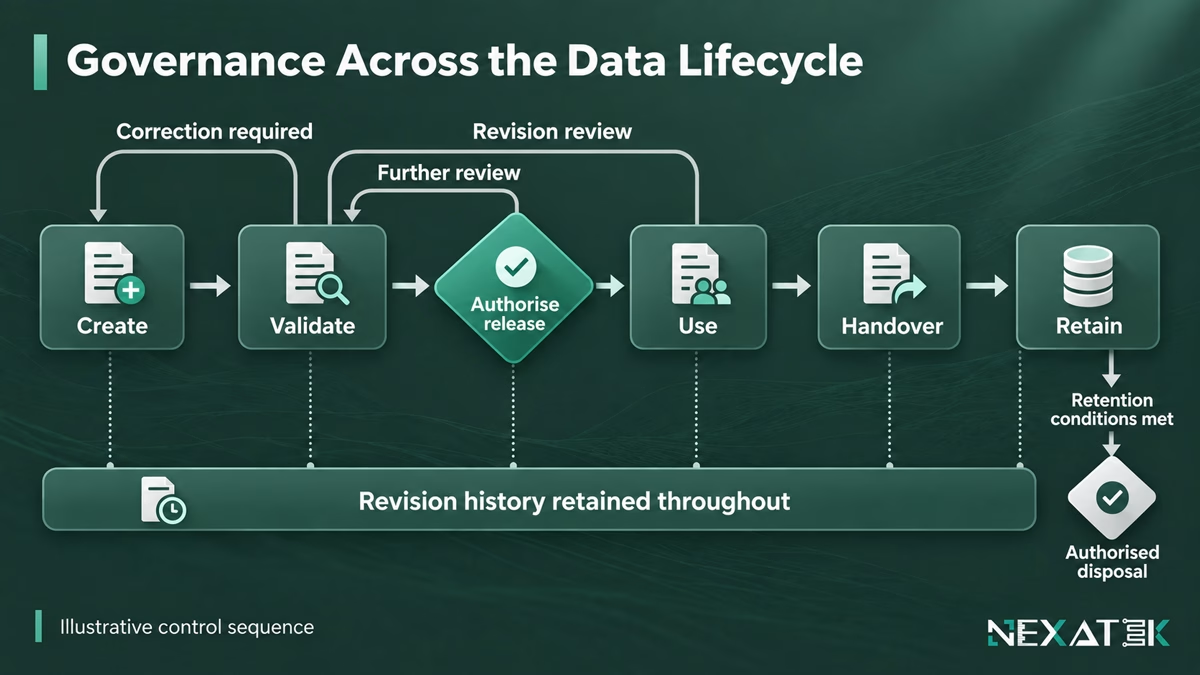
Govern the engineering data lifecycle from creation through validation, authorised release, use, revision, handover and retention. ISO 19650-1:2018 provides principles for managing built-asset information across its lifecycle, including recording and versioning.
Keep the source, author, reviewer, status, applicable revision and reason for change connected. When a released value changes, identify affected outputs and assess whether they need another review. Preserve the earlier issue as history while making its superseded status clear.
At handover, confirm the receiving custodian and acceptance criteria. Retention rules should identify record classes, retention periods, preservation requirements and authorised disposal. Project completion does not by itself mean the records can be deleted.
How to Assign Data Responsibilities?
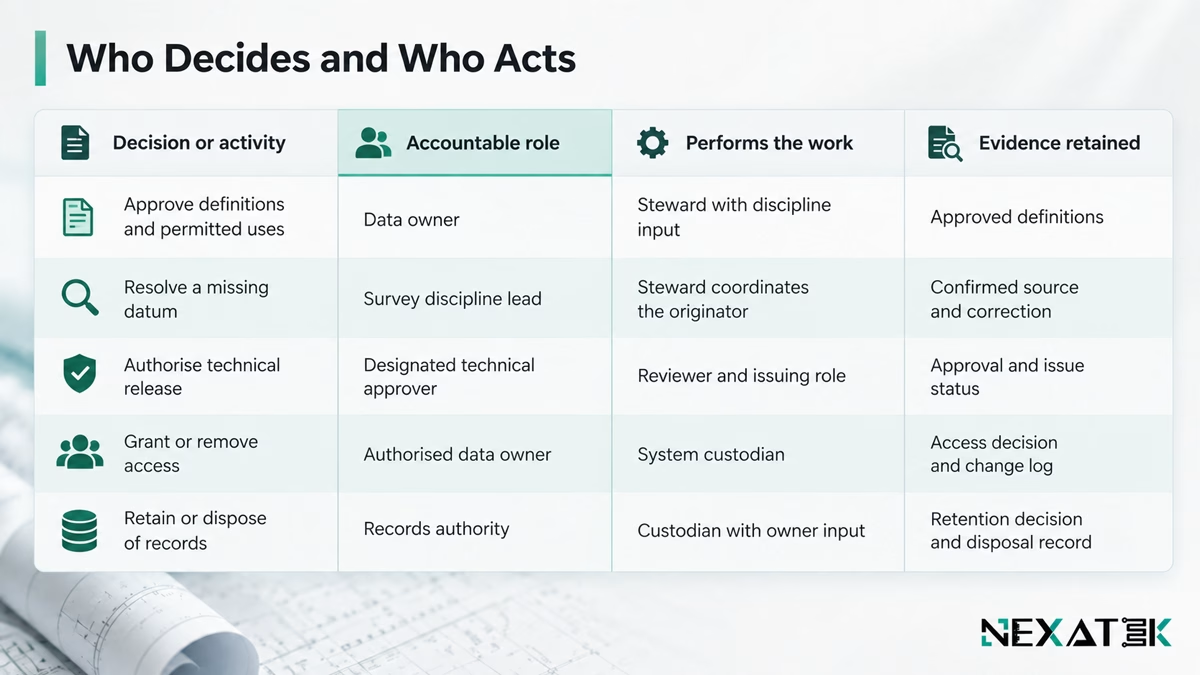
Start with one defined domain and name the decisions it requires. Assign one accountable role to each decision, then identify who performs the work and who supplies technical judgement. Confirm that each appointee accepts the remit and has authority to act. The illustrative responsibility matrix below can be adapted to project appointments. Its role names describe functions, which need to be mapped to actual people.
| Decision or activity | Accountable role | Performs the work | Evidence retained |
|---|---|---|---|
| Approve definitions and permitted uses | Data owner | Steward with discipline input | Approved definitions |
| Resolve a missing datum | Survey discipline lead | Steward coordinates the originator | Confirmed source and correction |
| Authorise technical release | Designated technical approver | Reviewer and issuing role | Approval and issue status |
| Grant or remove access | Authorised data owner | System custodian | Access decision and change log |
| Retain or dispose of records | Records authority | Custodian with owner input | Retention decision and disposal record |
Record a deputy and an escalation destination alongside each accountable role. A steward should know when an issue exceeds their remit, particularly when several disciplines use the same field. Shared project data also needs an agreed decision route across organisational boundaries.
For the missing datum, the steward obtains evidence from the survey originator. The discipline lead confirms the technical interpretation, and the designated approver decides whether release is justified. Updating metadata and approving the engineering use remain separately recorded actions.
Identify the unresolved decision in your data process
Bring one recurring data dispute, the affected record and the current approval route. Discuss where ownership, technical authority or system controls need to become explicit.
How to Introduce Governance Without Creating Bureaucracy
Put controls into an existing review or issue process. A separate governance form adds little when it merely repeats a decision already recorded elsewhere. Start with a recurring failure whose consequences and responsible team are understood.
- Define the minimum rule. Select the fields, permitted uses and release condition needed for that record type. Include a named owner and a route for unresolved questions.
- Place the check where the record changes hands. Check required metadata before release or reuse, using the team’s existing register or review process where possible.
- Route exceptions to the right authority. Let work that meets agreed rules follow the existing approval route. Escalate missing evidence, conflicting definitions and uses outside the agreed scope.
- Review the burden as well as the result. Compare correction effort and waiting time with the previous process. Remove duplicated approvals while preserving necessary engineering checks.
Allow project-specific requirements, but record their scope and approver. Otherwise, local exceptions can become competing company standards. Reserve governance-group review for unresolved decisions that cross data domains.
NEXATEK’s workflow automation and process optimisation capabilities include approval routing, escalation and revision history. Those controls become implementable once the organisation has agreed the responsible roles and release rules.
Measuring Whether Data Governance Is Working
Measure a defined population of records and compare like-for-like periods. Useful indicators include:
- Ownership coverage: critical datasets with an accepted owner and deputy divided by the critical datasets in scope.
- Release completeness: sampled issued records containing required metadata and approval evidence divided by all issued records sampled.
- Exception age: elapsed time from issue identification to resolution, separated by severity and responsible domain.
- Traceability success: outputs traceable to the applicable source revision and approval divided by all outputs sampled.
Pair these with the effort required to maintain controls. A rising rejection count may mean checks are detecting more defects, while a falling count may indicate that people have stopped reporting them. Examine the underlying records before declaring improvement.
These checks also support trustworthy data for engineering analytics, because a result is easier to challenge when its source and approval context remain available. Set targets from project risk and observed performance rather than importing unsupported industry benchmarks.
Key Takeaways
- Assign accountability for decisions and capacity for stewardship.
- Define engineering meaning, including units, reference systems and permitted use.
- Keep data checks, access permissions and technical approval distinct.
- Preserve revision history and resolve exceptions through named authorities.
- Assess both control effectiveness and the work needed to maintain it.
Conclusion
The practical test of engineering data governance is whether a disputed record reaches an authorised decision with its evidence intact. Choose a record your team struggles to resolve and check its definition, owner, approval route and revision history. Any unanswered question identifies a specific governance gap to close before that information is used again.
Make your engineering data rules usable in daily work
NEXATEK develops engineering data systems with ownership rules, access controls, revision history and approval workflows. Discuss how these capabilities could support the responsibilities your team has agreed.
Frequently Asked Questions
What is data governance in engineering?
It is the framework of responsibilities, definitions and controls that determines how technical information may be created, changed, released and reused. It applies to engineering records and their context throughout the lifecycle.
Who owns engineering data?
For governance purposes, a named business or engineering role is accountable for a defined data domain, with stewards maintaining it day to day. That allocation does not determine intellectual property or contractual ownership.
What should a data governance framework include?
Include ownership, stewardship, standards, quality checks, access rules, lifecycle controls and an escalation route. Each control should identify who decides, who acts and what evidence records the outcome.
How is data governance different from data management?
Governance establishes authority and rules within the broader discipline of data management. Operational data management applies them through activities such as collecting, storing, validating, maintaining and sharing records.




The part about keeping governance simple really stood out to me!
No one needs another layer of approvals!
Exactly, Lily! Good governance should make data easier to manage, not create more friction. That’s also why we keep governance principles practical when working on custom database development—clear ownership, access, and structure without unnecessary approval layers. Where do you usually see governance becoming too complicated?