







A credible digital maturity assessment should make disagreement visible. If headquarters calls a workflow digital while project teams still reconcile it by hand, that gap is part of the result. A digital maturity assessment for engineering firms examines how work, systems, data, people and governance operate together before leaders decide what to improve. This engineering-specific framework distinguishes isolated tools from capabilities the firm can repeat across projects.
What Digital Maturity Means for an Engineering Company?
Digital maturity is an engineering company’s current ability to use digital capabilities reliably. It covers repeatable workflows, governed information, connected systems, competent users and measurable control. BIM licences, field applications or dashboards do not demonstrate maturity when results still depend on manual reconciliation or individual workarounds.
A technology maturity assessment is too narrow. The European Digital Innovation Hubs Digital Maturity Assessment tool treats maturity as multidimensional, covering strategy, readiness, people, data and automation. Research based on 302 B2B firms likewise found that progress depends on combined technology and organisational resources in the assessment of digital maturity.
Digital readiness asks whether the organisation is prepared for a specific change; digital maturity examines how current capabilities operate. The assessment supplies evidence for an engineering digital transformation strategy, but does not replace strategy, roadmap design or implementation.
Five Dimensions of Engineering Digital Maturity
Assess the five dimensions separately. A single overall score can hide the constraint that matters most, such as reliable software operating on ungoverned data or a defined workflow that project teams routinely bypass.
| Dimension | Core assessment question | Typical current-state evidence |
|---|---|---|
| Processes and workflows | Is engineering work repeatable, visible and controlled across handoffs and exceptions? | Process maps, approval history, cycle time, rework, duplicate entry |
| Systems and integration | Do applications support the workflow and exchange information reliably? | System inventory, interface map, ownership, failure logs, reconciliation records |
| Engineering data | Is technical information structured, authoritative, traceable and reusable? | Data dictionary, revision status, identifiers, validation rules, source records |
| People and digital adoption | Can users complete the digital workflow correctly without hidden workarounds? | Role coverage, training evidence, usage patterns, support demand, user interviews |
| Governance and measurement | Are decisions, controls and improvement outcomes owned and reviewed? | Accountabilities, policies, baselines, KPIs, risk logs, review cadence |
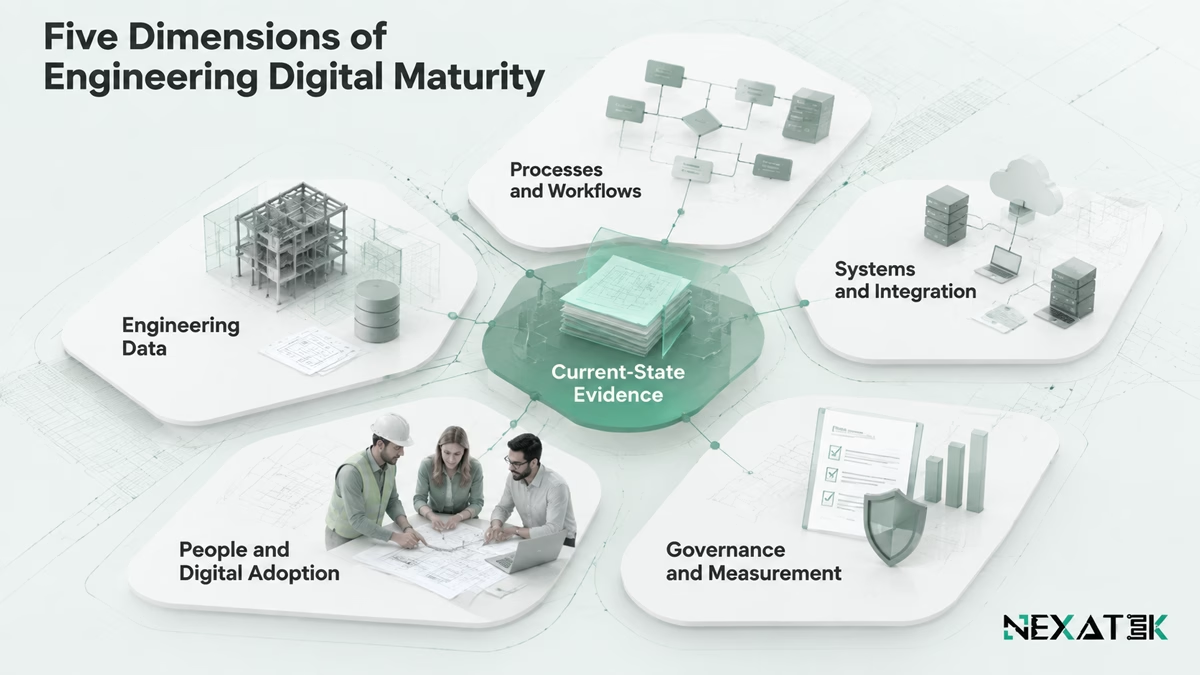
Processes and Workflows
Process maturity concerns how work actually moves, including informal routes around the official process. Follow a design submission, site inspection, test result or change request from creation to approval and reuse. Look for repeated entry, waiting, unclear ownership and unmanaged exceptions. A mature workflow is repeatable while allowing controlled responses to project-specific conditions.
Systems and Integration
System maturity measures fit and reliability, not application count. Identify which tool supports each step, which system owns shared records and what happens when an interface fails. Manual exports can suit an infrequent, low-risk exchange. They indicate a gap when routine reporting, approvals or technical decisions lack validation, monitoring or reconciliation.
Engineering Data
Engineering data maturity asks whether information retains meaning across disciplines, projects and lifecycle stages. Check identifiers, units, metadata, revision rules, approval status and links between drawings, calculations, tests and assets. The ISO overview of BIM information management reinforces the value of organising, digitising and exchanging project information across the lifecycle. Evidence should identify the authoritative source and preserve traceable corrections.
People and Digital Adoption
Adoption is demonstrated by dependable use, not training attendance. Compare the intended workflow with logs, completed records, support tickets and interviews. Parallel spreadsheets maintained by document controllers, project engineers or site teams are assessment evidence. Also check whether process ownership, administration and technical support can sustain the capability after the original project team moves on.
Governance and Measurement
Governance maturity makes responsibility and performance visible. Each important workflow and dataset needs an owner, controlled access, change rules and an escalation route. Use baselines such as approval time, reporting effort, duplicate entry, retrieval time, data exceptions and adoption to test the operating result. Metrics should support decisions, not decorate a dashboard.
How to Conduct a Digital Maturity Assessment?
Use one consistent method across all five dimensions, while allowing evidence to differ by workflow and role.
- Set the boundary. Define the business unit, project types, locations, lifecycle stages and workflows included. A company-wide label based on one advanced project is not reliable.
- Select representative workflows. Follow records that expose dependencies, such as a drawing revision, test result, site inspection and change approval.
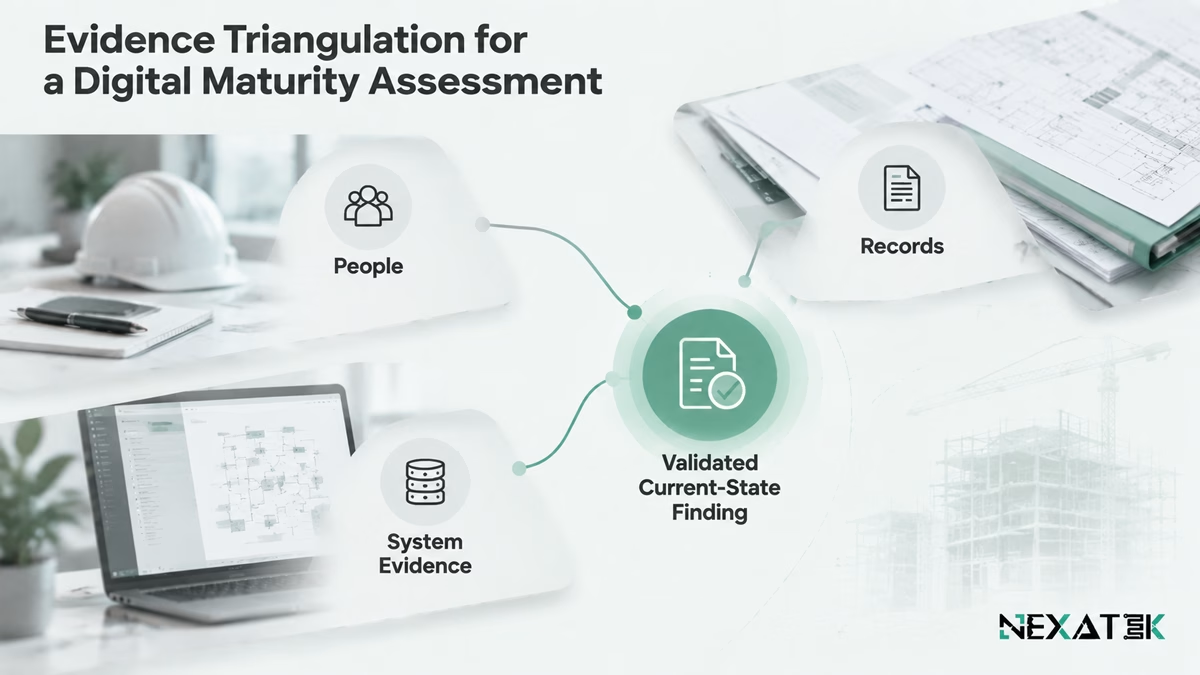
- Collect several forms of evidence. Combine interviews with process documents, system configuration, samples, logs, metrics and observation.
- Include the people doing the work. Involve engineering, project controls, document control, site operations, IT and data owners. Differences between their accounts reveal gaps.
- Score against written evidence criteria. Record what must exist for each result and cite the evidence used. The Institution of Civil Engineers’ BIM Maturity Measurement tool makes a useful general distinction: measure current capability rather than future aspiration, and do not present the exercise as an audit.
- Validate contradictions. Test high scores against actual records and review low scores with the responsible owner. Separate an isolated project success from a repeatable company capability.
- Document gaps and dependencies. For every gap, state the affected workflow, evidence, operating consequence, prerequisite and owner for follow-up. Reassess after a meaningful change or on an agreed periodic cadence.
NEXATEK
Score Evidence, Not Confidence
A confident interview can describe a mature intention while project records show a different operating reality. Use interviews to locate evidence, then score the evidence itself. Where sources disagree, preserve the disagreement as a finding until the team can explain it.
Establish a Defensible Current-State Baseline
Bring workflow evidence, system ownership and user practice into one assessment before choosing what to change.
How to Interpret the Results?
Use an evidence-anchored scale rather than a generic label applied by impression:
- 0 – No reliable evidence: the capability is absent or cannot be demonstrated.
- 1 – Local and person-dependent: useful practice exists, but it relies on individuals or one project.
- 2 – Defined but inconsistent: a standard exists, although adoption, data quality or control varies.
- 3 – Repeatable and governed: the capability works across the assessed scope with ownership and traceability.
- 4 – Measured and improving: performance is reviewed against baselines and the organisation can show controlled improvement.
These levels are an internal assessment device, not a certification. Write the evidence threshold before scoring, retain exceptions and use weighting only for an explicit business reason.
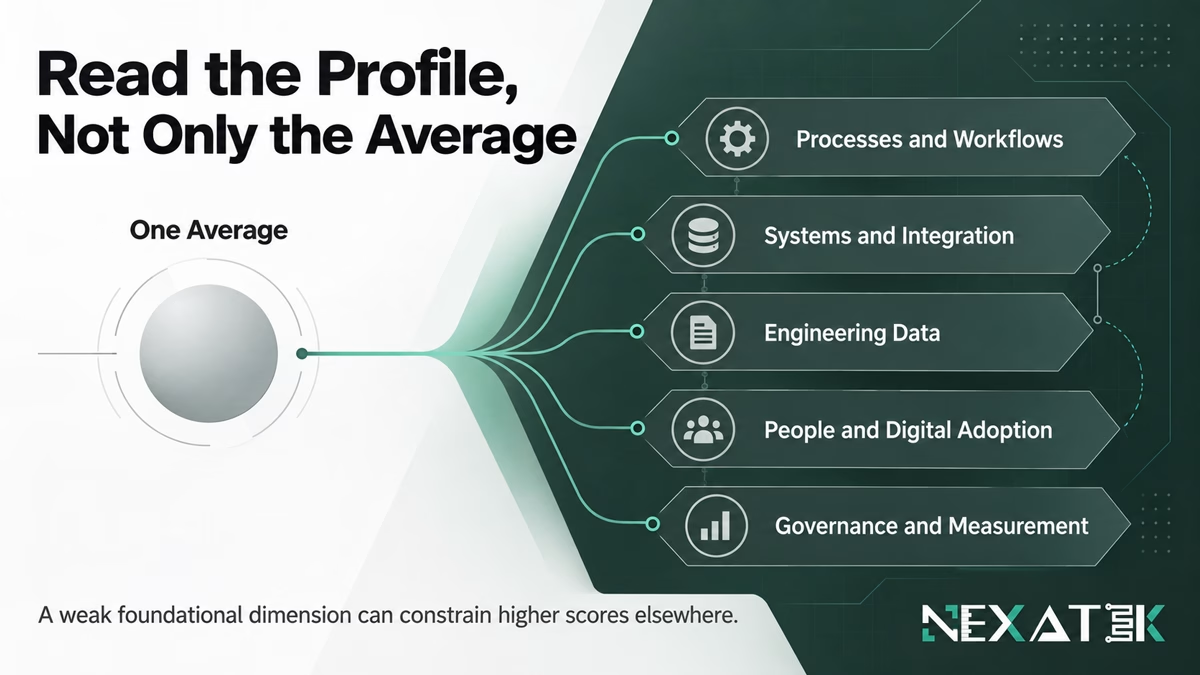
Interpret the result as a profile. Weak data may explain poor analytics or integration. Strong systems with weak adoption may signal poor workflow fit or inadequate support. Compare dimensions, projects and roles to locate these relationships. An average can summarise the result, but it should not replace the findings or conceal a foundational weakness.
Turning Maturity Gaps Into Digital Priorities
A gap becomes a candidate priority when three conditions are clear:
- It affects an important engineering or operating outcome.
- It constrains other capabilities or causes repeated work across projects.
- Progress can be tested against a current baseline.
Start with dependencies. If project identifiers differ across systems, another dashboard will not correct the source data. If an approval workflow has no owner, automating it will reproduce the ambiguity. The next action may therefore be a governance decision, data standard, process redesign, training measure or bounded pilot rather than new software.
The assessment should stop at a justified priority statement. Company-level choices belong in an engineering digital transformation strategy, while sequencing belongs to building a practical digital roadmap. NEXATEK supports firms that are improving digital capabilities across engineering operations when the diagnosis points to workflow, data, integration or measurement gaps.
Common Assessment Mistakes
- Scoring aspiration as capability: planned systems and draft policies are not current-state evidence.
- Using one viewpoint: executive, IT and project teams see different parts of the operating model.
- Counting tools: more applications can increase fragmentation rather than maturity.
- Averaging too early: one total can hide the weak data or governance layer constraining the rest.
- Ignoring exceptions: mature engineering workflows control legitimate variation instead of assuming every project follows one path.
- Jumping to solutions: assessment findings define the problem and dependency. They do not automatically justify a product or implementation.
Key Takeaways
- Digital maturity is a repeatable organisational capability, not a software inventory.
- Assess processes, systems, engineering data, adoption and governance separately.
- Use records, logs, metrics and observation to test interview responses.
- Read results as an interdependent capability profile, not only an average.
- Convert gaps into evidence-backed priorities before strategy, roadmap or implementation decisions.
Conclusion
A useful assessment explains where an engineering firm can rely on its digital capabilities and where work still depends on manual reconciliation, local knowledge or weak control. The result is a current-state evidence base, not a maturity badge. When leaders can see the affected workflow, the proof, the dependency and the owner, they can choose the next improvement without confusing visible technology with operational maturity.
Identify the Capability That Should Improve Next
NEXATEK can assess engineering workflows, systems, data, adoption and governance, then turn the evidence into a clear current-state capability profile.
Frequently Asked Questions
What is digital maturity in engineering?
Digital maturity is an engineering organisation’s current ability to run digital workflows, systems, data, user practices and governance reliably across its assessed scope.
How do you assess digital maturity?
Set a clear boundary, follow representative workflows, collect evidence from records and users, score each dimension against written criteria, validate contradictions and document gaps with their dependencies.
What are the main dimensions of digital maturity?
For civil engineering firms, a practical assessment covers processes and workflows, systems and integration, engineering data, people and adoption, and governance and measurement.
How is digital maturity different from digital readiness?
Digital maturity describes how well current capabilities operate. Digital readiness asks whether the organisation is prepared to adopt a particular change.
How often should digital maturity be assessed?
Reassess after a material operating change and on a regular cadence that fits the organisation, often annually for the full profile with targeted reviews after major pilots or system changes.
Who should participate in a digital maturity assessment?
Include leaders and the people who create, review, manage and use engineering information, including project teams, site operations, document control, IT, data owners and process owners.
Does digital maturity require advanced technology?
No. Clear ownership, structured data, stable processes, adoption support and measurement can improve maturity before advanced technology is needed.




Nice take on this. Focusing on what actually works makes it feel way more practical.
Thanks, Theo! That’s exactly the idea. A maturity assessment is most useful when it leads to clear, practical priorities rather than just another score or report. It can also be a strong starting point for a broader civil engineering digitalization in strategy.