






Digital programmes in engineering rarely meet one barrier at a time. Fragmented records weaken reporting, local spreadsheets become safety nets, and those parallel processes create more training and reconciliation work. Digital transformation challenges in engineering companies are connected operating constraints, not isolated technology problems. This article explains the main barriers in engineering organisations and the practical responses that can reduce risk without turning the discussion into a full transformation strategy or roadmap.
Why Digital Transformation Is Difficult for Engineering Companies?
Engineering organisations must change systems while live projects, approvals, calculations, drawings, field records, and contractual outputs continue. Specialist engineering tools also need to coexist with enterprise platforms for finance, procurement, document control, and reporting.
A 2026 construction study identifies high expenses, organisational structures, operational inertia, training difficulties, and industry culture among major barriers. A 2024 integrated digital delivery study also identifies skill gaps, investment requirements, interoperability, and limited budgets. The barriers are technical, organisational, and financial at the same time.
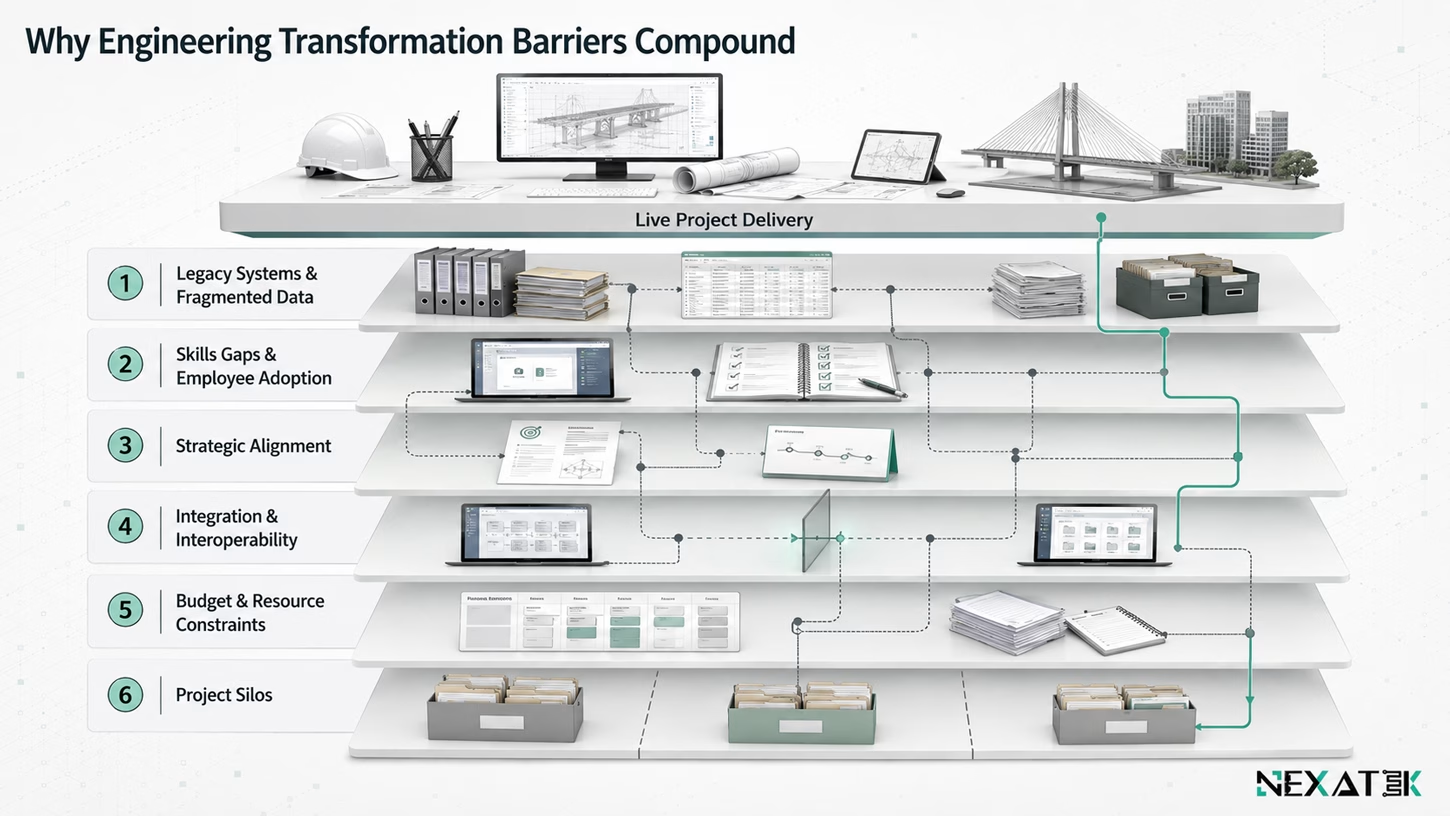
Digital Transformation Challenges in Engineering Companies at a Glance
| Challenge | Why It Happens | Practical Response |
|---|---|---|
| Legacy systems and fragmented data | Overlapping records and unclear ownership | Define authoritative records, stable identifiers, and a bounded migration scope |
| Skills gaps and employee adoption | New workflows compete with live project work | Protect training capacity and involve users early |
| Lack of strategic alignment | Local tools solve symptoms without a shared outcome | Define the problem, owner, process change, and success evidence first |
| Integration and interoperability | Systems use different structures and update rules | Define mappings, validation, ownership, and failure handling |
| Budget and resource constraints | Migration, integration, support, and internal time are underestimated | Pilot a measurable use case and cost the full delivery effort |
| Project-based workflows and organisational silos | Temporary teams create different trackers and exceptions | Standardise shared rules while allowing controlled project exceptions |
The Most Common Digital Transformation Challenges
1. Legacy Systems and Fragmented Data
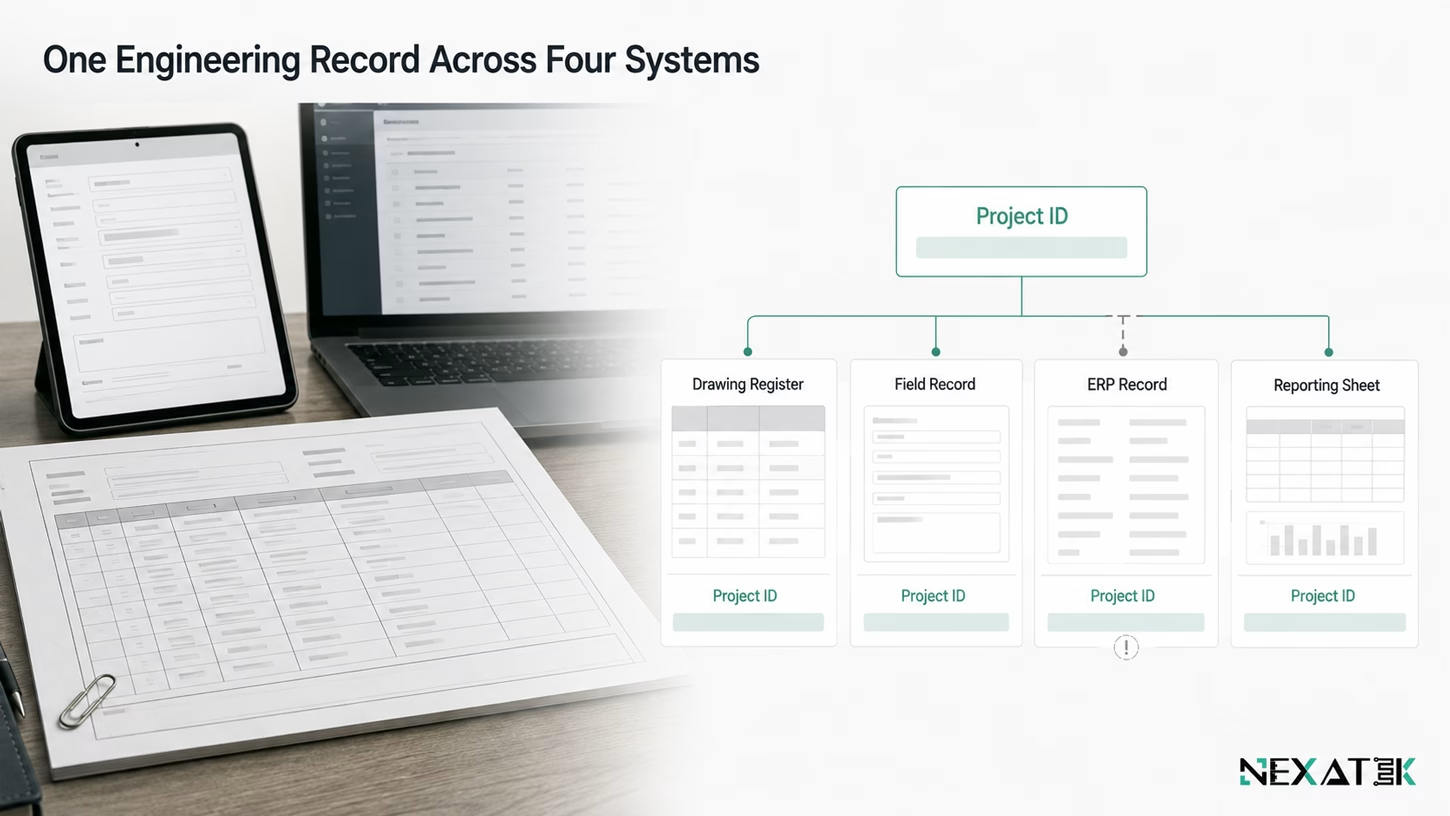
Legacy technology becomes a barrier when engineering records cannot move or be governed without manual translation. A stable specialist application may still be useful. The risk appears when project identifiers, document status, material records, or approval history differ across tools and ownership is unclear.
Classify the information before replacing software, then define common identifiers and ownership for records that must move. NEXATEK’s modern engineering data systems focus on structured project records, validation, version history, and integration with existing tools rather than treating migration as a simple file-transfer exercise.
2. Skills Gaps and Employee Adoption
Digital adoption competes directly with project capacity. Engineers may support a new workflow yet revert to the old method when deadlines tighten. Autodesk’s 2025 research highlights cost, time, and skills as significant transformation barriers, while an ICE roundtable highlighted uneven digital maturity and job-security concerns.
Training should therefore explain the changed process, ownership, exceptions, and support model, not only the interface. Resistance is useful diagnostic information when it points to extra work, poor fit, or unclear responsibility.
NEXATEK
Treat adoption capacity as a project resource
Training, testing, data clean-up, and process ownership consume the same engineering capacity needed for live delivery. If that time is not protected, a technically complete system can launch before the operating team has enough space to change how work is done.
3. Lack of Strategic Alignment
A technically sound initiative can still lack a clear reason to exist. Warning signs include feature lists without an operating baseline, overlapping departmental tools, or pilots judged mainly by launch date.
For each initiative, leadership should be able to state the problem, affected users, expected process change, accountable owner, and evidence that would justify continued investment. This keeps technology activity connected to business and project priorities.
4. Integration and Interoperability
Engineering firms depend on specialist systems that use different identifiers, units, status codes, permissions, and revision rules. A successful API call does not prove that exchanged information has the same meaning on both sides.
Interoperability is technical and organisational. University of Cambridge construction research describes persistent technical and organisational hurdles in AEC collaboration. Before integration expands, define the source of truth, mapping rules, validation, error handling, and responsibility for conflicting records.
5. Budget and Resource Constraints
Digital investment includes integration, data preparation, migration, testing, cybersecurity, training, support, and internal engineering time as well as licences. Under-resourcing can therefore undermine suitable technology.
A bounded pilot is a practical response. It gives management a real baseline, a manageable user group, and evidence for scaling, redesigning, or stopping before wider commitment.
6. Project-Based Workflows and Organizational Silos
Temporary project teams often develop local naming rules, approval paths, spreadsheets, and reporting logic to meet programme pressure. That flexibility helps delivery but makes cross-project reporting and reuse harder.
Use selective standardisation. Keep shared identifiers, document states, approval responsibilities, and core data definitions stable where information must connect. Preserve controlled exceptions where client requirements, site conditions, or technical methods genuinely vary.
How Engineering Companies Can Overcome These Challenges?
A practical response can start without a large transformation programme:
- Trace one real workflow. Record systems, handoffs, approvals, duplicate entries, exceptions, and workarounds. This is the basis for engineering workflow automation.
- Stabilise shared records. Agree ownership, identifiers, status logic, and validation before moving data between tools.
- Protect adoption capacity. Reserve time for testing, training, and process ownership rather than adding them to full project loads.
- Define interface responsibility. Identify which system owns each record, how errors are detected, and who resolves conflicts.
- Pilot one bounded problem. Choose a workflow with a measurable baseline and test both technology and changed responsibilities.
- Retire unnecessary parallel work. Define when the old spreadsheet, email route, or duplicate register stops after the new process is proven.
NEXATEK’s digitalization for civil engineering companies combines data management, integration, engineering tools, workflow optimisation, and reporting around existing operations. The right mix depends on the constraint limiting the process.
Identify the barrier before you fund the next tool
NEXATEK can review one stalled workflow and separate the visible symptom from the underlying data, integration, ownership, or adoption constraint.
How to Identify Transformation Risks Early?
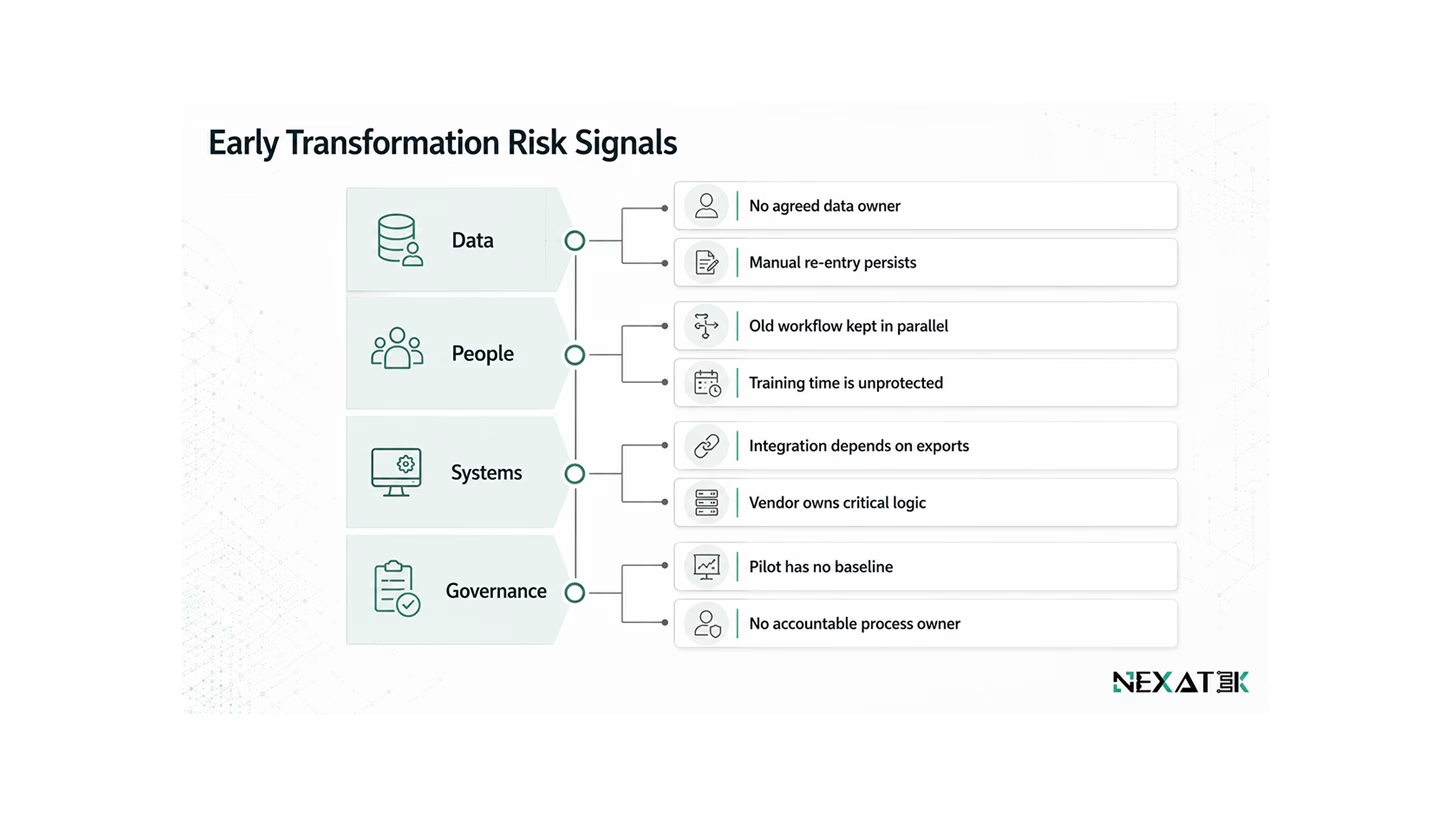
Early operating signals can show whether an initiative is ready or whether another constraint needs attention first.
| Early signal | Practical check |
|---|---|
| No agreed data owner | Name the authoritative source and correction owner |
| Manual re-entry persists | Follow one record across every handoff |
| Old tracker remains indefinitely | Define its retirement condition and legitimate exceptions |
| Pilot has no baseline | Measure current cycle time, effort, errors, or retrieval difficulty |
| Integration depends on exports | Test update timing, mapping, and failure recovery |
| Training time is unprotected | Reserve named user and process-owner capacity |
| Vendor owns critical logic | Document rules, interfaces, ownership, and support responsibility |
| No accountable process owner | Assign one owner for the changed operating process |
These checks do not replace a transformation strategy, roadmap, or technical architecture review. They help engineering leaders spot the conditions that commonly turn a manageable pilot into an expensive workaround.
Key Takeaways
- Engineering transformation barriers interact across data, systems, people, budgets, and project structures.
- Legacy systems become risky when ownership, identifiers, revisions, and data exchange depend on manual translation.
- Adoption requires protected capacity, user involvement, and clear process ownership.
- Interoperability depends on shared meaning, validation, responsibility, and error handling, not only connectivity.
- Bounded pilots provide evidence before wider investment.
- Parallel trackers, undefined data owners, and unprotected training time are early warning signals.
Conclusion
Digital transformation challenges in engineering companies are rarely solved by replacing one tool. A visible problem may originate in data ownership, integration, project structures, resource capacity, or adoption. Addressing only the symptom can preserve the underlying constraint.
Start with operating evidence. Follow the workflow, identify who owns the records and decisions, protect the people needed to change the process, and test one bounded intervention. That creates a stronger basis for deciding whether the next step is data restructuring, integration, workflow redesign, custom software, or broader digitalization.
Turn transformation barriers into an executable first intervention
NEXATEK can help identify the workflow, data, integration, and adoption constraints behind a stalled digital initiative, then define a practical first scope around the engineering work that needs to improve.
Frequently Asked Questions
What are the biggest barriers to digital transformation in engineering?
Common barriers include legacy systems, fragmented data, skills gaps, resistance, weak alignment, interoperability problems, budget limits, and project-based silos.
Why do engineering companies struggle with digital adoption?
Teams must adopt new processes while delivering live projects, so training time, workflow fit, data quality, and ownership can matter as much as the technology.
How can engineering companies overcome legacy systems?
Identify what must be retained, migrated, or integrated, then define authoritative data and stable identifiers before replacing systems broadly.
How can organizations improve employee adoption of new technology?
Involve users early, protect testing and training time, clarify exceptions and ownership, and retire unnecessary parallel processes once the new workflow is proven.




Which of these digital transformation challenges do engineering companies usually underestimate the most: legacy systems, data ownership, interoperability, or user adoption? In many cases, the technology seems easier to change than the processes and responsibilities around it.
Interesting article. Digital transformation can be challenging, and I agree that having the right strategy and people involved makes a big difference!
Thanks, Mike! Totally agree. Having the right tools helps, but the people, priorities, and overall strategy are what really determine whether digital transformation works in practice.