





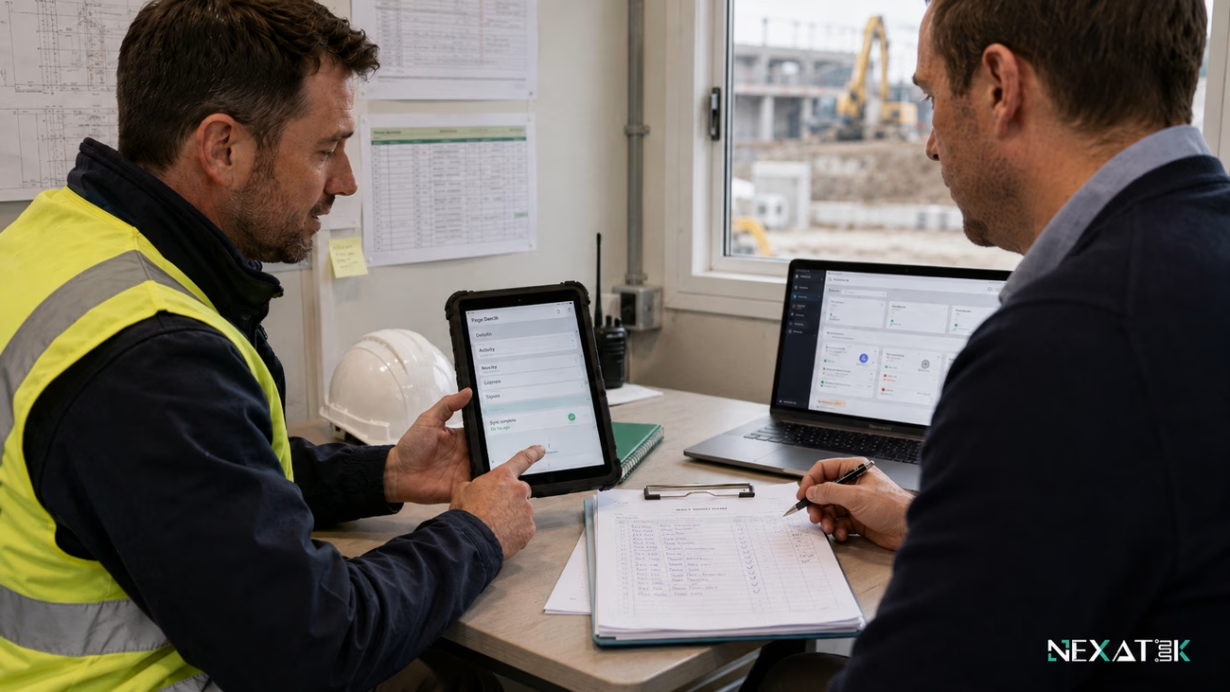

A field inspection can expose the whole digitalization problem in one record. The result is signed on paper, typed into a spreadsheet later, copied into an email, entered again for reporting, then discussed because the dashboard still shows an older status. For a CTO or Head of Operations, the issue is not the paper itself. It is the technical debt created by disconnected data ownership and repeated handoffs.
A business digitalization framework addresses that problem at workflow level. It connects process design, data structure, integration, people, security, and measurement so digital tools improve how work moves through the enterprise. This guide explains the distinctions, benefits, real-world use cases, implementation roadmap, common failure points, and practical measures for ROI and carbon efficiency in asset-heavy organisations.
Business Digitalization Framework at a Glance
A useful framework starts with the operating process rather than the software catalogue. Five layers should stay connected throughout the programme:
| Layer | Core question | Typical evidence |
|---|---|---|
| Workflow | Where does work slow, repeat, wait, or lose context? | Process map, handoffs, exception routes |
| Data | Which system owns each record and identifier? | Data owner, master data, validation rules |
| Integration | Which systems must exchange governed data? | API contracts, mapping, failure handling |
| People and controls | Who acts, reviews, approves, and accesses information? | Roles, permissions, training, audit trail |
| Measurement | What should improve after the pilot? | Cycle time, rework, duplicate entry, adoption, carbon data quality |
The layers are interdependent. Automating a weak process can shorten the time required to create the wrong result. Integrating systems with conflicting identifiers can spread duplicate records. A business process digitalization programme therefore needs operating rules as well as technology.
Digitization vs. Digitalization vs. Digital Transformation
The three terms describe different levels of change. Confusing them can lead a leadership team to buy technology for a problem that actually sits in process design, governance, or organisational behaviour.
Digitization (The Tools)
Digitization converts analogue information into digital form. A paper site inspection becomes a PDF. A handwritten equipment log becomes a spreadsheet. A box of historical drawings is scanned into an electronic archive. The information is easier to store, copy, search, and distribute, but the underlying process may remain unchanged.
That distinction matters because a scanned document can still require manual re-entry later. If an engineer reads a PDF inspection sheet and types its result into a reporting workbook, the organisation has digitized the document without digitalizing the workflow. The data exists electronically, but it is not yet structured for controlled reuse.
Digitalization (The Process)
Digitalization uses digital technology to redesign a specific workflow. The inspection example changes when a field form captures the result as structured data, validates required fields, routes the record for review, updates the relevant project status, and supplies reporting without another manual entry.
The same principle applies across enterprise operations. An invoice can move from receipt to coding, approval, ERP posting, and payment status through defined rules. A design submittal can move through checker, approver, client response, and revision states while preserving its history. This is where modernizing legacy infrastructure workflows through civil engineering digitalization services becomes an operating-model exercise rather than a document-conversion project.
For built-environment information, ISO 19650-1 provides a relevant information-management reference because it addresses the exchange, recording, versioning, and organisation of information across project actors. It does not replace a company digitalization strategy, but it reinforces the need for governed information rather than isolated files.
Digital Transformation (The Culture)
Digital transformation is broader than one automated process. It changes how an organisation makes decisions, assigns ownership, coordinates departments, serves clients, funds technology, and improves processes over time. The objective is not to make every task digital. It is to create an operating environment where data can move reliably between technical and business functions without losing context or accountability.
Technical debt becomes visible at this level. A company may have ERP, BIM, CRM, document management, and dashboards, yet still depend on CSV exports and local spreadsheets to connect them. Transformation addresses the architecture and governance behind those gaps. It asks which systems remain authoritative, which interfaces should be built, which workarounds should disappear, and which exceptions still need human judgement.
NEXATEK
Ownership Comes Before Integration
Connecting systems is not the first design decision. Each shared record needs an authoritative source, an accountable owner, validation rules, and a correction path. Without that foundation, APIs can move inconsistent project data faster while making the inconsistency harder to see.
Visual Aid Suggestion
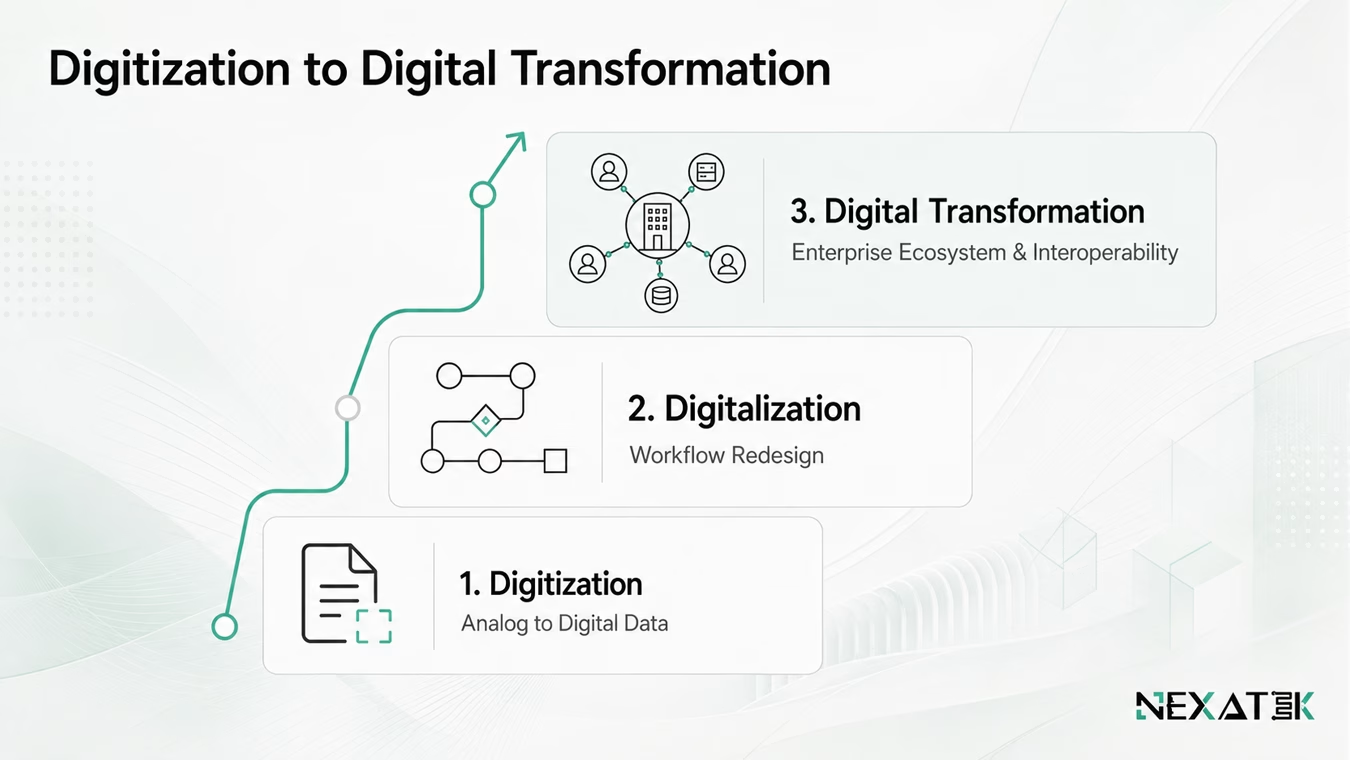
The distinction is easiest to see as a three-level maturity ladder:
- Digitization: analogue information becomes digital data or files.
- Digitalization: a defined workflow is redesigned around structured data and automated handoffs.
- Digital Transformation: connected workflows, governance, skills, and system interoperability change how the enterprise operates.
The levels are related but not automatic. Scanning every paper form does not create workflow integration. Automating several departments independently does not create an enterprise ecosystem if each department still defines project codes, suppliers, assets, or document status differently.
The Confusion
Enterprise decision-makers often use the three terms interchangeably because the visible technology can look similar. A tablet may be used for simple PDF viewing, structured field capture, or a fully integrated field-to-office process. The device does not reveal the maturity level. The data flow does.
A practical test is to follow one record. Ask where it is created, who owns it, how it is validated, where it is retyped, what happens when an approval is rejected, and which system is authoritative at the end. The answers expose whether the organisation has digitized information, digitalized a process, or built a connected operating model.
Why Digitalization Matters? (Key Benefits)
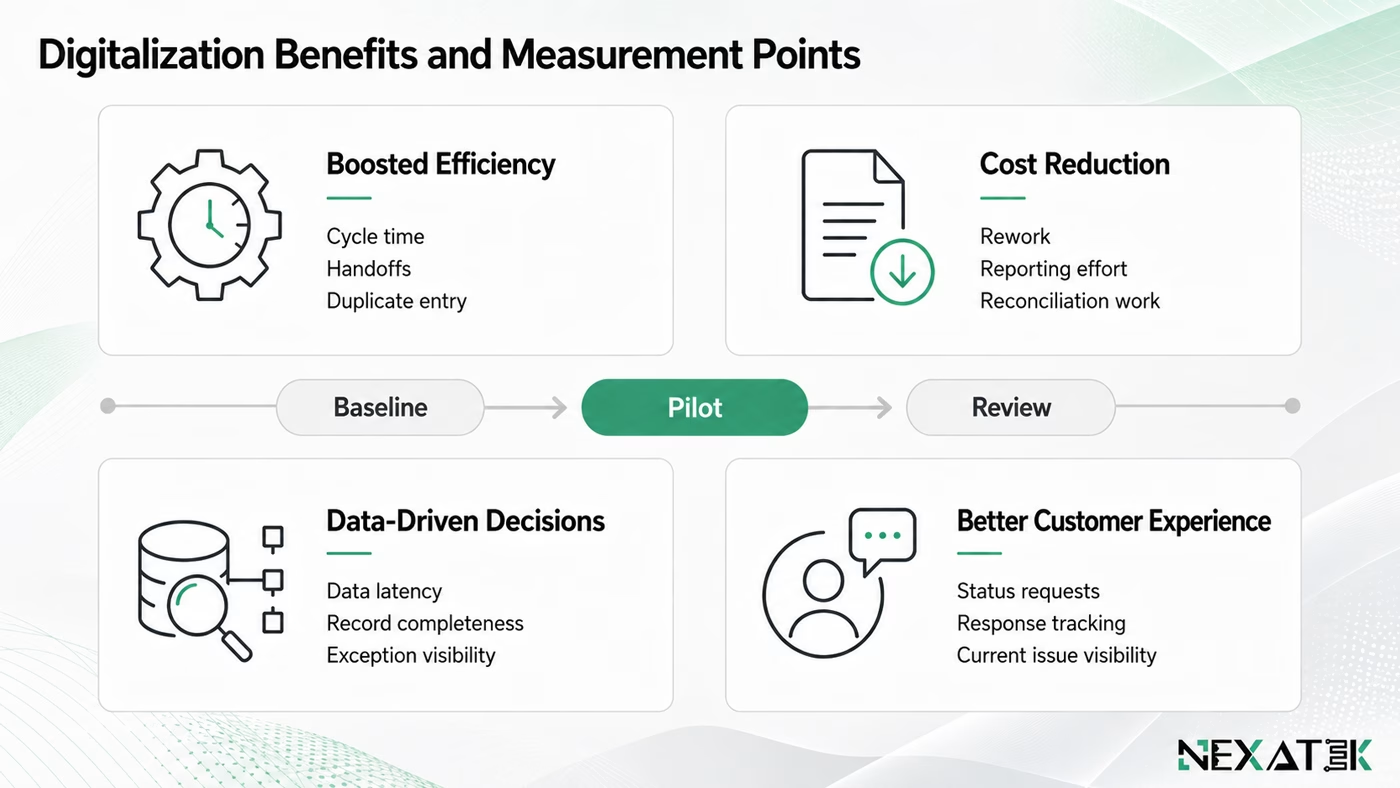
The benefits of digitalization become credible only when they are linked to a measurable workflow. Broad claims about productivity are weak evidence. A stronger business case identifies the baseline, the process change, and the operational metric that should move.
Boosted Efficiency
Efficiency improves when repeated handling disappears. In a field-to-office process, one structured inspection record can support technical review, non-conformance routing, progress reporting, and handover evidence. The value comes from reducing duplicate entry, waiting, reconciliation, and status chasing rather than simply making the form electronic.
For a digitalization pilot, measure the work surrounding the task. Useful metrics include approval cycle time, number of handoffs, manual entries per record, unresolved exceptions, reporting hours, and retrieval time. These measures reveal whether the workflow changed or whether the company only moved the same administration onto a screen.
Cost Reduction
Cost reduction follows the same logic. Paper storage and printing may fall, but larger savings often sit in repeated coordination, correction, rework, duplicate licences, and manual consolidation between systems. These costs are distributed across departments, which is why they can be difficult to see in one budget line.
A defensible comparison includes implementation, integration, data migration, training, support, security, and process ownership on the investment side. On the benefit side, it measures specific work removed or shortened. The goal is not to prove that every digital project saves money. It is to identify whether a defined process has enough recurring friction to justify change.
Data-Driven Decisions
Data-driven decision-making requires more than a dashboard. The underlying records need stable identifiers, agreed definitions, known owners, and reliable update timing. A data warehouse can consolidate reporting across ERP, project systems, CRM, field applications, or BIM-related sources, but the output is only as trustworthy as the source rules and transformations behind it.
Real-time reporting should also be used precisely. Some data can update immediately through event or API connections. Other information may remain daily, weekly, or approval-based by design. Leadership should know the latency and status of each metric instead of assuming every chart is live.
Better Customer Experience
Clients, prime contractors, and stakeholders often need controlled visibility rather than more email. A dedicated portal can expose agreed milestones, issued deliverables, review status, requests, and update history without giving every external user access to internal systems. NEXATEK’s customer portal development for civil engineering reflects this separation between client access and internal ownership.
The client interaction becomes easier to audit. A client sees the current issue and its status, while the delivery team preserves internal review controls and revision history. Automated reporting can reduce routine status requests, but exceptions and commercial decisions still need named responsibility.
Digitization in Business examples (Real-World)
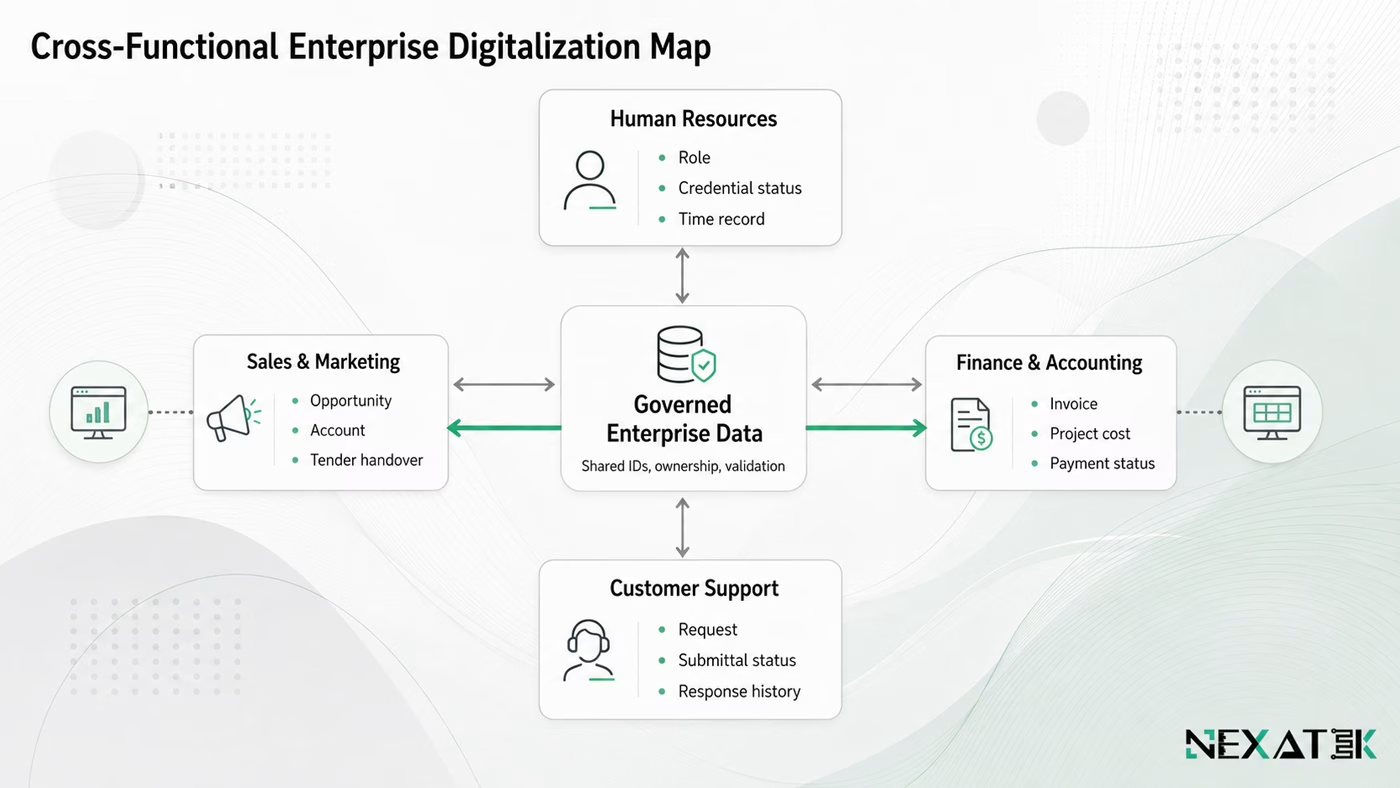
Digitalizing enterprise workflows does not mean replacing every specialist system. It means defining how functional systems exchange data, how responsibility moves between departments, and which records remain authoritative.
Finance & Accounting
A finance workflow may begin with a supplier invoice received by email or portal. The digitalized process extracts or captures required fields, checks the supplier and project reference, routes approval by responsibility and threshold, posts the approved transaction to ERP, and records payment status back against the original item.
Bank clearing may still depend on external payment rails, so the enterprise workflow should distinguish approval, payment initiation, bank confirmation, settlement, and reconciliation rather than present all states as one instant event. Capital expenditure and cost-to-complete reporting become more reliable when finance uses the same project and package identifiers as operations.
Human Resources
Human resources digitalization can connect onboarding, credential verification, training status, site access, time recording, leave, payroll inputs, and project allocation. In an infrastructure environment, a worker’s access may depend on current certifications, project assignment, induction status, or role-specific permissions.
The process needs data minimisation and role-based access because personnel records are sensitive. The objective is not to expose more HR information across systems. It is to expose only the status or attribute another workflow genuinely needs, such as whether a required credential is valid for site access.
Sales & Marketing
For engineering consultancies, contractors, and manufacturers, sales digitalization can connect tender opportunities, key accounts, technical enquiries, proposal stages, and project handover to delivery. CRM becomes more valuable when it uses stable company, opportunity, project, and contact records that can later map into the operational systems used after award.
The tender-to-project handover becomes a controlled data transfer instead of a reset. A technical requirement identified during a bid should not disappear when the project becomes live. Relevant scope assumptions, client commitments, and agreed contacts can move into project setup through controlled fields instead of relying on a handover email and personal memory.
Customer Support
Customer support in project-based businesses often overlaps with technical clarification and document status. A portal can route routine requests, show submission status, surface approved FAQs, and keep each communication linked to the relevant project or deliverable. More complex requests can escalate to a named engineer, project manager, or commercial owner.
This is a good example of deploying workflow automation & process optimization in civil engineering without removing professional judgement. Automation handles routing, notification, status, and record keeping. People remain responsible for technical interpretation and decisions.
Step-by-Step Roadmap to Digitalize Your Business
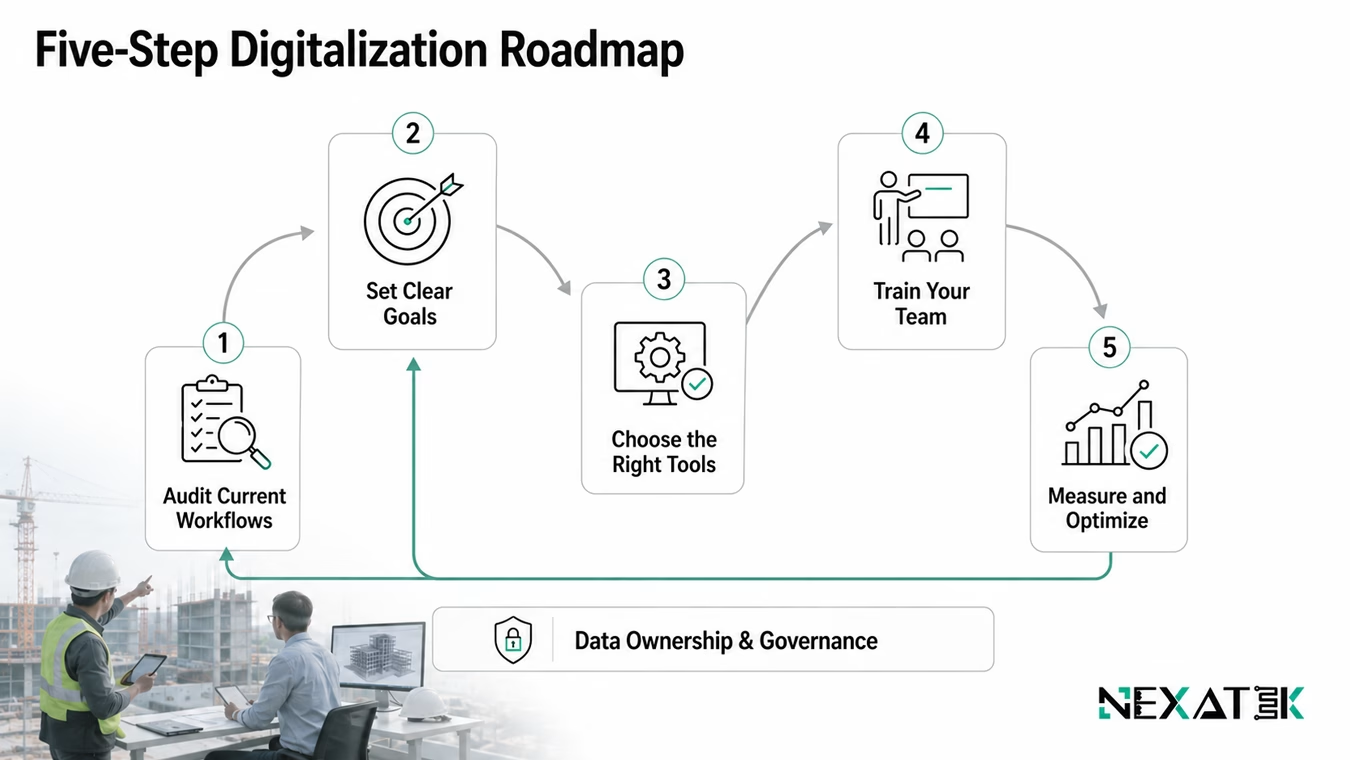
A digital transformation roadmap should reduce uncertainty in stages. The sequence below is deliberately process-led. Technology selection appears only after the organisation understands the workflow and knows what improvement it wants to measure.
Step 1: Audit Current Workflows
Start with one or more high-friction processes, not a list of desired technologies. Map the trigger, inputs, decisions, handoffs, approvals, exceptions, outputs, and systems used at each point. Record where data is retyped, copied, emailed, reconciled, or held in local spreadsheets.
The audit should also identify shadow systems. A formal ERP process may depend on an unofficial workbook that combines project codes and cost categories before monthly reporting. Removing the workbook without understanding why it exists can break the process. The workaround is evidence about a missing data rule or integration need.
Step 2: Set Clear Goals
Define goals as operational changes that can be measured before and after a pilot. Illustrative targets might include reducing inspection approval latency or shortening invoice processing time. Any percentage or target duration should remain provisional until a real baseline is measured inside the organisation.
A useful KPI has a named process, a defined start and finish, a data source, and an owner. Examples include median approval cycle time, duplicate entries per record, percentage of records requiring correction, reporting hours per period, or time required to retrieve an approved document for audit.
Step 3: Choose the Right Tools
Choose technology only after the process and measurement model are clear. The required architecture may combine ERP, BIM, document platforms, CRM, field applications, databases, APIs, reporting tools, and custom modules. A single enterprise suite can be appropriate, but so can a composable architecture that keeps specialist tools and connects them through governed interfaces.
For complex engineering operations, scalable custom enterprise solutions for civil engineering can provide the shared data, approval, and integration layer around specialist systems. API selection should include authentication, versioning, mapping, retries, monitoring, and reconciliation of failed transfers, not only the successful demonstration path.
Map One Workflow Before You Select the Platform
Trace one live process from source data to review, approval, reporting, and exception handling. That gives technology teams a concrete basis for integration and tool decisions.
Step 4: Train Your Team
Adoption work should begin before launch. Users need to understand what changed, why the new process exists, which records they own, how exceptions are handled, and where to get help. Training that only shows buttons and menus leaves the operating model unexplained.
In mixed digital maturity teams, the new workflow should retain familiar engineering concepts where possible. A site inspection form can still look and behave like an inspection process, while the system adds validation, status, revision, and routing behind it. This reduces unnecessary cognitive load without preserving the old duplication.
Step 5: Measure and Optimize
Measure the pilot against its baseline, then investigate the reason behind any result. A shorter approval time may come from better routing, fewer handoffs, or simply lower workload during the test period. Adoption metrics also matter because a technically successful workflow has little value if users continue maintaining a parallel spreadsheet.
For asset-heavy sectors, include carbon where the process creates relevant activity data. Material quantities, equipment use, transport records, and energy inputs can feed carbon calculations when the organisation has a defined methodology and reliable factors. NEXATEK develops digital tools and calculators for tracking CO2 performance, but the digitalization programme should keep carbon inputs traceable to the underlying project records instead of treating sustainability as a separate reporting exercise.
NEXATEK
Pilot the Bottleneck, Not the Platform
A first release should prove one operational improvement, such as a shorter approval path, fewer duplicate entries, or a more reliable field-to-office record. Proving one bounded workflow creates evidence for the next investment decision without committing the organisation to an enterprise-wide replacement before the process is understood.
Common Challenges (And How to Overcome Them)
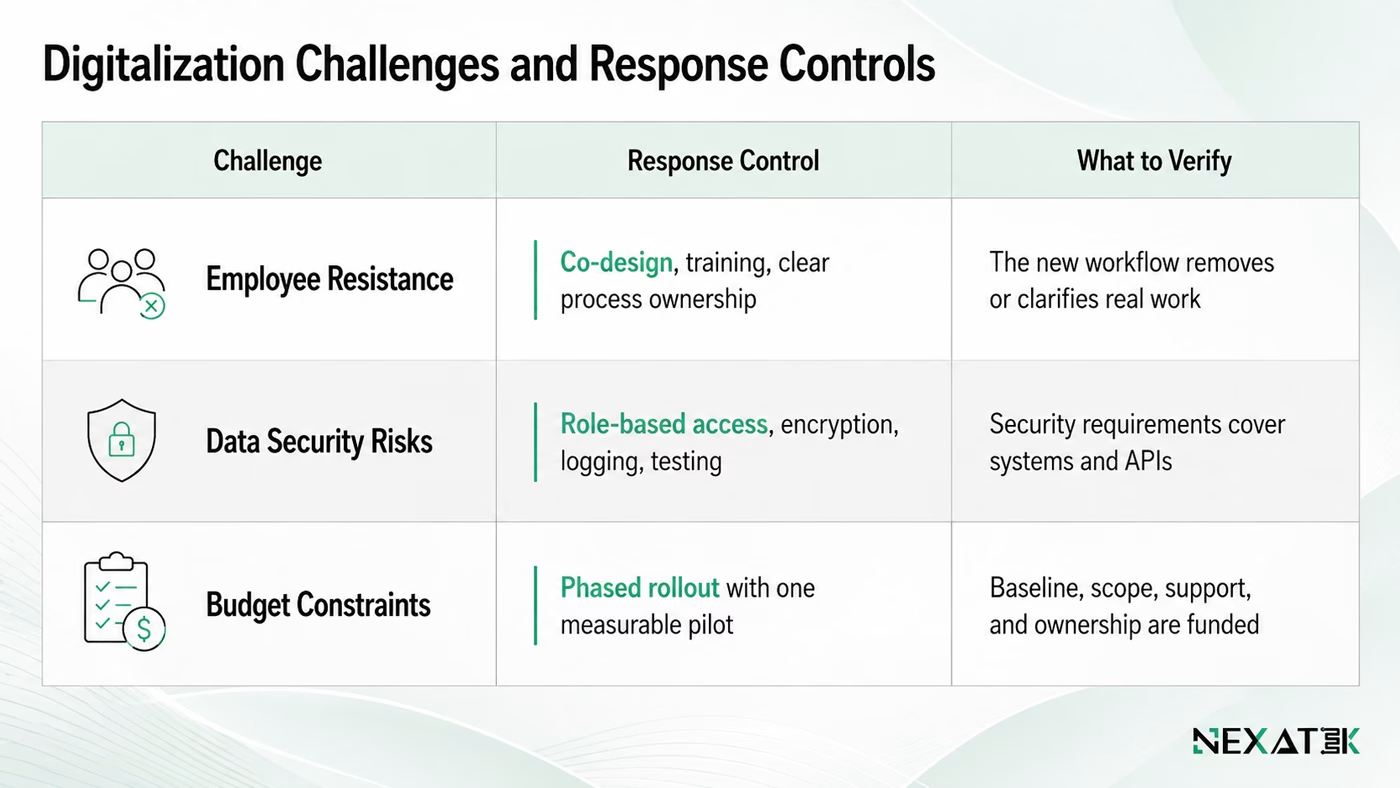
Digitalization programmes fail in predictable ways. The most important controls address people, security, and investment discipline together because weaknesses in one area can undermine the others.
Employee Resistance
Resistance is often a rational response to a system that adds work, removes useful flexibility, or was designed without the users who operate the process. Change management should therefore combine communication with workflow evidence. Show which duplicate step disappears, which status becomes clearer, and which manual reconciliation is no longer required.
Upskilling is more credible than framing technology as replacement. Identify process owners and practical champions, involve them in prototype review, and test exception cases with the people who currently solve them. A workflow that only works in the happy path will be abandoned as soon as a live project produces an unusual condition.
Data Security Risks
Moving workflows online expands the importance of identity, access, logging, data classification, encryption, backup, recovery, and security testing. ISO/IEC 27001:2022 defines requirements for an information security management system, so organisations pursuing alignment or certification need governance that extends beyond individual application features.
For built-asset information, ISO 19650-5 addresses a security-minded approach to information management. For application and API implementation, the OWASP API Security Project provides practical awareness of risks such as broken authorization, authentication weaknesses, exposed business flows, and unsafe API consumption. Security requirements should be included in architecture, procurement, testing, and operations from the start.
Budget Constraints
Budget pressure is a reason to narrow the first release, not to remove discovery, security, or measurement. A phased programme can begin with one high-friction workflow whose data owners are known and whose outcome can be measured. If the pilot does not improve the baseline, leadership can stop or redesign before a wider platform commitment.
Open standards and documented APIs can reduce unnecessary dependency, but they do not remove integration work. The budget still needs data mapping, testing, monitoring, user adoption, support, and ownership. A small, well-defined module that proves value is usually safer than an underfunded enterprise rollout that digitizes several weak processes at once.
💡 Key Takeaways
The most important points to remember about business digitalization:
Digitization converts information into digital form. Digitalization redesigns a workflow. Digital transformation changes the wider operating model, governance, and culture.
A business digitalization framework should connect workflow, data ownership, integration, people, controls, and measurement.
Track workflow outcomes such as cycle time, duplicate entry, rework, retrieval time, adoption, and relevant carbon data quality instead of relying on broad efficiency claims.
Select tools after the workflow audit and target definition. Integration cannot compensate for conflicting data ownership.
Use phased delivery and one measurable pilot to reduce investment and adoption risk before wider rollout.
Treat security as an operating responsibility covering identity, access, information governance, application controls, testing, and recovery.
Conclusion
Digitalization is becoming a core delivery capability for organisations that manage long asset lifecycles, large document sets, field records, technical approvals, commercial data, and cross-company coordination. The strategic issue is not whether the enterprise owns modern software. It is whether project and business information can move through controlled processes without repeated entry, unexplained transformations, or loss of responsibility.
A structured business digitalization framework gives leadership a way to separate technology activity from operational progress. It turns isolated initiatives into a sequence of governed workflow changes that can be measured.
Final Thought
Complete transformation does not require the overnight replacement of every legacy system. In many engineering organisations, specialist tools already perform their core job well. The stronger approach is to identify where information breaks between them, define ownership and interfaces, then improve one process at a time while preserving what still works.
That sequence reduces risk and creates evidence. Each successful pilot clarifies the next architectural decision, the next training need, and the next integration priority.
Start with the operational bottleneck that produces the most repeated coordination, manual re-entry, or uncertainty. Map the current state, define the baseline, and decide what evidence would justify a wider rollout. That is a more useful first step than starting with a platform shortlist.
Turn One Operational Bottleneck Into a Measurable Digitalization Pilot
NEXATEK can help map the workflow, define data ownership, identify integration requirements, and shape a first release around evidence that leadership can measure before wider rollout.
Frequently Asked Questions
What is the technical difference between digitization and digitalization?
Digitization converts analogue information into digital files or data. Digitalization redesigns the process around structured digital data, automated handoffs, validation, and system integration.
How does digitalization in business reduce enterprise operational costs?
It can reduce processing latency, duplicate data entry, physical document handling, reconciliation work, and avoidable rework. The savings should be measured against implementation, integration, training, support, and operating costs.
What are the primary failure points when implementing digitalization?
Common failure points include automating an unexamined process, weak change management, unclear data ownership, and selecting tools that cannot exchange governed data. These problems create new digital silos rather than removing the old ones.
How can asset-heavy sectors like civil engineering measure digitalization ROI?
Track a defined workflow before and after implementation using measures such as cycle time, rework, reporting effort, audit retrieval time, adoption, and relevant material or activity data used for carbon tracking. Avoid using one broad productivity percentage as the only ROI measure.
What security protocols are required during enterprise digital transformation?
Use role-based access, strong authentication, encryption in transit and at rest where appropriate, logging, backups, recovery controls, and regular security verification for applications and APIs. Organisations may also align governance with ISO/IEC 27001 and relevant built-environment information-security requirements.


A strong point: digitalization is not just about replacing paper with software. The real value comes from redesigning workflows, improving data ownership, and connecting systems in a way that reduces repeated manual work.
Exactly! Digitalization should make the work easier, not just more digital!