





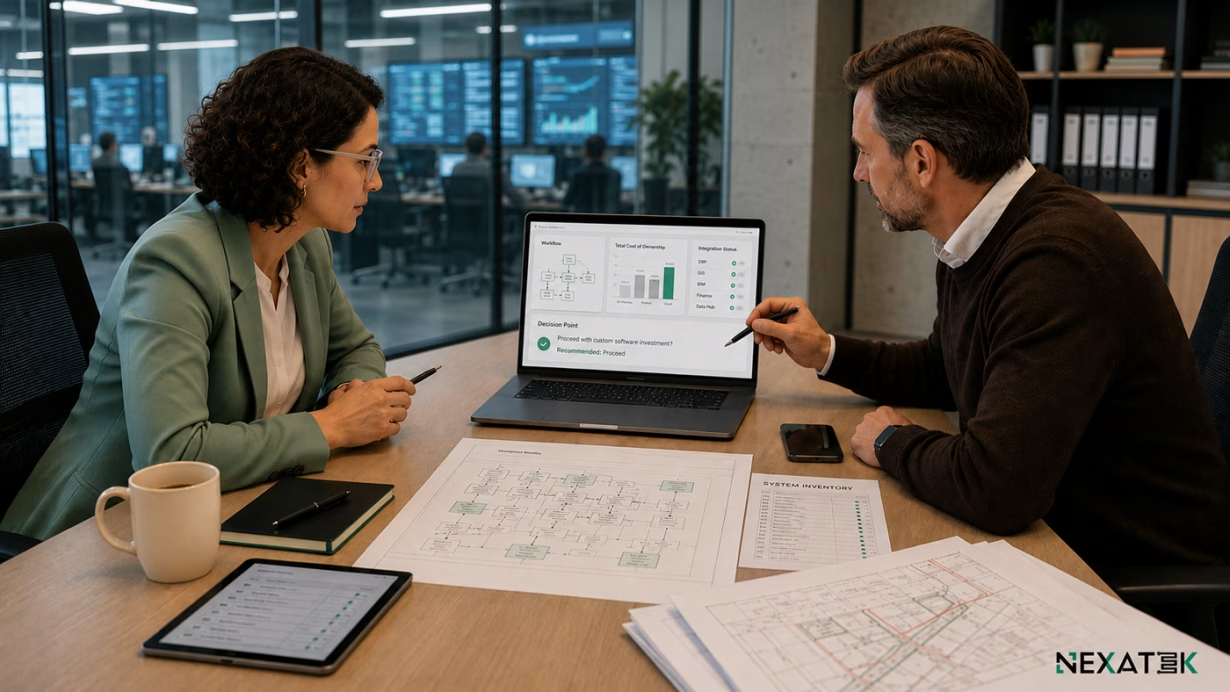

A firm can have BIM models, field applications, ERP, document control, and polished dashboards, yet still depend on spreadsheets and exports to connect them. The tools are digital, but the workflow is not. Each transfer creates another version and another opportunity for information to lose context.
The case for custom software development begins at that boundary. It is justified when persistent gaps between standard platforms create measurable cost, delay, risk, or loss of engineering data. It is not justified merely because a tailored interface looks better. The decision depends on workflow fit, integration debt, ownership capacity, and the value of keeping information usable from design through asset operations.
Why Generic Software Breaks Down in Workflows?
Generic software is built around common processes. That suits payroll, routine accounting, and basic document storage. Civil engineering work is harder to generalise because technical dependencies change with ground conditions, design assumptions, contractual packages, and approval responsibilities.
The problem is rarely one missing feature. It is the translation work between systems. A project team may approve a drawing in one platform, record site progress in another, and reconcile both against cost codes in a third. When those relationships live in people’s heads or spreadsheets, the organisation has digitised tasks without creating reliable engineering information management.
Where off-the-shelf tools create hidden process gaps?
Off-the-shelf platforms usually represent documents, tasks, users, and transactions well. They often struggle with engineering relationships. A revised geotechnical parameter may affect a foundation calculation, a reinforcement drawing, a quantity take-off, a procurement package, and a construction sequence. A generic task list can show that five activities exist, but not why one technical change makes the other four records unsafe to use.
Teams compensate through comments, naming conventions, custom fields, and side registers. These workarounds look inexpensive because no development project appears in the budget. Their cost is spread across design coordination, reporting, checking, and handover. The result is integration debt: recurring manual effort required because the systems do not share the same project logic.
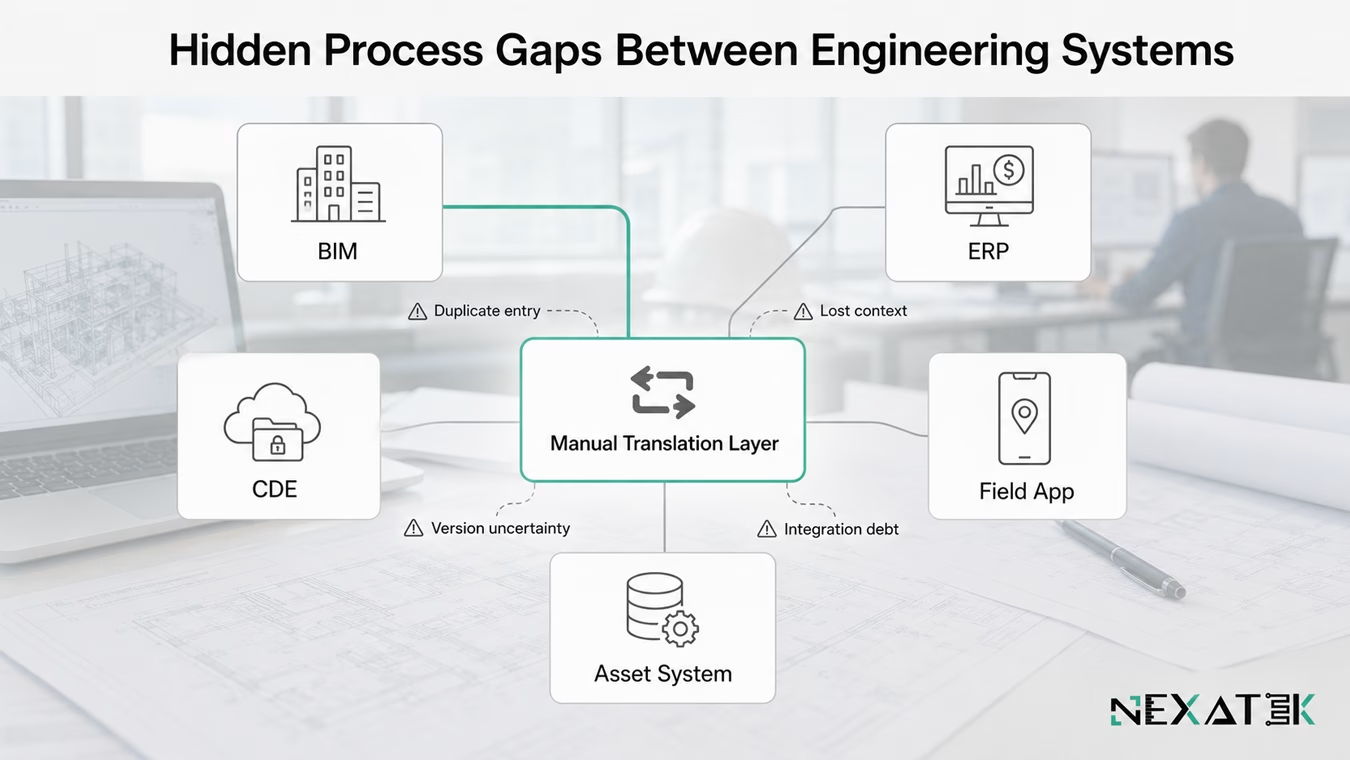
A feature gap is not automatically a reason to build. The stronger signal is a repeated workflow gap that affects several projects, requires manual reconciliation, and prevents the organisation from governing one reliable version of engineering information.
Why spreadsheet bridges and manual exports become operational risk?
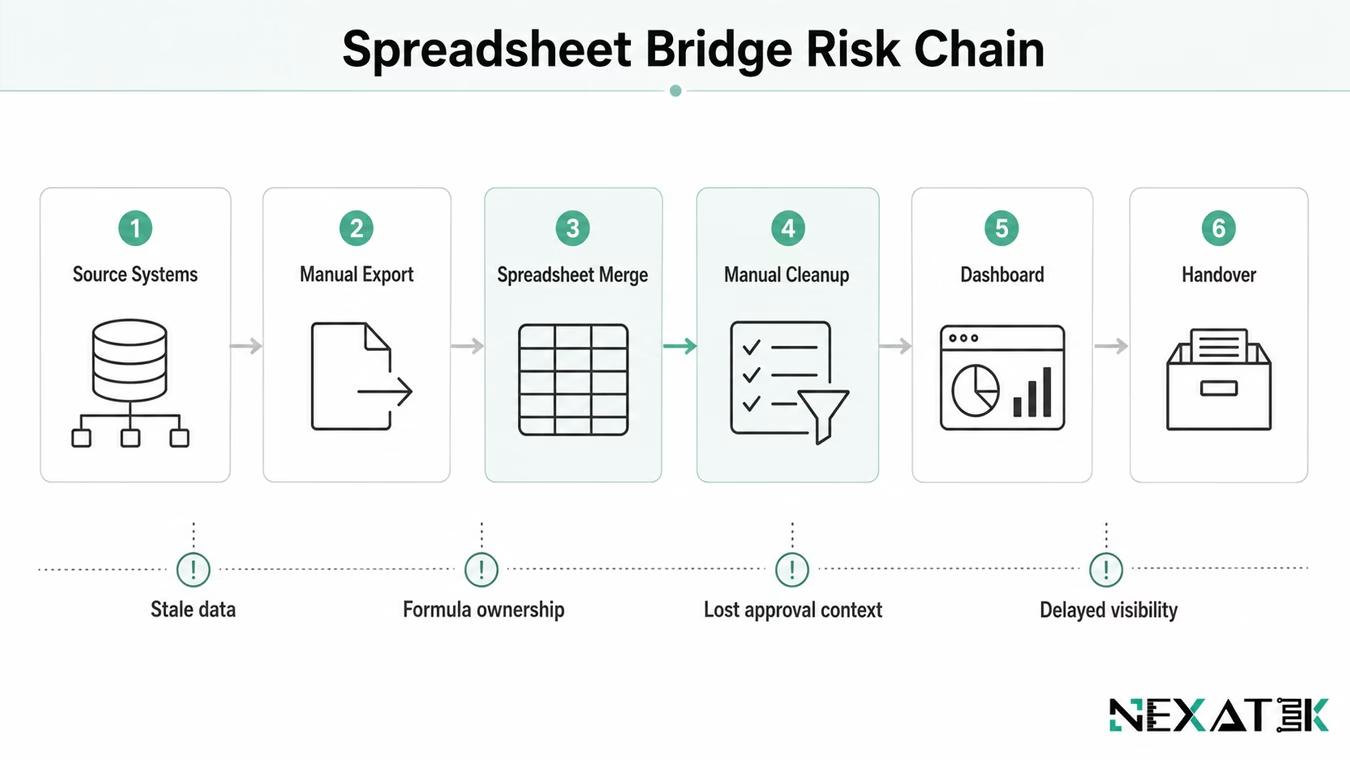
Spreadsheet bridges are immediate and familiar. A project controls engineer can export a schedule, merge site progress, and produce a report without waiting for an integration project. The weakness appears when the bridge becomes permanent. Formula ownership is unclear, refresh steps depend on one person, and the report cannot prove which source records were current when it was issued.
Manual exports also break traceability. A CSV file copied from a Common Data Environment into a reporting workbook loses much of its context: revision status, access rules, approval history, and links to related records. A dashboard can therefore look current while depending on data that was manually cleaned three days earlier. This is a reporting delay disguised as real-time visibility.
The cost of fragmented data across design, delivery, and operations
Fragmentation becomes more expensive as information moves through the asset lifecycle. During design, it creates repeated checks and inconsistent assumptions. During construction, it raises the risk of work proceeding from superseded information. At handover, it produces asset registers that are incomplete, duplicated, or disconnected from the records needed to maintain the asset.
The ISO 19650 series treats information management as a lifecycle discipline, including exchange, recording, versioning, and organisation. ISO 55000:2024 places asset value and lifecycle management at the centre of asset management. Together, these principles make a practical point: information that cannot retain meaning between project phases has less operational value, regardless of how many systems store it.
When Custom Software Becomes a Better Financial Decision?
Custom software becomes financially credible when the current workaround costs more than owning a targeted solution. The comparison must use total cost of ownership, including licences, manual reporting, integration maintenance, error correction, training, support, hosting, security, controlled change, and eventual migration.
Consider an illustrative scenario. Twenty staff spend 30 minutes per working day reconciling the same records across project controls, site reporting, and finance. At 220 working days, that is 2,200 hours each year. At an illustrative blended labour cost of $50 per hour, the direct reconciliation cost is $110,000 per year before counting delays or errors. A targeted integration and workflow layer may be defensible if it removes a substantial share of that work and can be maintained responsibly.
A good candidate for bespoke software development usually has four characteristics:
- The workflow is repeated and measurably inefficient.
- Existing tools require permanent manual bridges.
- Data ownership and product responsibility can be defined.
- A bounded first release can prove value.
A poor candidate has unstable requirements, weak process ownership, limited operating capacity, or a need already met by a standard product. In that case, configuration, better governance, or a small integration may solve the problem with less risk. The practical choice is often hybrid: retain proven BIM, ERP, CDE, or analysis tools, then build only the engineering logic and connectors that are genuinely specific.
Compare options at workflow level. Buy standard capabilities, integrate systems that must exchange governed data, and build only where engineering logic, data ownership, or strategic differentiation makes a tailored layer necessary.
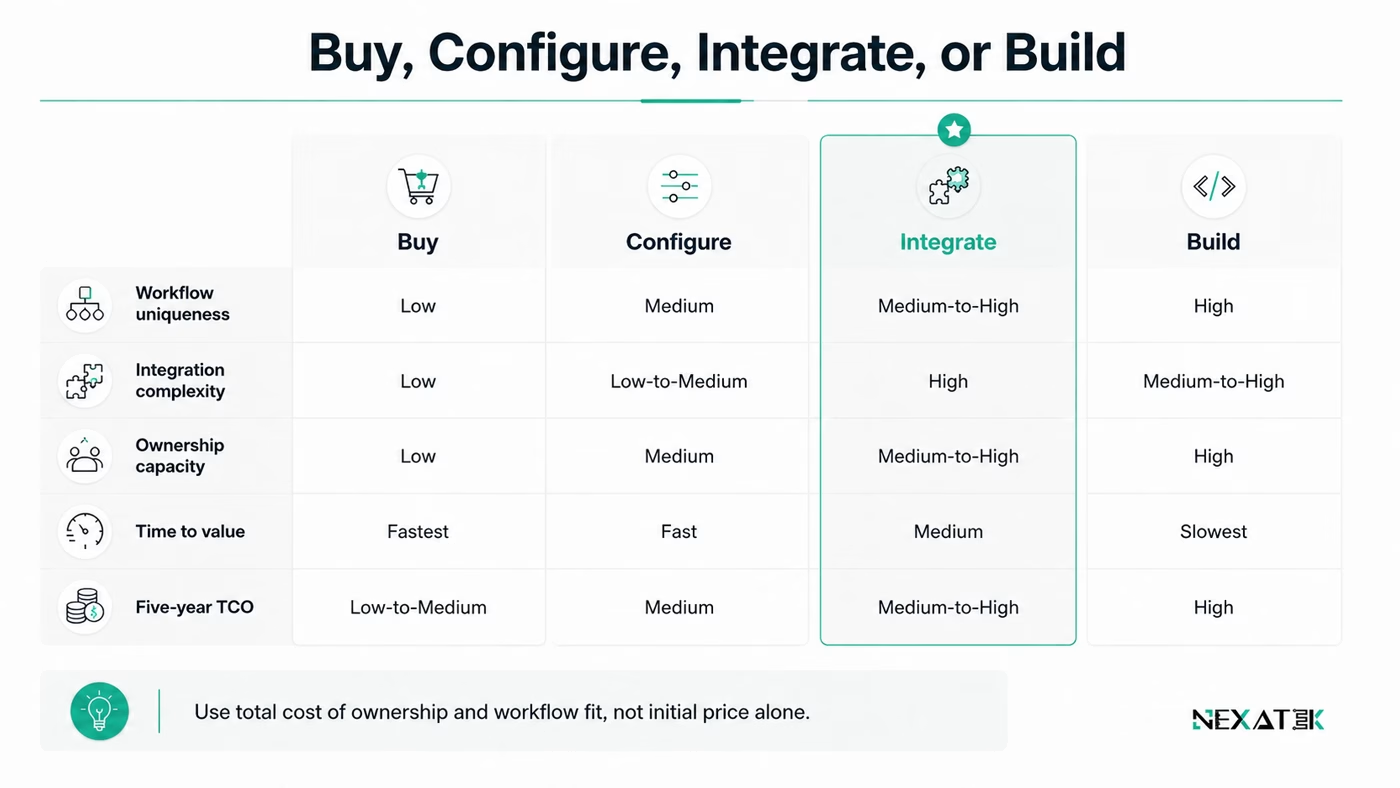
| Decision Criteria | Buy | Configure | Integrate | Build |
|---|---|---|---|---|
| Workflow uniqueness | Low | Medium | Medium-to-High | High |
| Integration complexity | Low | Low-to-Medium | High | Medium-to-High |
| Ownership capacity | Low | Medium | Medium-to-High | High |
| Time to value | Fastest | Fast | Medium | Slowest |
| Five-year TCO | Low-to-Medium | Medium | Medium-to-High | High |
Test the Business Case Before You Commit to a Build
Map the workflow, quantify the recurring workarounds, and identify the smallest release that can prove operational value.
7 Key Benefits of Custom Software Development
The benefits are strongest when software changes how engineering information moves, not simply how the interface looks. A tailored system can connect specialist tools, enforce project controls, and preserve technical reasoning. Each benefit should be tied to an operational baseline and measurable outcome.
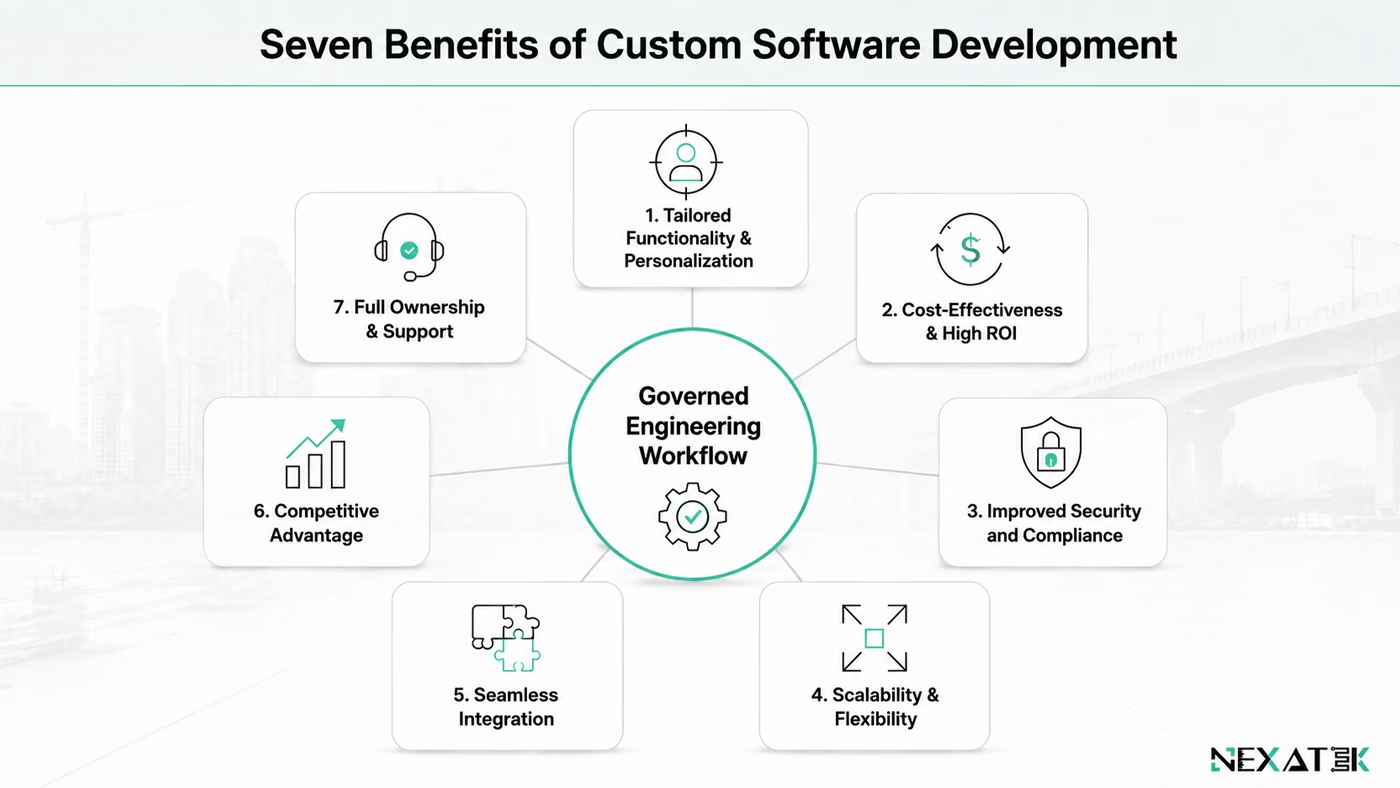
1. Tailored Functionality & Personalization
Tailored functionality means the software reflects the actual roles, records, approvals, and exceptions in an engineering workflow. A site inspector sees inspections and non-conformance records. A design lead sees assumptions, review gates, and affected deliverables. An asset manager sees location, condition, maintenance history, and linked handover records.
Personalisation should follow responsibility, not preference. The goal is to reduce irrelevant steps while preserving one governed data model. NEXATEK’s approach to custom software development for civil engineering starts with workflow analysis so technical requirements shape the system before technology choices do.
2. Cost-Effectiveness & High ROI
Custom software can lower total cost when it replaces repeated manual work, prevents avoidable rework, or removes several overlapping subscriptions. It can also fail financially when scope expands faster than value, user adoption is weak, or the organisation underfunds support.
A defensible ROI model measures one workflow before and after implementation. Useful measures include reporting hours, approval cycle time, duplicate entries, unresolved data conflicts, handover completeness, and support cost. The first release should target a small number of these measures. Broad claims about productivity are less useful than evidence that one approval cycle fell from eight handoffs to four.
3. Improved Security and Compliance
A tailored system can apply role-based access, project segregation, audit logs, retention rules, and approval authority around the organisation’s real information structure. This is particularly useful when sensitive asset, site, commercial, or design information crosses internal and external teams.
Customisation does not make a system secure by default. Security depends on architecture, identity management, encryption, monitoring, testing, patching, and operating discipline. ISO 19650-5 reinforces security-minded management of sensitive information through its lifecycle. A custom platform should make governance visible and testable.
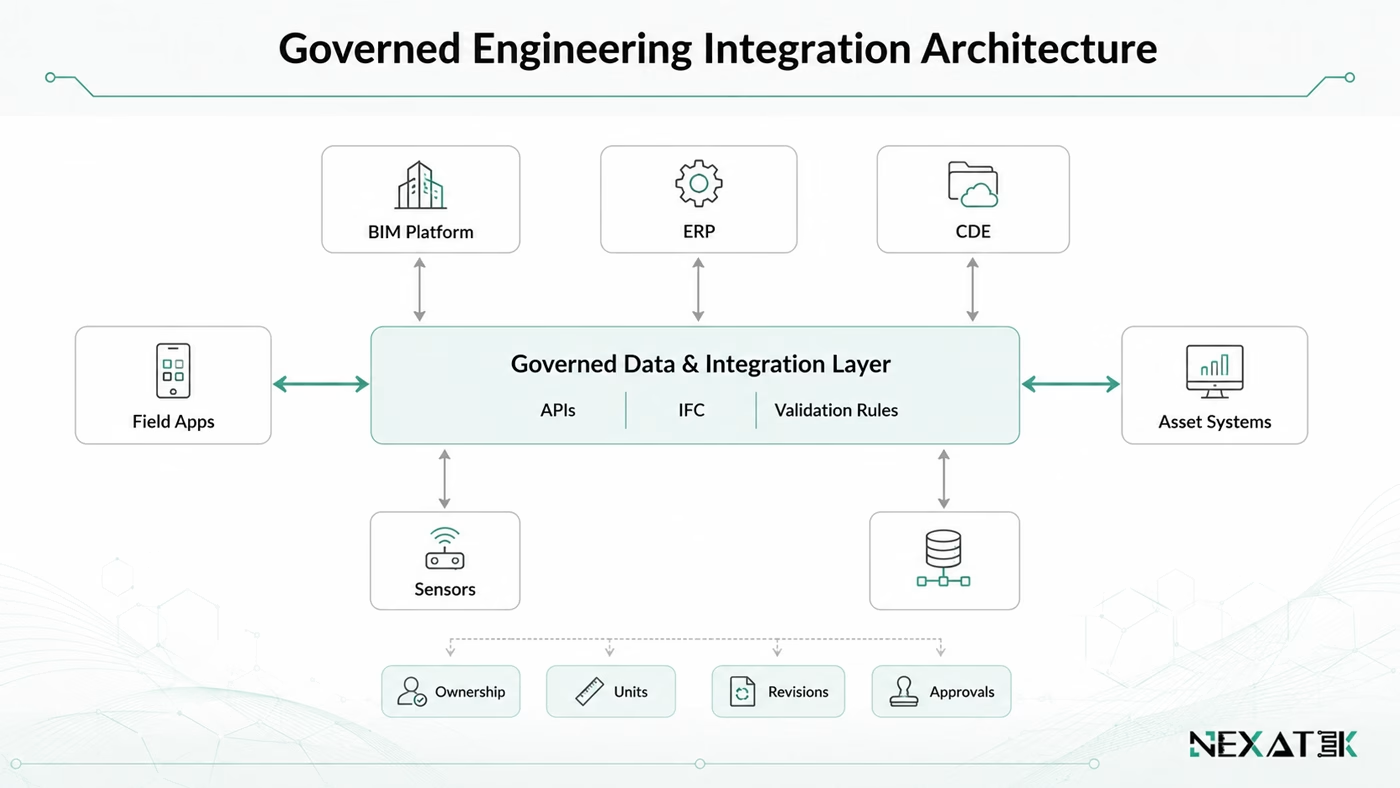
Data ownership should be agreed before integration begins. Every shared record needs a system of record, an accountable owner, validation rules, and a clear process for correcting errors. Without these decisions, automation moves inconsistent data faster.
4. Scalability & Flexibility
Scalability in civil engineering is not only a question of user volume. The system may need to support more projects, disciplines, regions, asset classes, record types, and contractual structures without breaking historical data. A stable core data model with configurable workflows usually scales better than a rigid application filled with one-off exceptions.
Flexibility also needs limits. Uncontrolled configuration recreates the spreadsheet problem inside a new platform. The better approach separates stable elements, such as project identifiers and approval history, from variable elements, such as a new inspection type or regional reporting format. This allows controlled evolution without forcing every active project through the same change at once.
5. Seamless Integration
Integration creates much of the practical value in custom enterprise software. Analysis tools, BIM platforms, ERP, document repositories, field applications, sensors, and dashboards should exchange data without stripping away ownership, units, revision status, or approval context.
Open standards reduce dependency on one vendor. The Industry Foundation Classes standard, published as ISO 16739-1:2024, provides a vendor-neutral structure for exchanging built asset information. A custom integration layer can use open formats and APIs while keeping specialist tools in place. This is often safer than replacing an entire working toolchain.
NEXATEK supports this through custom database development and workflow automation, where structured records and process rules provide the foundation for reliable exchange.
6. Competitive Advantage
Custom software creates strategic advantage when it captures knowledge that competitors cannot buy as a standard feature. Examples include a manufacturer’s proprietary design method, a contractor’s production planning logic, a consultant’s validated calculation workflow, or an owner’s asset prioritisation model.
The advantage is not the code itself. It is the engineering method, structured data, adoption, and ability to improve from operational evidence. A bespoke tool that no one uses has no strategic value. A narrow system that shortens a critical cycle across every project may have considerable value.
7. Full Ownership & Support
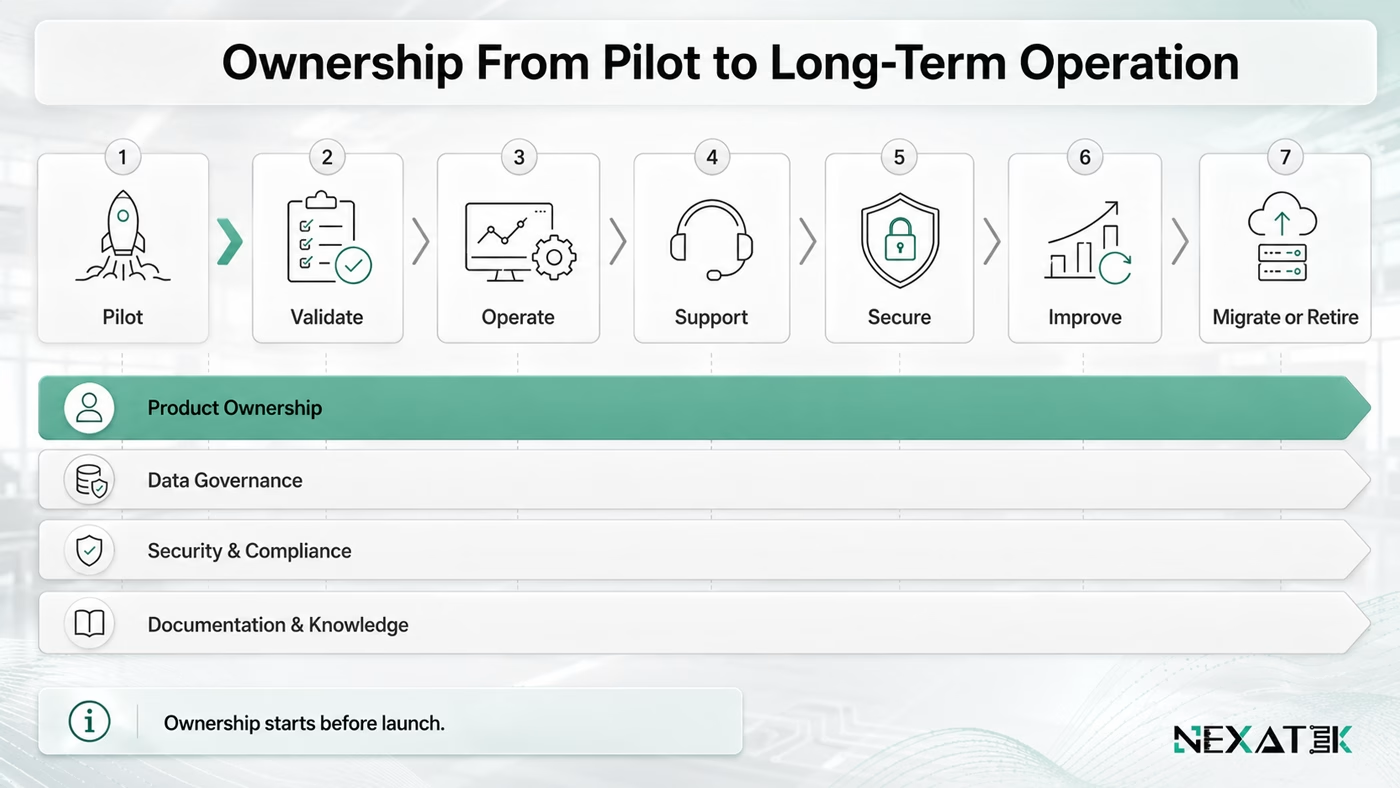
Ownership gives an organisation control over priorities, data structures, integrations, and release timing. It also creates obligations for the roadmap, security, documentation, support, infrastructure, supplier continuity, and change approval. These responsibilities should be planned before the first release.
Source-code ownership is only one part of control. Practical ownership also includes access to documentation, deployment processes, data models, test assets, licences, credentials, and migration paths. A support model should distinguish incidents, maintenance, regulatory changes, and new features so operational reliability is not displaced by an endless enhancement backlog.
Start with one measurable pilot, but design its data model and interfaces so the result can scale. A pilot should test adoption, information quality, and operating responsibility, not only whether the software functions.
💡 Key Takeaways
Essential insights on evaluating, implementing, and deriving value from custom software development in civil engineering.
- Custom software is justified by a repeated engineering or data problem, not by a preference for bespoke technology.
- The real comparison is total cost of ownership across licences, manual work, integration debt, support, security, and change.
- Standard platforms remain the better choice for common, stable functions that do not create persistent workflow gaps.
- Integration should preserve ownership, units, revisions, approvals, and lifecycle context, not merely move files between systems.
- A targeted pilot with measurable baseline metrics is safer than an immediate enterprise-wide build.
- Ownership must include product governance, documentation, support, security, and a credible migration path.
Conclusion
Custom software development creates value when generic tools leave important engineering workflows disconnected. The strongest cases involve repeated reconciliation, specialist logic, unreliable handover information, or data relationships that standard platforms cannot govern without permanent workarounds.
The decision requires restraint. Custom development is not automatically cheaper, more secure, or more flexible. Those outcomes depend on workflow ownership, disciplined scope, reliable data, sound architecture, adoption, and long-term operating capacity. Often, the best answer keeps proven commercial tools and adds a focused custom layer for integration, automation, or proprietary methods.
Start with operational evidence. Map where information changes hands, quantify retyping and reconciliation, and define the smallest release that can prove a better result. That turns custom software from an IT ambition into a defensible engineering investment.
Build Around the Workflow That Creates the Value
NEXATEK combines civil engineering, software, UX, data architecture, and project delivery expertise to define a focused solution, test it against measurable outcomes, and plan for responsible long-term ownership.
Frequently Asked Questions
Is custom software development worth it for construction and civil engineering firms?
Despite using specialized tools, teams often lose over 15 hours weekly copy-pasting data between BIM models and ERP spreadsheets. Custom software is worth it when standard SaaS forces inefficient workarounds, as tailored automation can slash manual reporting time by 70% and compress approval cycles from days to hours. It pays off whenever your core competitive advantage relies on unique engineering workflows.
What is cheaper long term: custom software or off-the-shelf construction software?
Off-the-shelf software is cheaper upfront, but skyrocketing per-seat licensing fees and hidden labor costs for manual data reconciliation make it expensive over time. For mid-to-large firms, custom software requires higher initial capital but eliminates recurring software license inflation and cuts reconciliation errors by up to 85%, offering a lower total cost of ownership over a 3-to-5-year horizon.
How does custom software integrate with BIM, ERP, and legacy engineering systems?
Field teams often make decisions using outdated drawings because BIM data, cost codes, and legacy databases remain trapped in isolated silos. Custom software connects these systems via open APIs and middleware using standardized formats like IFC, instantly syncing design updates with ERP budgets. This eliminates double-entry entirely and cuts field-to-office data delay from days to under 5 minutes.
When should an infrastructure company avoid building custom software?
Firms should avoid custom software when standard off-the-shelf tools like Procore or ACC already meet over 80% of their routine operational needs, such as basic RFIs or safety logs. Building custom tools for standard processes adds 20–30% in annual maintenance overhead without adding competitive value. If commercial software solves the bottleneck natively, building custom is a waste of capital.


Interesting perspective on custom software development for civil engineering. How do you think companies should decide when to keep improving off-the-shelf tools and when a custom solution becomes the better long-term investment?
That’s the real value of custom software.
Exactly, Jack. The real advantage is being able to build around the actual workflow instead of forcing the team to adapt to a generic tool. Have you seen cases where off-the-shelf software became a limitation for the team?