





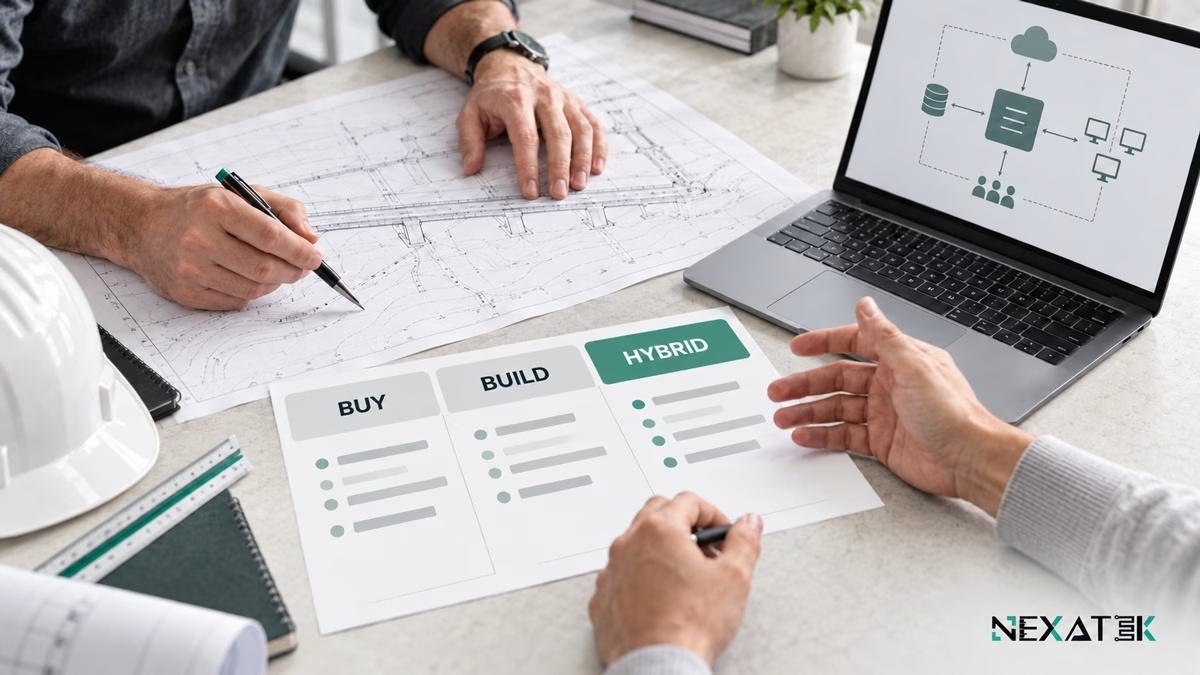

A build-vs-buy engineering software decision is really a choice about where the organisation will carry complexity. Buying moves much of the product burden to a vendor, while accepting product boundaries and commercial dependency. Building creates control over technical logic and data relationships, while making the organisation responsible for a product across its lifecycle. The useful question is therefore narrower: which capabilities are standard enough to buy, and which must reflect engineering work that the organisation needs to govern?
What Build vs Buy Means for Engineering Software?
To buy software is to adopt a commercial product and configure it within the limits of its data model, workflow engine, interfaces, and release roadmap. To build is to develop a system, module, or integration around requirements the organisation defines and governs. The decision can apply to one calculation tool or workflow rather than an entire enterprise platform.
A sound assessment begins with user needs, organisational capability, the available market, and full lifecycle cost. The UK Government Digital Service’s purchasing strategy guidance uses the same logic and explicitly allows a combined approach. For an engineering company, that often means buying stable commodity capabilities while building the technical logic or connections that create operational value.
| Decision factor | Buy or configure | Build custom software |
|---|---|---|
| Best fit | A common, mature need that products already serve | A repeatable, distinctive engineering need |
| Initial availability | Usually faster after selection and configuration | Usually slower because discovery, design, and testing are required |
| Workflow change | Limited by configuration and the vendor roadmap | Controlled through the product roadmap and delivery capacity |
| Integration | Depends on supported APIs, connectors, and licence terms | Can be designed around existing systems, but must be maintained |
| Ownership | Governed by the licence, contract, export rights, and service terms | Governed by the development contract, intellectual property terms, and internal controls |
| Ongoing responsibility | The vendor maintains the core product; the buyer manages configuration, data, and adoption | The organisation remains responsible for hosting, security, support, maintenance, and evolution |
NEXATEK
Draw the software boundary around the workflow
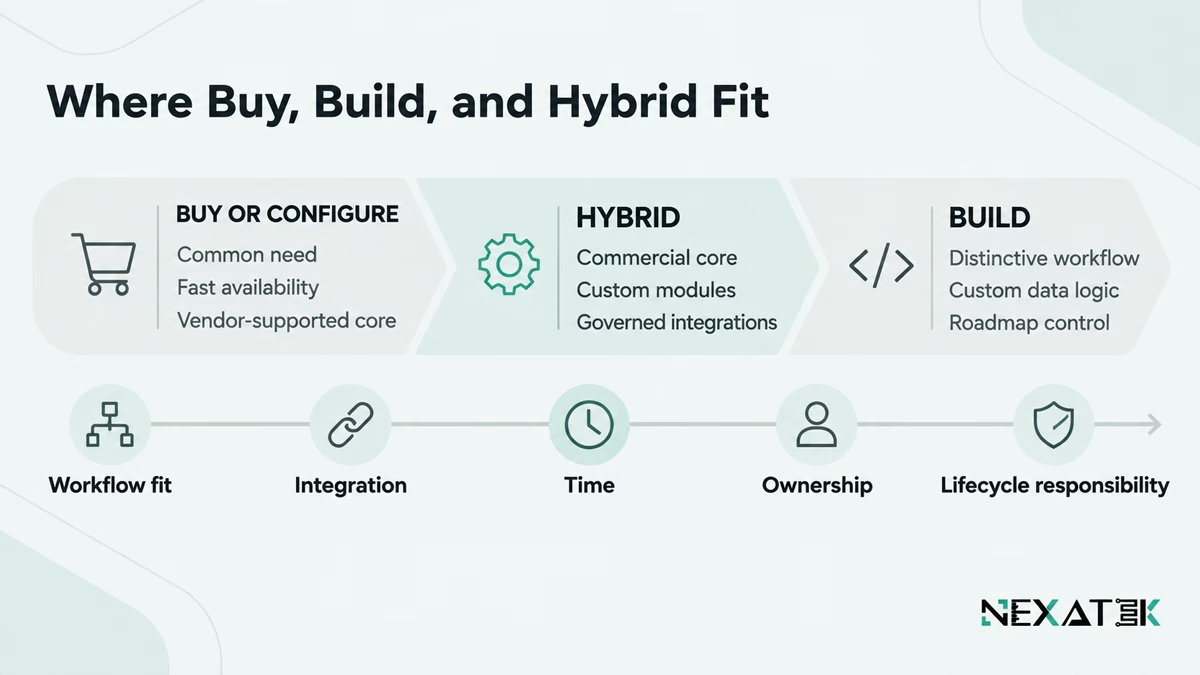
Do not ask whether the company should build or buy everything. Separate standard functions from the engineering logic, data relationships, and approval controls that make the workflow distinctive. The most defensible answer is often a deliberate boundary between commercial software, custom components, and governed integrations.
When Off-the-Shelf Software Makes Sense
Off-the-shelf software is usually the stronger choice when the process is common, the market is mature, and configuration can cover the organisation’s real requirements without permanent workarounds. Accounting, identity management, general collaboration, and standard document storage often fall into this category. Buying can also provide access to established support, security updates, and a user community without requiring an internal product team.
The case is strongest when:
- a product meets the mandatory workflow and data requirements with limited configuration;
- supported interfaces cover the necessary engineering and business systems;
- rapid implementation matters more than owning the roadmap;
- the vendor’s service, upgrade, export, and exit terms are acceptable;
- internal teams can administer the product and manage adoption.
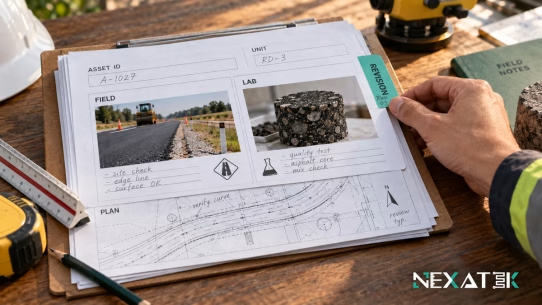
A demonstration is not enough. Test one real drawing revision, approval exception, calculation transfer, or field record from start to finish. A product that succeeds only in a standard demonstration may still fail at the handover where engineering context matters.
When Custom Software Becomes More Appropriate
Custom software becomes a stronger option when the unmet requirement is structural rather than cosmetic. Typical signals include proprietary calculation logic, product-specific design methods, unusual approval dependencies, project data that must remain traceable for many years, or repeated reconciliation between systems that commercial products cannot remove safely.
It can also be appropriate when a standard platform would require so much modification that upgrades become fragile. NEXATEK’s work on custom software for specialised engineering workflows focuses on calculation tools, workflow automation, integration, structured project data, and decision support. Those benefits still depend on clear ownership, adequate funding, technical governance, and a maintainable support model.
Start with a limited module or MVP that proves one measurable outcome. A controlled pilot can test whether the proposed data model and workflow actually reduce duplicate entry, shorten review time, or improve traceability before the organisation commits to a larger system.
Key Build vs Buy Evaluation Criteria
The decision should be scored against evidence, not preference. Weight each criterion according to the risk and value of the workflow under review.
Workflow Fit
Map the current workflow, including exceptions, loops, approvals, handovers, and the records created at each step. Then test whether a product represents that logic directly or merely hides gaps behind manual work. A minor inconvenience is a configuration issue. A repeated gap that changes technical meaning, creates duplicate records, or weakens accountability is a stronger case for custom development.
Integration and Data
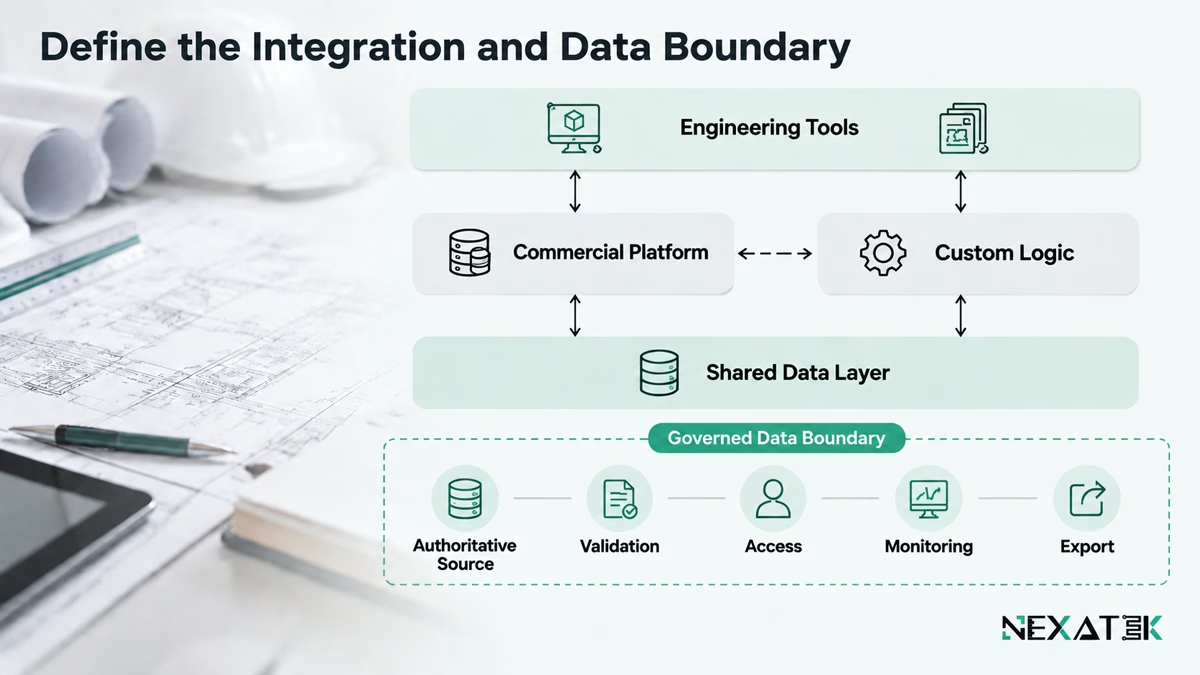
List the systems that create and consume each important record. Define the authoritative source, identifiers, transfer direction, timing, validation, access rules, and failure response before comparing solutions. Good integration planning also protects future adaptability rather than solving only today’s connection. For purchased software, verify API coverage and export rights. For custom software, budget for monitoring, reconciliation, interface changes, and data governance.
Cost and Time
Buying normally shortens the path to an initial deployment, but selection, configuration, migration, integration, training, and process change still take time. Building adds discovery, design, development, testing, deployment, and support preparation. Compare time to reliable use, not just time to contract signature or first code. Opportunity cost matters too: internal experts assigned to software cannot spend the same hours on engineering delivery.
Scalability and Ownership
Scalability includes more than user volume. Ask whether the solution can support new disciplines, project types, regions, data volumes, approval rules, and interfaces without repeated redesign. Define ownership separately for data, code, intellectual property, configurations, documentation, and roadmap decisions. Vendor dependency is not automatically a problem; unclear dependency is, especially when the organisation cannot export its records, replace an integration, or continue operating after a contract ends.
Test the decision against one real engineering workflow
Use a representative calculation, review, field record, or data handover to expose the requirements that a feature checklist misses.
Compare Total Cost of Ownership, Not Initial Price
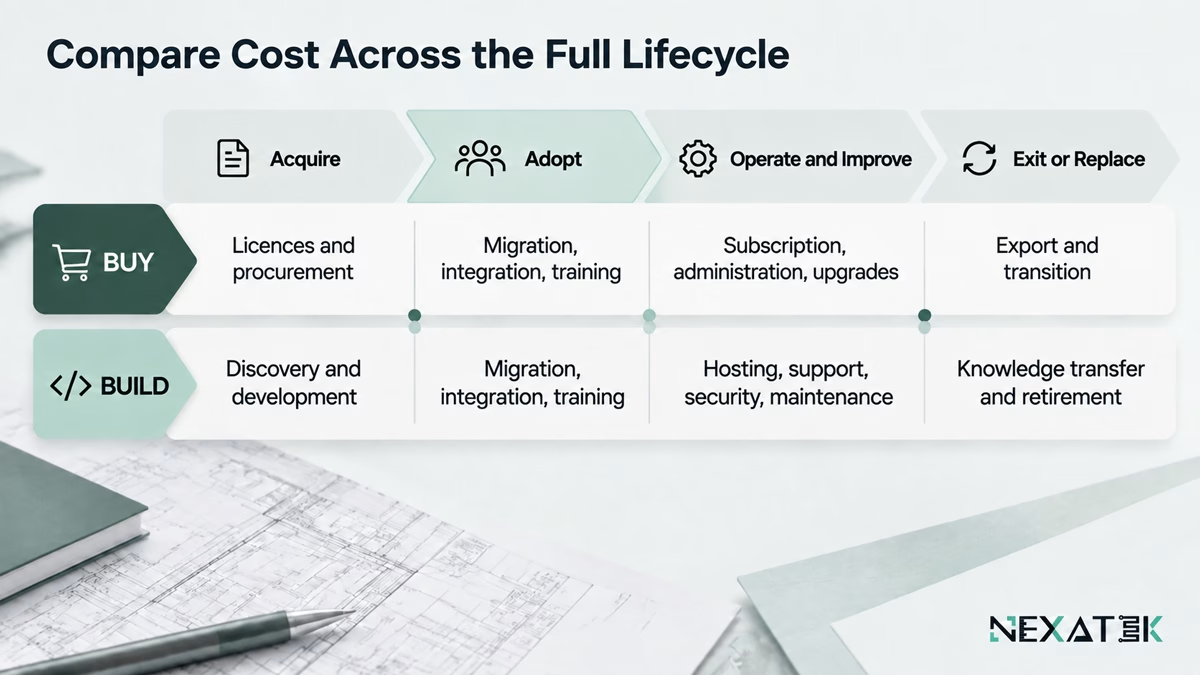
Initial licence fees and development estimates describe only the entry point. The current ISO/IEC/IEEE 12207:2026 software lifecycle framework covers acquisition, supply, development, operation, maintenance, support, and retirement. A useful software total cost of ownership model should therefore include four cost layers:
- Acquire: procurement and licences for a purchased product, or discovery, design, and development for a custom system.
- Adopt: configuration, migration, integration, testing, training, process change, and temporary parallel working.
- Operate and improve: subscriptions, hosting, monitoring, security, administration, support, upgrades, defect correction, and planned enhancements.
- Exit or replace: data export, transition support, contract termination, technical debt removal, knowledge transfer, archiving, and retirement.
Use the same planning horizon, usage assumptions, service levels, and risk treatment across every option. The GAO Cost Estimating and Assessment Guide emphasises a defined technical baseline, documented assumptions, sensitivity and risk analysis, and updates using actual costs. That discipline prevents a mature commercial quote from being compared with an incomplete custom estimate, or vice versa.
A Practical Build vs Buy Decision Framework
- Set the decision boundary. Name the workflow, users, records, decisions, and outcomes in scope. Avoid treating the whole software estate as one choice.
- Separate mandatory needs from preferences. Include functional requirements, data rules, security, performance, support, traceability, and exit conditions.
- Assess the market with real scenarios. Test shortlisted products against representative engineering cases, including an exception path and an integration failure.
- Model three credible options. Compare buy and configure, build, and a hybrid architecture using the same criteria and TCO horizon.
- Check delivery capability. Confirm who will own the product, data, architecture, testing, support, vendor management, and future change.
- Run a measurable pilot. Choose one bounded workflow, record the baseline, and judge the result through adoption, cycle time, data quality, rework, and support demand.
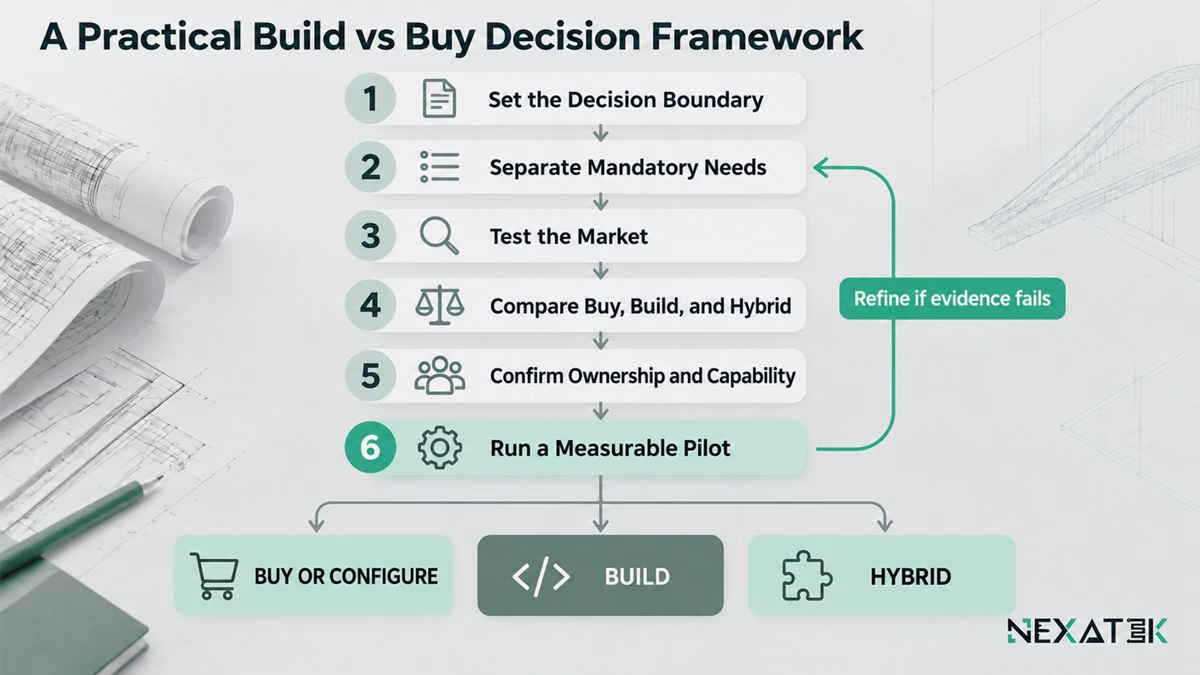
Treat this framework as part of the wider engineering software strategy. A buy decision can still require custom integration. A build decision can still rely on commercial identity, database, cloud, or reporting components. The aim is a maintainable operating model, not ideological purity.
Key Takeaways
- Buy when the need is common, product fit is strong, and configuration preserves supportability.
- Build when distinctive engineering logic or data relationships create material value or risk.
- Use a hybrid approach when commercial core functions and custom engineering capabilities have different boundaries.
- Compare lifecycle cost, delivery capacity, ownership, and exit conditions on the same basis.
- Prove the decision with one representative workflow and a measurable pilot.
Conclusion
A defensible build-vs-buy engineering software decision can be explained in one page: which workflow is in scope, why it matters, what the market can cover, who owns the data and future change, and what the lifecycle burden looks like. If those points remain vague, a vendor comparison or development estimate will create false precision.
Engineering companies rarely need one answer for every capability. They need a clear boundary between standard functions, differentiated technical logic, and the integrations that keep both useful. That boundary should be tested against real work before money, data, and operating responsibility are committed.
Turn a build vs buy debate into a testable software decision
NEXATEK can help map the engineering workflow, define the system boundary, compare viable delivery models, and shape a controlled pilot.
Frequently Asked Questions
Is it better to build or buy software?
Buying is usually better for common, well-served needs that require speed and vendor support. Building is stronger when a repeatable, distinctive workflow or data model creates enough value to justify long-term ownership.
When should a company build custom software?
A company should consider custom software when commercial products cannot represent critical workflow logic, integrations, or governance without fragile workarounds, and when it can fund ongoing support and change.
What factors influence a build-vs-buy decision?
The main factors are workflow fit, integration and data control, implementation time, total cost of ownership, scalability, security, delivery capability, vendor dependency, and exit options.
Is custom software more expensive long term?
Not always. Custom software carries development and maintenance costs, while purchased software carries licences, configuration, integration, vendor change, and exit costs, so both options must be compared over the same lifecycle and usage assumptions.



This pretty much nails it! Build what matters, buy the rest!
Exactly, Olivia! That’s a great way to put it. Custom software development makes the most sense when a process is unique or gives the business a real advantage. For more standard needs, buying an existing solution can often be the smarter choice. What