







An engineering company can have ten sensible digital initiatives and still have no workable plan for delivering them. A field application may depend on project identifiers that are not governed. Automated reporting may depend on data still assembled by hand. A client portal may be scheduled before document-control rules are stable. A digital roadmap for an engineering company turns those dependencies into an execution sequence, so leaders can decide what comes first, what must wait, who owns each initiative, and what evidence will justify the next phase.
What Is a Digital Transformation Roadmap?
A digital transformation roadmap is a sequenced management plan that converts approved digital objectives into initiatives, dependencies, phases, ownership, resources, milestones, and measurable outcomes. It answers the practical question that follows strategy: what should the organisation do first, second, and third?
For an engineering company, the roadmap should reflect calculations, drawings, project data, field records, reviews, approvals, reporting, and handovers. The Institution of Civil Engineers argues that digital transformation needs a clear purpose and that technology should be treated as an enabler rather than the end goal. The roadmap applies that principle to execution.
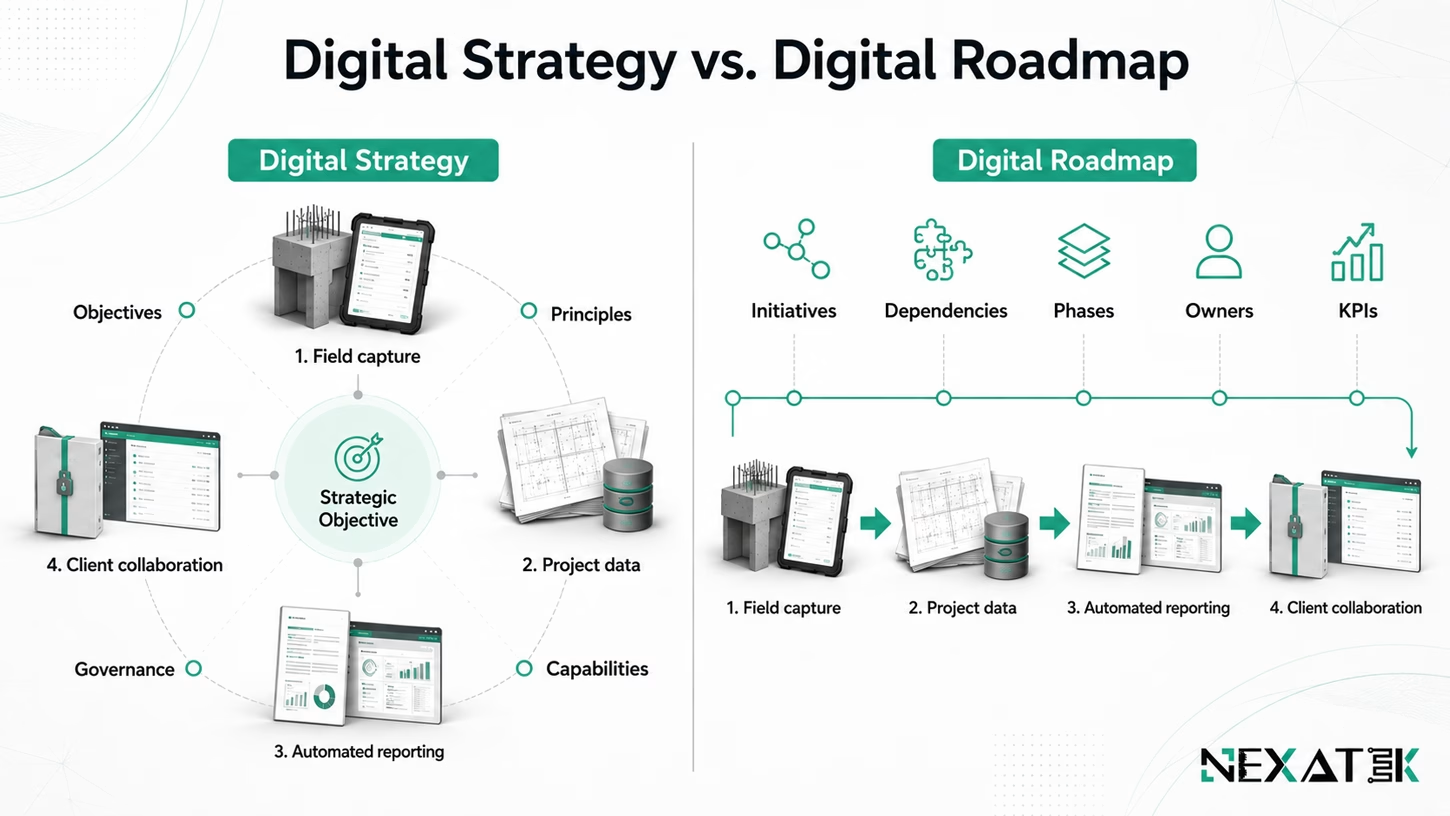
Digital Strategy vs. Digital Roadmap
Digital strategy establishes direction. The roadmap converts that direction into an implementation sequence without redefining the strategy itself.
| Question | Digital strategy | Digital roadmap |
|---|---|---|
| What does it decide? | What must change and why | What will be done, in what order, and by whom |
| Main focus | Objectives, principles, capabilities, governance | Initiatives, dependencies, phases, resources, milestones, KPIs |
| Typical horizon | Long-term direction | Rolling execution view reviewed as conditions change |
| Main output | Strategic choices and decision rules | A sequenced portfolio of actionable initiatives |
If the strategy says project information should become more traceable, the roadmap should identify the initiatives needed to reach that state, such as consistent project identifiers, structured document control, field data capture, or an integration layer, then sequence them according to dependency and readiness.
How to Build a Digital Roadmap Step by Step?
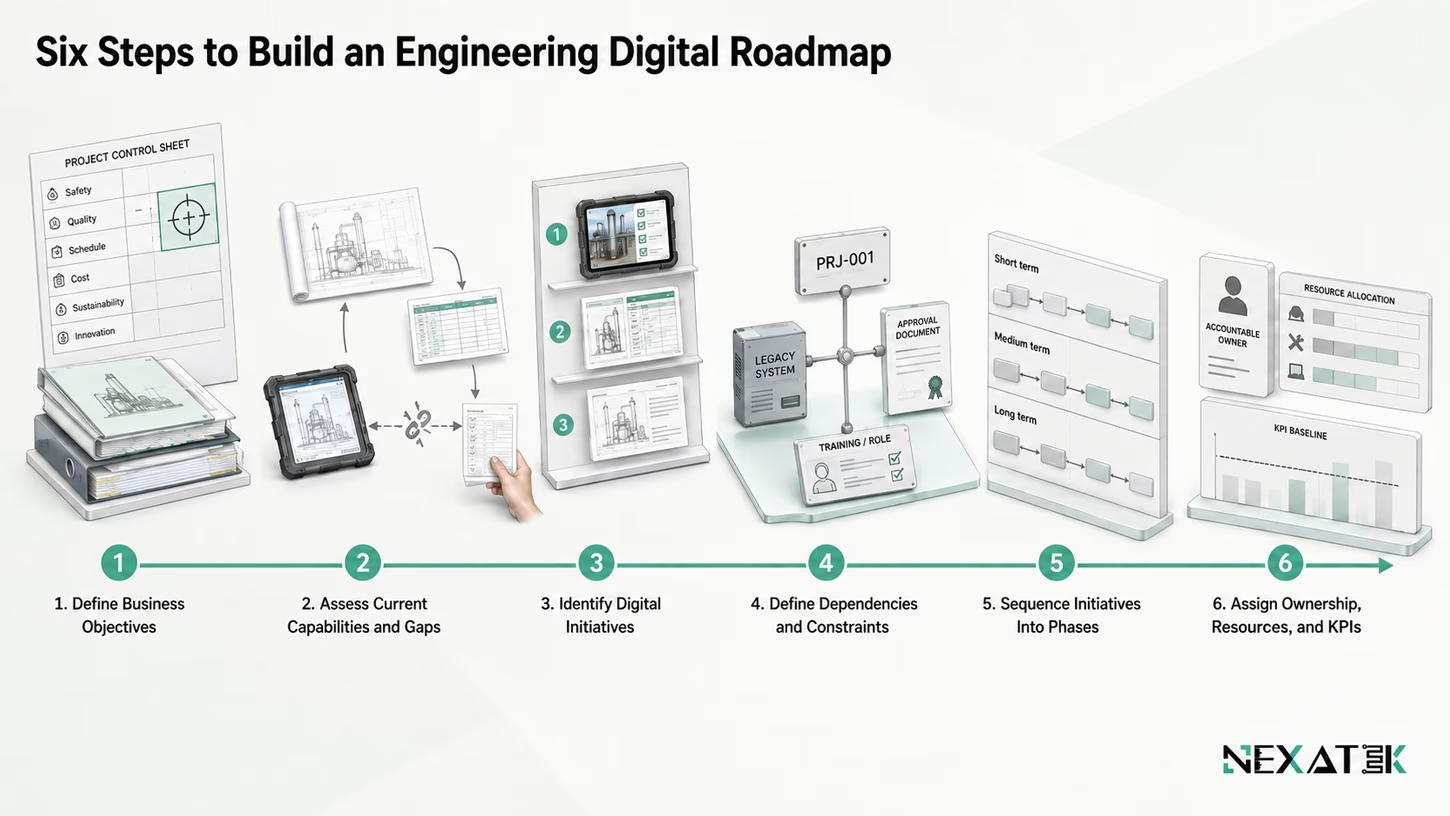
A practical engineering digital roadmap can be built through six steps:
- Define the business and engineering outcomes the roadmap must support.
- Assess current capabilities and gaps.
- Build an inventory of digital initiatives linked to those gaps.
- Identify dependencies and constraints that control initiative order.
- Sequence initiatives into short-, medium-, and long-term phases.
- Assign ownership, resources, KPIs, and governance before execution starts.
1. Define Business Objectives
Use objectives already approved at strategy level and make them operational enough to guide roadmap choices. Examples include reducing repeated site-to-office data entry, shortening technical approval cycles, improving revision traceability, standardising calculation workflows, or reducing manual consolidation in project reporting.
Each objective needs a baseline or measurable condition. If monthly reporting is the problem, record the current handoffs, consolidation effort, or correction cycles. The roadmap can then favour initiatives that change that evidence rather than initiatives that only look modern.
2. Assess Current Capabilities and Gaps
Assess the current state through four lenses: workflow readiness, information readiness, system readiness, and delivery readiness. Map representative processes, duplicated entry, authoritative applications, workarounds, and the people who must own the changed process after launch.
Engineering constraints matter. A cloud field tool may be unsuitable where connectivity is unreliable. Analytics may be premature if project codes differ across systems. NEXATEK’s civil engineering digitalization services cover data management, integration, engineering tools, workflow optimisation, and performance monitoring around these operating needs.
3. Identify Digital Initiatives
Translate each capability gap into candidate initiatives. Describe the operating change, not only the product. “Structured mobile inspection capture with office review” is more useful than “buy inspection software” because it identifies the workflow being changed.
An engineering initiative inventory might include:
- controlled field inspection and site-record capture,
- a governed project-data foundation with consistent identifiers,
- automated technical report generation,
- a web-based calculation tool for repeated engineering checks,
- document and revision-control improvement,
- integration between specialist tools and enterprise records,
- a client portal for controlled deliverables and requests.
Before prioritisation, give each initiative a clear problem, user group, expected outcome, main dependency, and likely owner.
Turn workflow gaps into roadmap-ready initiatives
A focused workflow review can separate genuine digital opportunities from problems that first need clearer data, ownership, or process rules.
4. Define Dependencies and Constraints
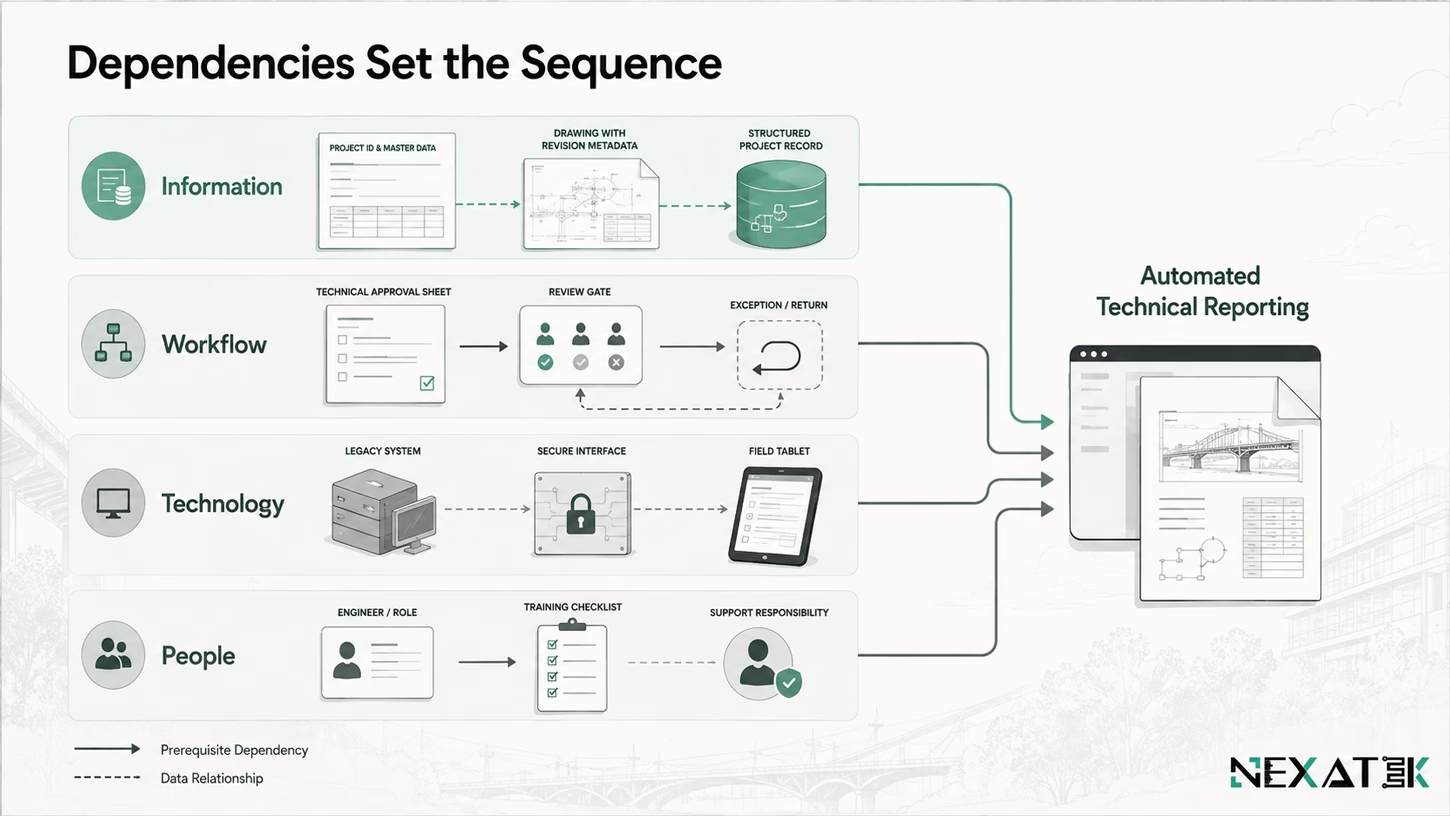
Dependencies determine which initiatives can start safely. Four types appear repeatedly:
- Information: master project data, naming rules, revision logic, and authoritative-record ownership.
- Workflow: approval roles, exception paths, handoffs, and decision gates.
- Technology: legacy access, interfaces, security, field connectivity, hosting, and specialist software constraints.
- People: training, support capacity, process ownership, and adoption time.
The ISO 19650-1 framework addresses exchanging, recording, versioning, and organising information across the built-asset lifecycle. A roadmap need not become an ISO implementation plan, but it should recognise when information control is a prerequisite for integration or automation. A 2024 study of integrated digital delivery barriers also identified skill gaps, interoperability, investment requirements, and organisational budgets among significant adoption constraints.
NEXATEK Let dependencies decide the order
If automated reporting depends on inconsistent project data, stabilising identifiers and ownership may create more roadmap value than launching the reporting interface first. Sequence the dependency, then the feature that consumes it.
5 . Sequence Initiatives Into Phases
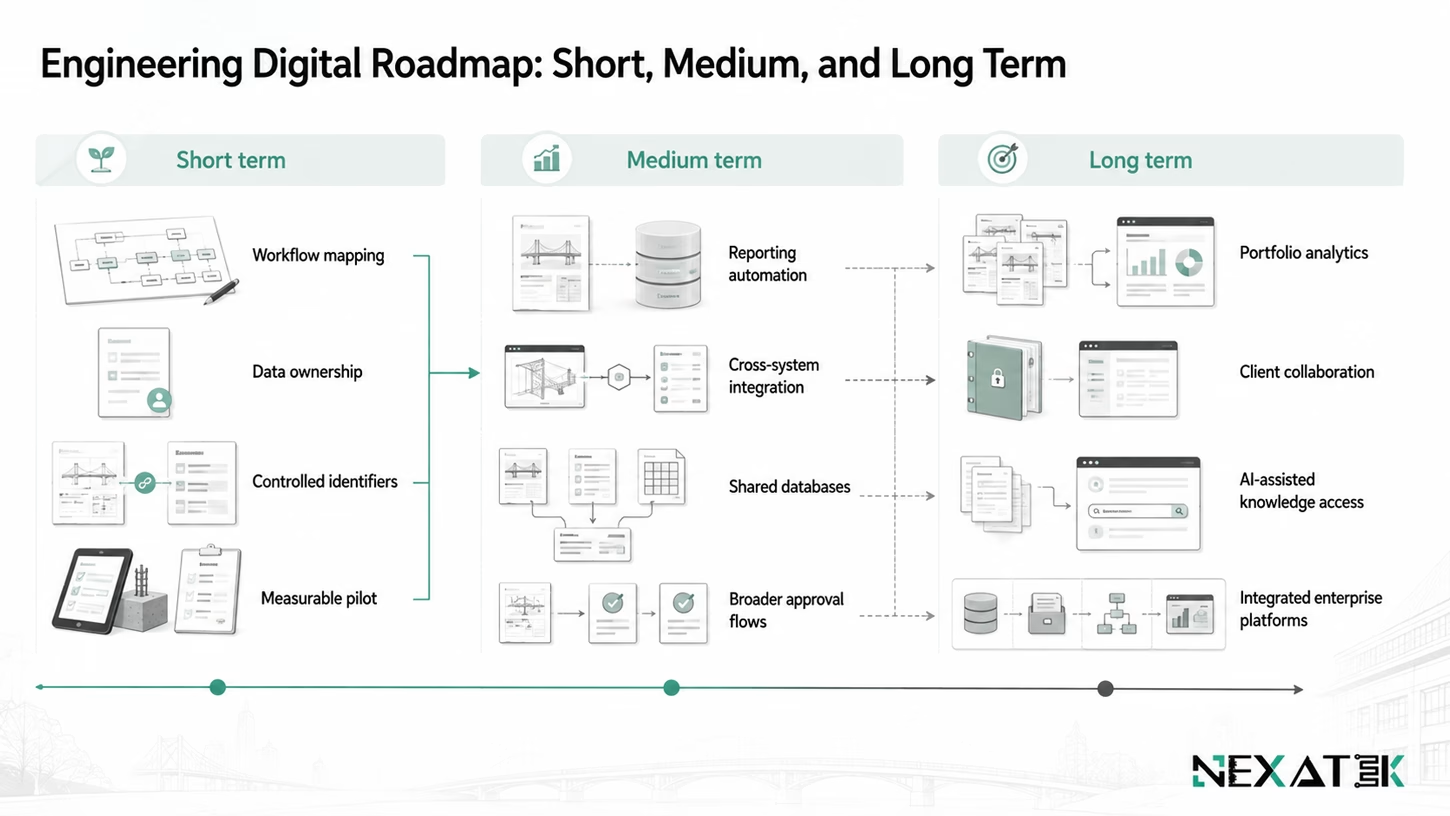
Convert the dependency map into short-, medium-, and long-term phases. These labels should express relative sequence, not false precision, and the roadmap should be reviewed as projects, systems, budgets, and capacity change.
- Short term: stabilise foundations and prove focused use cases through workflow mapping, data ownership, controlled identifiers, or a measurable pilot.
- Medium term: connect proven workflows through reporting automation, cross-system integration, shared databases, or broader approval flows.
- Long term: scale capabilities that depend on earlier foundations, such as portfolio analytics, wider client collaboration, AI-assisted knowledge access, or integrated enterprise platforms.
A pilot should test adoption, information quality, operating ownership, and process outcomes, not only whether the software functions.
6. Assign Ownership, Resources, and KPIs
Every roadmap initiative needs one accountable owner. Delivery may involve IT, software, engineering, project management, document control, UX, or operations, but shared participation should not blur responsibility for the outcome and the changed process.
Show resource requirements on the roadmap as well. An initiative that needs subject-matter experts for process definition can conflict with a tender or mobilisation even when the technology team is available.
KPIs should follow the original objective. A field-record initiative might track time from inspection to approved record, duplicate entry, or record completeness. Automated reporting might track preparation effort or correction cycles. Usage can be monitored, but adoption alone does not prove the workflow improved.
For cross-department initiatives, NEXATEK’s enterprise digital solutions focus on engineering data foundations, technical documentation, workflow coordination, approvals, and system interfaces.
What an Engineering Digital Roadmap Should Include?
The roadmap should support portfolio decisions without becoming a technical specification. Each initiative should show enough control information to answer these questions:
| Roadmap element | Decision it should answer |
|---|---|
| Objective and baseline | What operating condition are we trying to change? |
| Initiative definition | What workflow, information, or capability will change? |
| Dependencies and constraints | What must be true before this can proceed? |
| Phase and milestone | When should it start, and what proves the phase is complete? |
| Accountable owner and resources | Who owns the outcome, and what capacity is required? |
| KPI | Which measure will show whether the initiative created value? |
| Governance review | When will leaders scale, revise, pause, or stop the initiative? |
This keeps portfolio planning separate from detailed solution design. A roadmap can state that project data needs a governed common structure before reporting automation expands. It does not need to specify database tables, APIs, or application architecture.
Common Roadmap Mistakes
Roadmaps often fail before implementation because their planning logic is incomplete:
- Listing products instead of changes. Vendor names do not explain the workflow, data, or outcome being improved.
- Sequencing by visibility instead of dependency. Dashboards or AI tools may rely on foundations that are not ready.
- Using dates without resource reality. Engineering experts may be unavailable for process definition, testing, or adoption.
- Ignoring legacy and field constraints. Integration access, offline operation, document history, and security can change the correct order.
- Leaving ownership at department level. “IT and Engineering” is participation, not accountability.
- Measuring launch instead of outcome. Go-live and user counts should not replace workflow, data-quality, or engineering-result measures.
- Treating the roadmap as fixed. Governance needs review points that allow resequencing when assumptions change.
Key Takeaways
- A digital roadmap translates approved strategy into a sequenced execution portfolio.
- Build initiatives from real engineering capability gaps, not a technology catalogue.
- Map information, workflow, technology, and people dependencies before assigning phases.
- Use short-, medium-, and long-term phases to express sequence while keeping the roadmap reviewable.
- Give every initiative an accountable owner, realistic resource requirement, baseline, and outcome KPI.
Conclusion
A digital roadmap is useful when it makes trade-offs visible. It should show why one initiative must precede another, what capability gap each item addresses, who owns the changed process, what resource it consumes, and which evidence will support the next decision.
For engineering companies, that sequencing must respect workflows, project information, specialist systems, field constraints, and technical responsibility. NEXATEK supports the transition from objectives to execution through civil engineering digitalization built around workflow, data, software, and integration needs.
Build a roadmap your engineering teams can execute
NEXATEK can help translate digital objectives into a sequenced roadmap that accounts for engineering workflows, information dependencies, legacy systems, ownership, resources, and measurable outcomes.
Frequently Asked Questions
What is a digital roadmap?
A digital roadmap is a sequenced plan that converts digital objectives into initiatives, dependencies, phases, owners, resources, milestones, and measurable outcomes.
What should an engineering digital roadmap include?
It should include objectives and baselines, capability gaps, initiative definitions, dependencies, phases, accountable owners, resources, KPIs, and governance review points.
How is a digital roadmap different from a digital strategy?
Digital strategy defines the direction, objectives, and principles for change. The roadmap translates those choices into an ordered implementation portfolio with ownership and measurement.
How often should a digital roadmap be updated?
Review it at defined governance points and whenever a major dependency, project condition, budget, system constraint, or strategic priority changes enough to affect sequencing.




A digital transformation roadmap becomes much more useful when it focuses on execution, not just technology. Sequencing initiatives around real dependencies, clear ownership, and measurable outcomes can make the difference between a digital plan and a transformation that actually works.
Good point about keeping the roadmap flexible as priorities change!
Thanks, Rebecca! Exactly. A roadmap should give direction without becoming too rigid. Priorities, resources, and business needs can change, so being able to adjust along the way is really important.