



Suppose engineers repeatedly retype test-certificate results into a review register. AI might reduce transcription, while unreadable scans, missing units and correction work could erase the gain. Before selecting a model, the company needs to establish whether the complete task can improve.
AI use case identification in engineering applies that test across candidate workflows. For innovation managers and engineering directors, the useful output is a shortlist with a defined problem, usable evidence and a credible way to measure improvement. It should also identify problems that simpler automation can solve.
Start With Engineering Problems, Not AI Technology
Observe a recurring task with the people doing it. Examine recent examples, including awkward cases, and record where time, information or judgement is lost. Ask what a better output would enable someone to do differently.
Write each candidate in operational terms: a document controller extracts specified fields from certificates, an engineer checks them against the source, and accepted values enter a register. Identify the owner, current effort, errors and simpler alternatives. A mandatory field or deterministic calculation may need ordinary software rather than AI.
Google’s problem-framing guidance separates deciding whether machine learning suits a problem from defining the machine-learning solution. Keep that distinction during discovery so the technology remains a choice to justify.
Where to Look for Potential AI Use Cases?
Look where useful information already exists but interpreting it consumes repeated effort:
- Technical documents: locating approved precedents, extracting certificate fields or drafting source-linked summaries for review.
- Production and project records: identifying patterns that could flag batches or activities for additional investigation.
- Inspection images: sorting photographs into review categories, with inspectors confirming condition and significance.
These are candidate engineering AI applications, not established benefits. For each, ask whether an authorised user can act on the output. Predicting a problem after the intervention window has closed provides little operational value.
NEXATEK’s AI solutions for engineering workflows cover document processing, engineering assistants, predictive analytics and integration. Selection should narrow those capabilities to a task the company can evaluate.
Evaluate Each Candidate Use Case
An AI opportunity assessment should retain the evidence behind each judgement. Record assumptions and unresolved questions alongside the candidate, so confidence does not silently become a fact.
Business Value
Establish how often the task occurs, who spends time on it and what consequence an error creates. Estimate the recoverable benefit after preparation, human checking, correction and ongoing support. Recovered capacity becomes a cash saving only where spending actually changes.
Include the cost of data preparation, interfaces, licences and review capacity in the business case. Avoid counting the same recovered hours again as separate productivity and cost benefits.
Data Availability
Inspect samples before judging the archive by its size. Check access rights, current revisions, units, identifiers, completeness and whether the material represents the intended users and operating conditions.
Data needs depend on the task. Predictive models need historical inputs linked to relevant outcomes. Document retrieval needs authoritative, permission-controlled source material and representative questions. Image analysis needs representative photographs and expert judgements for evaluation. An existing model may work without training on company data, but it still needs evaluation on representative company examples.
Assign an owner to gaps and estimate the work required to close them. Treat unresolved access or missing critical evidence as a prerequisite rather than a small scoring penalty.
Technical Feasibility
Check whether the proposed output can be tested within the workflow’s constraints. Include system access, response time, connectivity and the effort required to maintain the solution. Compare AI with a credible manual or rule-based baseline.
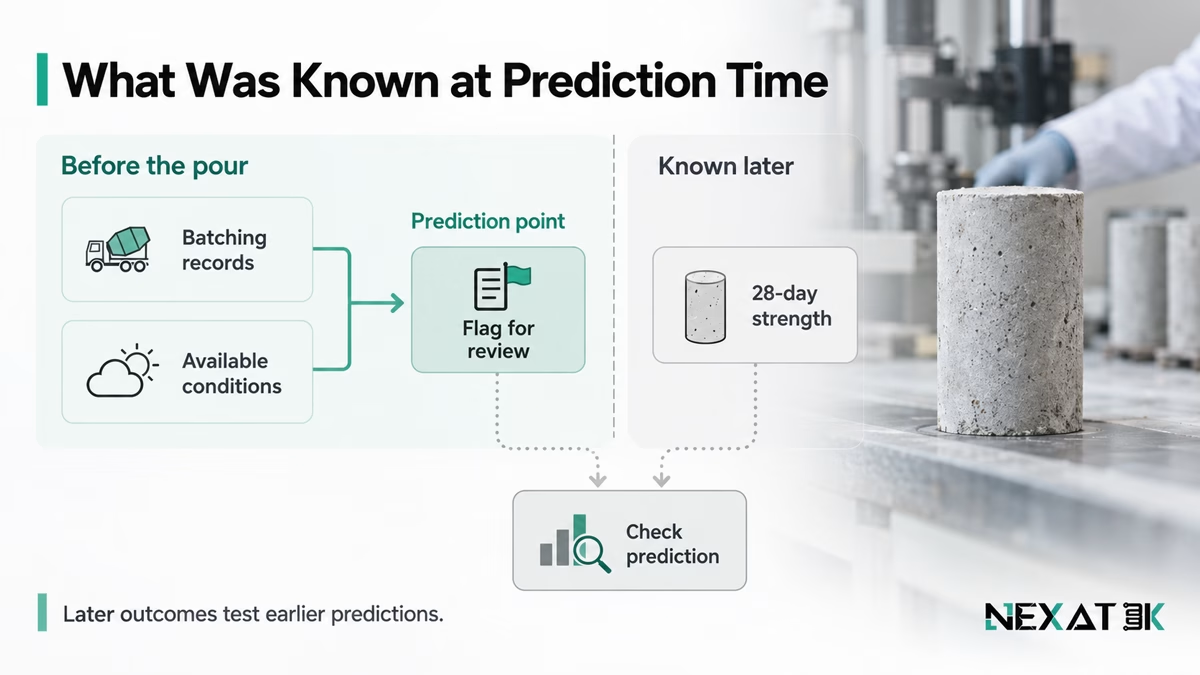
For an illustrative pre-pour quality flag, batching records may be available when the decision is made. The later 28-day strength result can evaluate the prediction but cannot be an input to that earlier decision. Including future information in a historical test creates a misleading result.
Reserve representative cases for evaluation and keep related records together when splitting data. Duplicated reports or near-identical photographs across development and evaluation sets can exaggerate performance. Evidence from one plant may not transfer to different products or capture conditions.
Risk and Human Oversight
Identify what happens when the output is wrong, incomplete or unavailable. Assess missed problems as well as false alarms. Name a qualified reviewer with access to the evidence, time to check it and authority to reject the output.
The NIST AI Risk Management Framework addresses documented human oversight and consideration of viable non-AI alternatives. Applied here, oversight must be a workable part of the task. A review label alone cannot control an error the reviewer cannot detect.
Retain the authorised engineer’s responsibility for technical acceptance. Resolve confidentiality, access and consequential failure risks before admitting a candidate to a pilot shortlist.
NEXATEK
Checking effort belongs in the AI business case
If an engineer must reconstruct the source to verify every extracted value, the proposed saving may disappear. Assess how quickly reviewers can find evidence, detect errors and correct the result. That checking effort belongs in the value estimate before a pilot is funded.
Prioritize AI Use Cases
Screen out candidates with unresolved data rights, unacceptable consequences or no accountable owner. Mark missing evidence as U, meaning unknown, and assign follow-up work. Then compare eligible candidates using an illustrative 1-5 scale, with higher scores representing stronger evidence.
| Criterion | 1: Weak | 3: Partial | 5: Strong |
|---|---|---|---|
| Business value | Minor gain | Useful local gain | Material recurring gain |
| Data availability | Major gaps | Preparation needed | Representative and accessible |
| Technical feasibility | Untested assumptions | Plausible with limits | Representative test supports fit |
| Risk and oversight | Controls unresolved | Controls designed | Controls demonstrated |
| Measurability | No usable baseline | Baseline obtainable | Baseline and test agreed |
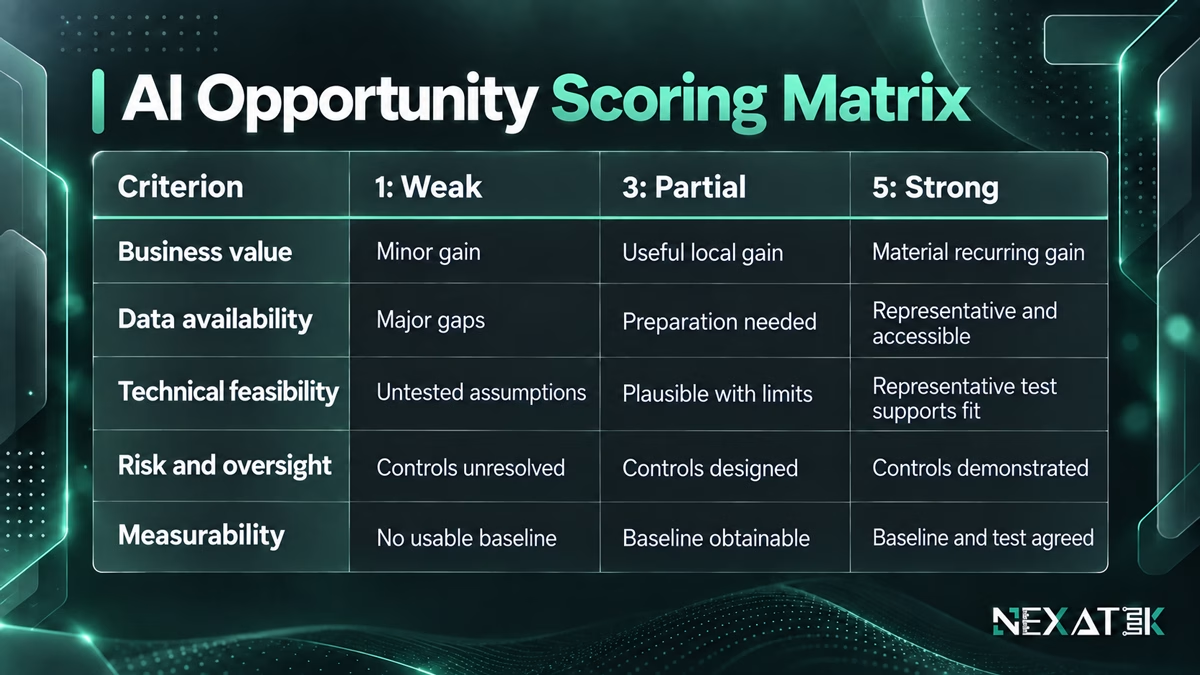
Use 2 or 4 for intermediate positions and attach evidence to every rating. Unknown is not zero. This AI use-case scoring matrix is a discussion rubric, not an industry standard. Compare the ratings separately so a strong value rating cannot cancel a failed gate.
Prioritise material value among candidates whose data, feasibility, oversight and measurement are adequate for a bounded test. Record whether each should advance, receive prerequisite work or stop. Consider engineering capacity and reuse across projects when choosing between similarly credible options.
For example, certificate extraction could advance when sources and reviewers are available. A promising quality-prediction idea may first need batch records linked to outcomes. Record that prerequisite instead of inventing the missing evidence to complete its score.
Resolve the uncertainty holding back your AI shortlist
Discuss a candidate task, representative records and the evidence still needed to judge feasibility. NEXATEK can help relate the technical question to the engineering workflow.
Define Success Before Building a Pilot
Specify the task boundary, representative sample, baseline, reviewer and acceptance rules before building. Google’s guidance on success metrics distinguishes business outcomes from model evaluation metrics. An accurate model can still fail to improve the work.
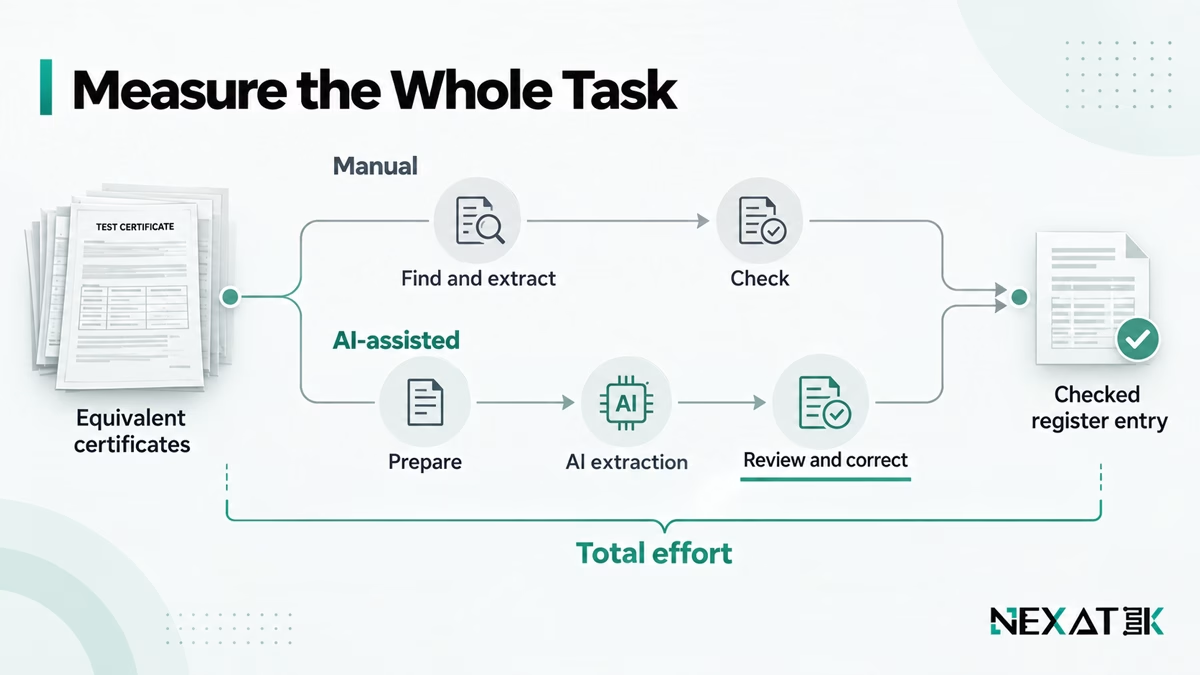
For the illustrative certificate task, compare manual and AI-assisted processing of equivalent records under the same acceptance rules. Track total effort per checked register entry, field errors, missing units and reviewer corrections. A checked entry confirms transcription quality, not material acceptance. Include difficult scans and unfamiliar layouts, and separate the final evaluation sample from examples used to tune the solution.
Set a minimum worthwhile improvement and quality limits from the company’s baseline and risk. Define stop conditions for critical errors or access breaches. Avoid a universal percentage target that has no connection to the task.
Count preparation, review and correction in the AI-assisted result. Faster generation alone cannot establish a useful saving. If the test leaves a material scientific uncertainty, NEXATEK’s R&D consulting includes data analysis and model development that can support further investigation.
Common AI Use-Case Selection Mistakes
Selecting the most impressive demonstration. Test ordinary records and exceptions, including cases the demonstrator has not prepared.
Treating all company data as available training material. Confirm rights, permissions, relevance and the actual data needs of the proposed task.
Scoring away a serious constraint. Keep unresolved safety, access or review failures outside the ranking until addressed.
Calling a pilot successful because the model runs. Evaluate the accepted work product and the complete effort needed to produce it.
Key Takeaways
- Define a recurring task and the decision its output supports.
- Inspect representative data and information available at the decision time.
- Apply eligibility gates before comparing scored candidates.
- Measure accepted outcomes, including human review and correction.
Conclusion
A useful shortlist records what would justify funding each candidate and what could overturn that judgement. A candidate with a clear baseline, usable data and a testable review process is ready for a bounded investigation. Where those conditions are missing, the next investment may be data preparation, process repair or a simpler automation change.
Give your next AI proposal a measurable engineering task
NEXATEK combines engineering expertise, AI development and data analysis. We can help define the candidate workflow, examine its data requirements and frame an evaluation before broader investment.
Frequently Asked Questions
How do companies identify AI use cases?
Observe recurring work, identify costly decisions or interpretation tasks, and define the changed workflow. Check data, feasibility, risk and measurability before selecting technology.
What makes a good AI use case?
A good candidate addresses a material problem, has suitable accessible evidence and lets an accountable user act on the output. Its benefit should remain worthwhile after review and operating costs.
How do you prioritize AI projects?
Apply mandatory gates first, then compare business value and the evidence supporting delivery. Use scores to structure discussion while keeping dependencies and unknowns visible.
What data is required for an AI use case?
The task determines the requirement: predictive models need relevant historical inputs and outcomes, while retrieval needs trusted documents and image analysis needs representative images. All require suitable evaluation examples and permission to use the information.