







A length stored as 2,500 mm can become 2.5 m without changing its meaning. A design length cannot become an installed length merely because both fields are called length. That distinction sits at the centre of engineering data integration:
bringing information together while preserving what each value actually describes.
Engineering directors and data managers need clear answers about the records themselves. Which asset does this value belong to? Which revision applies? Can a delayed update overwrite a correction? Answering these questions makes integrated information usable beyond the team that originally recorded it.
What Engineering Data Integration Actually Involves?
Engineering data integration combines information from engineering applications, databases, files and operational sources through agreed mappings, transformations and update rules. Its output is a set of related records made consistent for an agreed use, with their identity, meaning and history preserved.
This article concentrates on that information layer. Application connectivity, software replacement and enterprise orchestration are separate decisions.
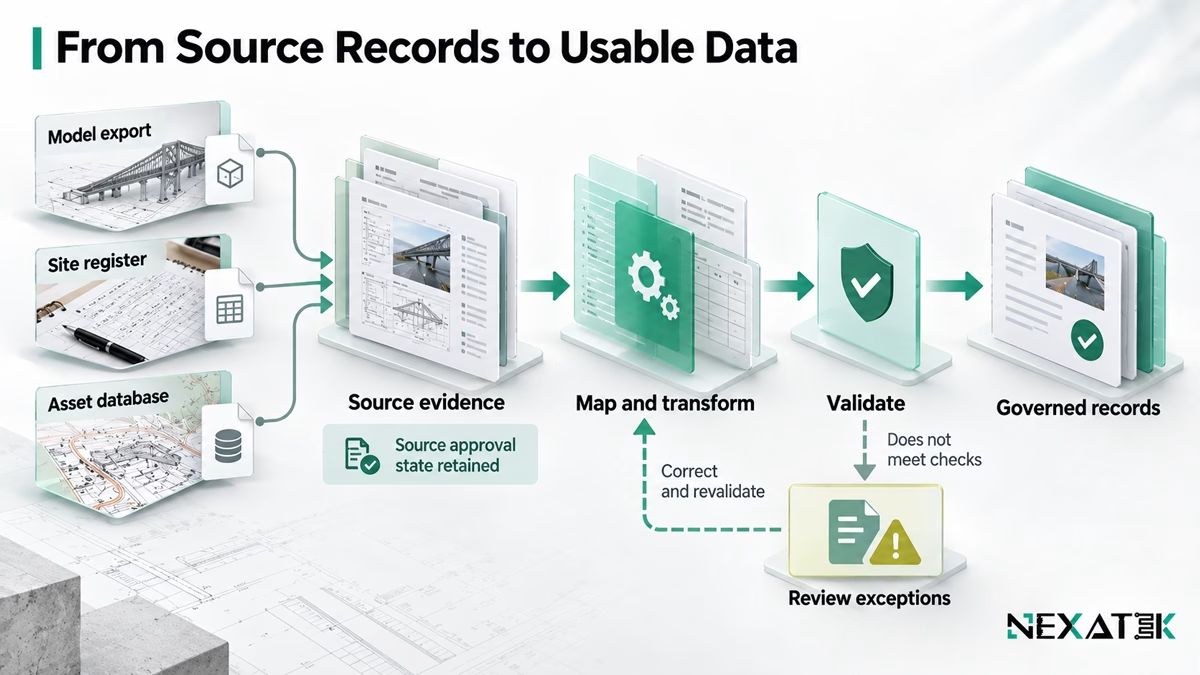
The work starts with source-system mapping. For each dataset, record its owner, access method, fields, identifiers, units, revision model and update frequency. Define its granularity too: one row might represent an asset, an inspection or a complete work package. IBM’s overview of data integration identifies source discovery, mapping, validation and synchronisation as parts of the process.
The resulting map should explain how a source record becomes a usable destination record, including what happens when the record cannot be matched or validated.
Why Engineering Data Becomes Fragmented?
Different engineering data sources describe different aspects of the same physical work. A model organises components spatially, a site register records observations, and procurement groups purchases by supplier or order. Each structure serves its own task, so consolidation needs explicit translation rules.
Fragmentation develops when those structures travel without their definitions. A model export may preserve geometry but omit a required property. A spreadsheet may use a local asset code that another project reuses. A PDF may contain the authoritative instruction while a database holds an older extracted value.
Information also changes on different schedules. Field observations may arrive after an offline shift, while design records change through controlled revisions. Engineering system data integration must account for both the meaning of the source and the point at which its information becomes available.
Common Data Integration Challenges
Several engineering data integration challenges become visible only when the receiving team tries to use the transferred records:
- Schema and format differences
A nested model object, spreadsheet row and document attachment need different extraction and mapping rules. Missing fields must remain distinguishable from zero or a valid empty value.
- Ambiguous identifiers
A matching label does not prove that two records describe the same asset. Include project context and maintain an approved crosswalk between local identifiers and a shared identifier.
- Incompatible meaning
Units, coordinate reference systems, measurement methods and lifecycle states affect interpretation. Unit conversion cannot reconcile design information with an as-built observation.
- Different granularity
Joining asset measurements to work-package totals can multiply rows and double-count quantities. Define the intended relationship and aggregation before joining datasets.
- Conflicting updates
Arrival time, source revision and approval status can disagree. A later delivery may contain an older record, and two sources may claim authority over the same field.
Data interoperability therefore needs an explicit agreement about what may be combined. Unresolved matches should remain visible for review rather than being silently merged to make an import appear complete.
Main Engineering Data Integration Methods
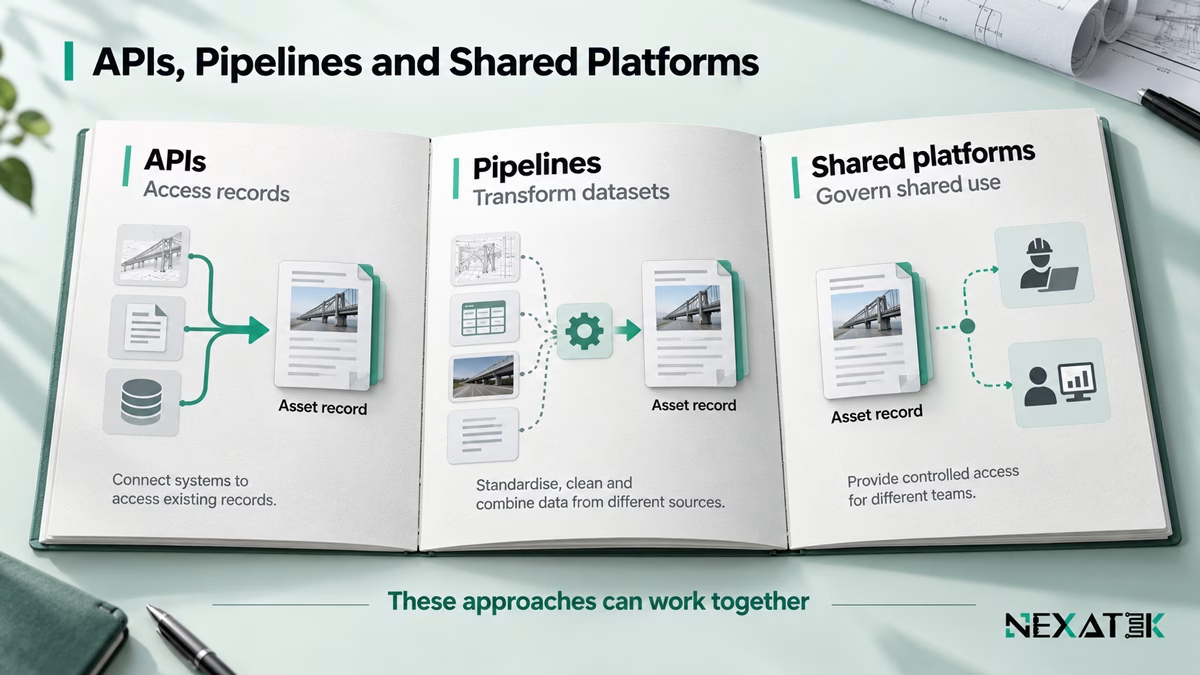
APIs, pipelines and shared platforms address different parts of the task. They can operate together: a pipeline may retrieve records through an API and publish validated results to a shared platform.
| Approach | Main job | Useful engineering application | Control to define |
|---|---|---|---|
| APIs | Retrieve or submit selected records | Exchange a changed asset attribute | Field meaning, revision and retry behaviour |
| ETL/ELT pipelines | Move and transform datasets | Harmonise model exports and site registers | Mapping, rejected records and reconciliation |
| Shared data platforms | Provide governed access to common records | Reuse agreed asset identifiers and properties | Authoritative fields, permissions and history |
APIs
An application programming interface provides a defined way for software to interact, as explained in Red Hat’s API overview. For data exchange, establish exactly which attributes and revisions the interface returns or accepts.
An API is not automatically real time. Polling intervals, source publication rules and downstream processing determine freshness. Handle paginated responses, deleted records and retries explicitly. Repeating the same accepted update should not create another asset or apply the change twice.
ETL/ELT and Data Pipelines
ETL means extract, transform, load. ELT loads extracted data before transforming it within the destination environment. IBM’s ETL guidance explains this difference and distinguishes traditional batch processing from streaming ETL.
Engineering data pipelines suit repeatable work such as translating source codes, converting units and joining datasets at agreed granularity. With ELT, keep raw landing data distinguishable from validated information available for operational use. With either approach, retain source evidence, version the mapping rules and account for records excluded from the published result.
Shared Data Platforms
A shared platform can hold a governed asset register or expose agreed views of records maintained elsewhere. A warehouse or data lake may participate, but a shared storage location alone does not reconcile conflicting meanings.
Define which source owns each shared attribute and how corrections reach consumers. For example, design may own specified dimensions while field teams own measured observations. NEXATEK’s integrated engineering data infrastructure supports structured records, stable identifiers, validation and traceable updates around these requirements.
Check one data exchange before selecting the method
Bring a representative source export and the record your team needs to receive. NEXATEK can help define their mapping, ownership and validation requirements.
How to Preserve Data Meaning and Quality During Integration?
Use an explicit mapping specification for each exchange. It should record the source field, destination field, definition, unit, transformation, null handling, source authority and acceptance rule. Engineering and data owners should agree on the meaning before implementation.
Consider an illustrative asset-length record. Its source holds 2,500 mm, a local identifier and a design revision. The destination expects metres and a shared asset identifier. A controlled transformation converts the value to 2.5 m, resolves the identifier through the approved crosswalk and retains the design basis and source revision. The destination retains it as a design value.
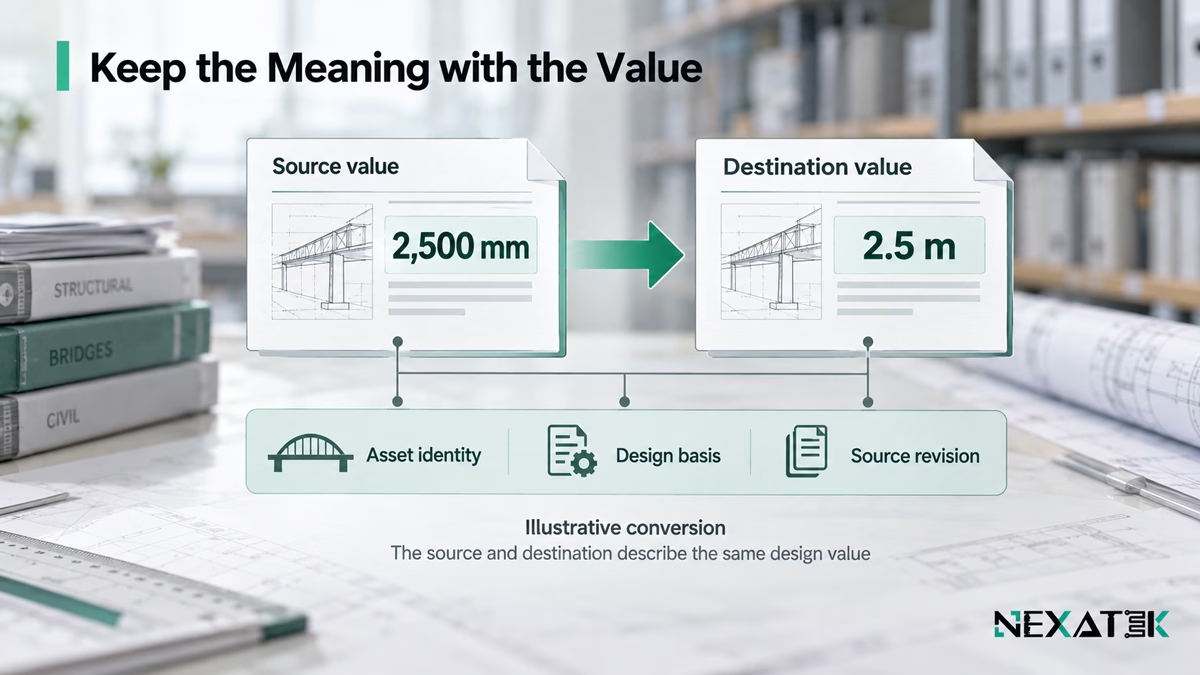
If the unit is absent or the identifier maps to several assets, hold the record for review. Reconcile source and destination by identity, revision and relevant values, as well as counts. Use the same extraction window and account for intentional aggregations and exclusions. Equal row totals can still conceal a missing asset and a duplicate.
Open standards can make some requirements machine-readable. For model exchanges, buildingSMART’s Information Delivery Specification supports explicit information requirements and IFC validation. Its checks do not determine whether a measurement is correct or whether engineering approval has been granted.
A valid transfer does not approve the recordA mapping check can confirm that a value has the expected type, unit and identifier. Engineering approval answers a different question about its suitability for use. Preserve the source approval state during integration, and keep records awaiting technical review distinguishable from released information.
Keep lineage with the transformed record: the source reference, original value and unit, revision, transformation rule and processing time. The W3C PROV model provides a formal vocabulary for representing provenance across systems. Even a simpler implementation should let a reviewer reconstruct how the destination value was produced.
Engineering Data Integration Best Practices
Use these controls to make the exchange maintainable after its first successful run:
- Set authority at field level. Assign a correction owner and agreed precedence where sources overlap. Keep specified and measured attributes separate, and transfer only fields the recipient is authorised to access.
- Define synchronisation behaviour. Set acceptable data age, distinguish when a value applied from when it arrived, and define rules for updates, deletions and reinstatements. Show stale or incomplete data clearly to consumers.
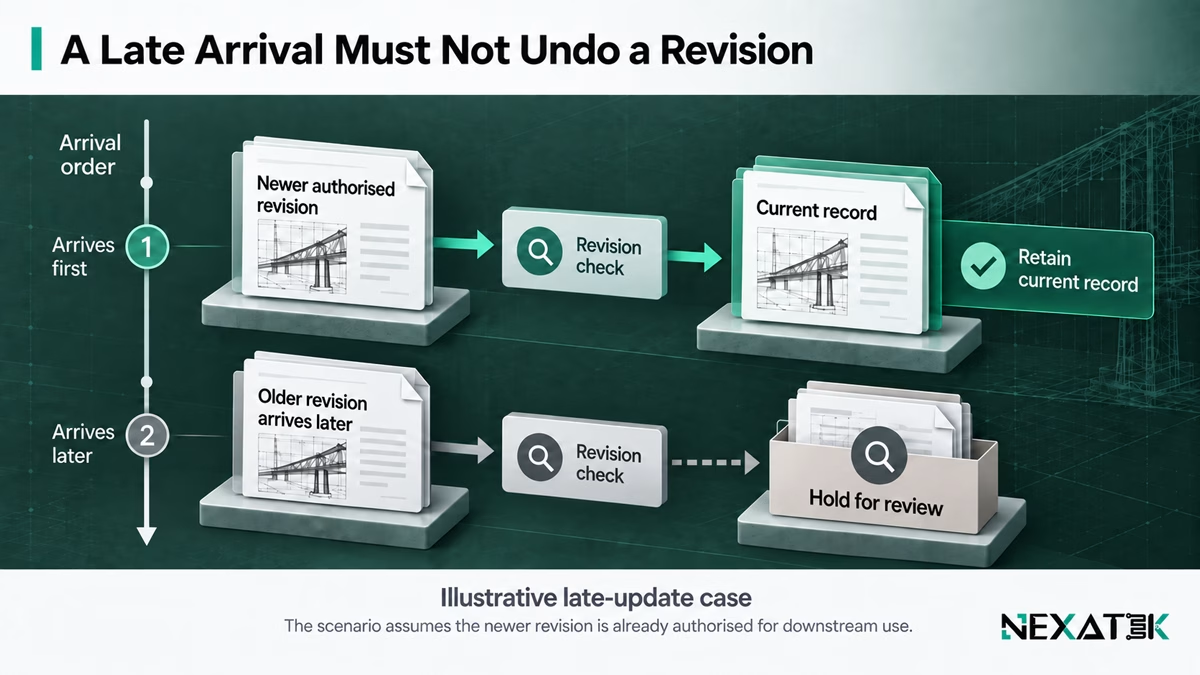
- Test late and repeated updates. Engineering data synchronisation should retain the newer revision authorised for downstream use when an older one arrives late. Test repeated delivery, partial failure and restart without losing or duplicating changes.
- Reconcile beyond transfer success. Track unmatched identifiers, rejected records, unexplained count differences and stale records. Give each exception an owner and a correction route.
- Prove and maintain a bounded exchange. Pilot one record family using representative exceptions. Version schema and mapping changes, test existing records after each change, and monitor whether manual reconciliation actually decreases.
For organisations coordinating several record families, NEXATEK’s engineering data foundation services combine project data models, master data and system interfaces. The shared definitions need ongoing ownership as projects and source systems change.
Key Takeaways
- Map source meaning and granularity before moving records.
- Select APIs, pipelines and shared platforms as complementary mechanisms.
- Preserve identity, units, revision and lineage through transformations.
- Keep validation outcomes separate from engineering approval.
- Test late updates, duplicates and recovery, then reconcile the resulting data.
Conclusion
A useful acceptance test is whether a reviewer can trace one integrated value back to its source, explain the transformation and confirm that the correct revision remains in use. Apply that test to awkward records as well as straightforward ones.
Begin with an exchange whose meaning and ownership can be clearly agreed. Expand when its exceptions are understood and its reconciliation can be sustained by the people responsible for the information.
Make your next engineering data exchange traceable
NEXATEK develops engineering databases and integrations around project records, controlled updates and existing working practices. Discuss the records you need to combine and the rules required to keep them reliable.
Frequently Asked Questions
What is engineering data integration?
It is the controlled combination of engineering information from multiple sources into consistent, related records. Integrated engineering data retains the context needed to interpret and update those records.
What are common data integration methods?
Common approaches include APIs, ETL or ELT pipelines, replication and shared data platforms. The choice depends on source access, transformation needs, update timing and ownership.
What makes engineering data integration difficult?
Engineering records can differ in identifiers, units, structure, granularity and revision status. Resolving those differences requires engineering definitions as well as technical mappings.
How do APIs differ from ETL?
An API provides an interface for accessing or changing data, while ETL describes extracting, transforming and loading it. An ETL pipeline can use an API to obtain its source records.
Does integration require real-time synchronisation?
No. Set the update frequency according to how quickly the consuming activity needs a valid change, and make any delay visible.




This was a helpful read, especially the part about managing engineering data across different systems
Thanks, Jessica! That’s often one of the biggest challenges—getting data from different systems to work together without creating more complexity. It’s also something we focus on in custom database development, especially when teams need a more consistent and reliable data structure.