
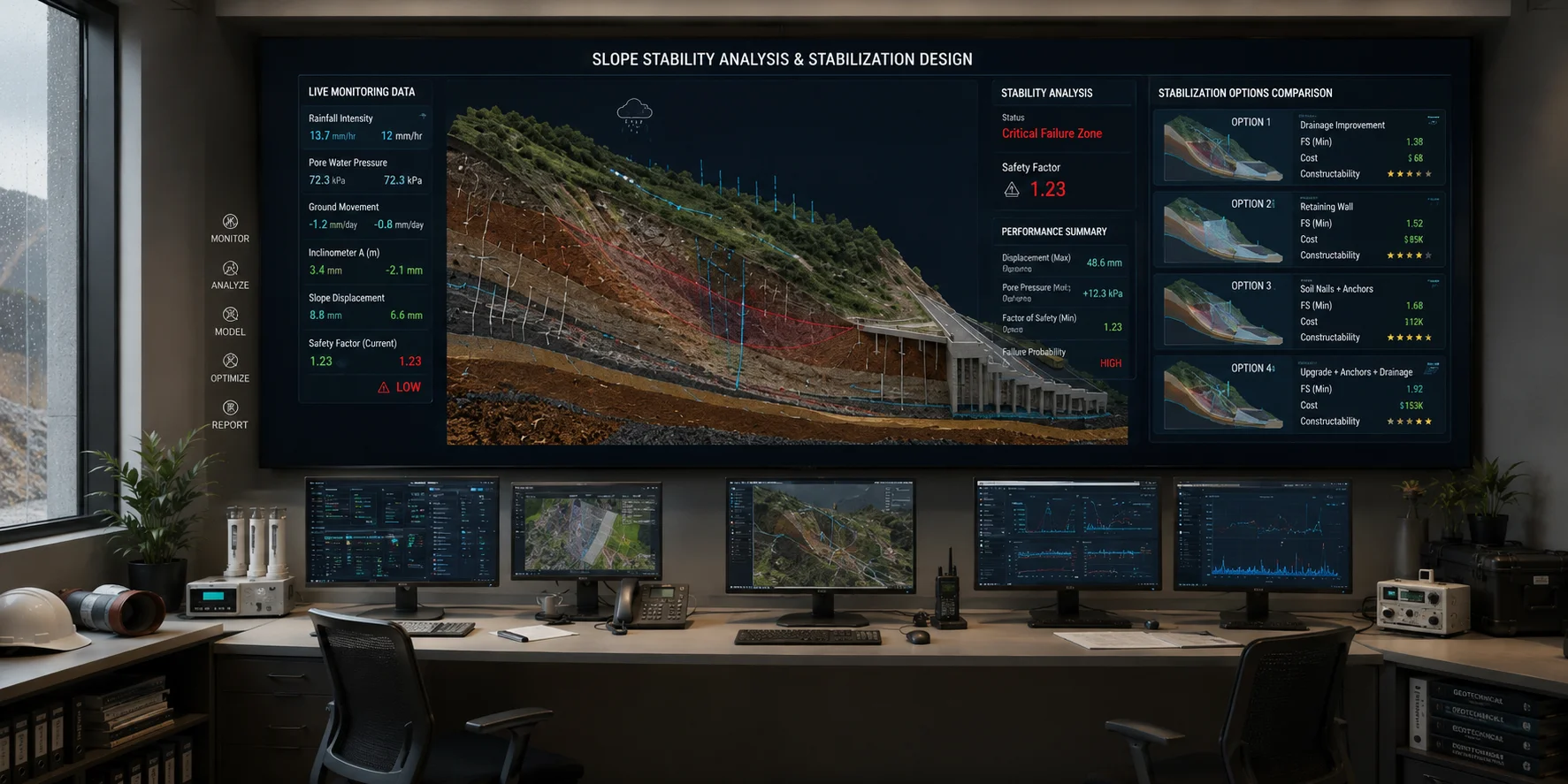
Engineering Modellering & Simulatie voor Civiele Techniek
Ontwikkel geavanceerde civieltechnische modellen en simulatietools die analyse en ontwerpoptimalisatie ondersteunen.
Numerieke Modellering & Analyse
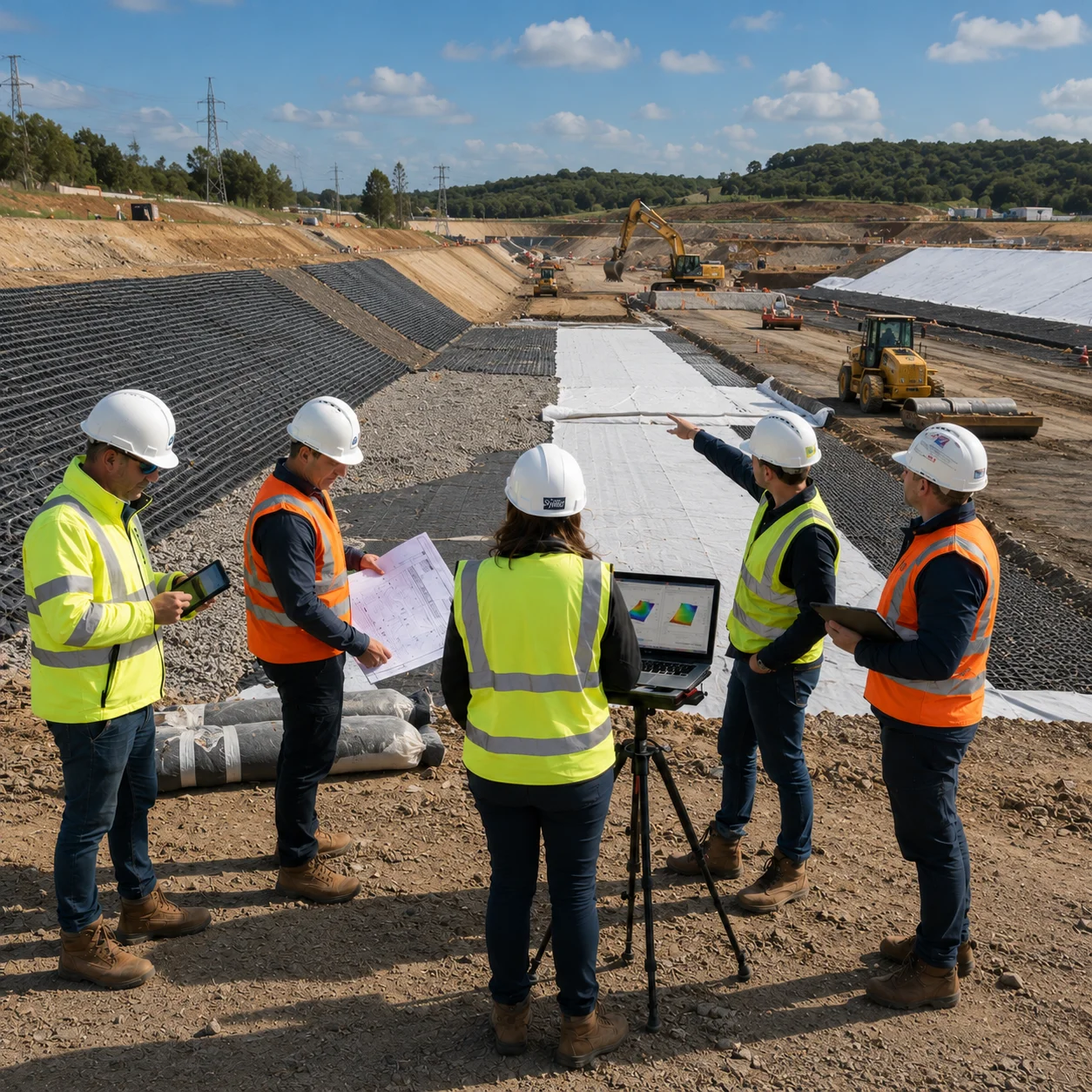
Technisch Ontwerp & Optimalisatie
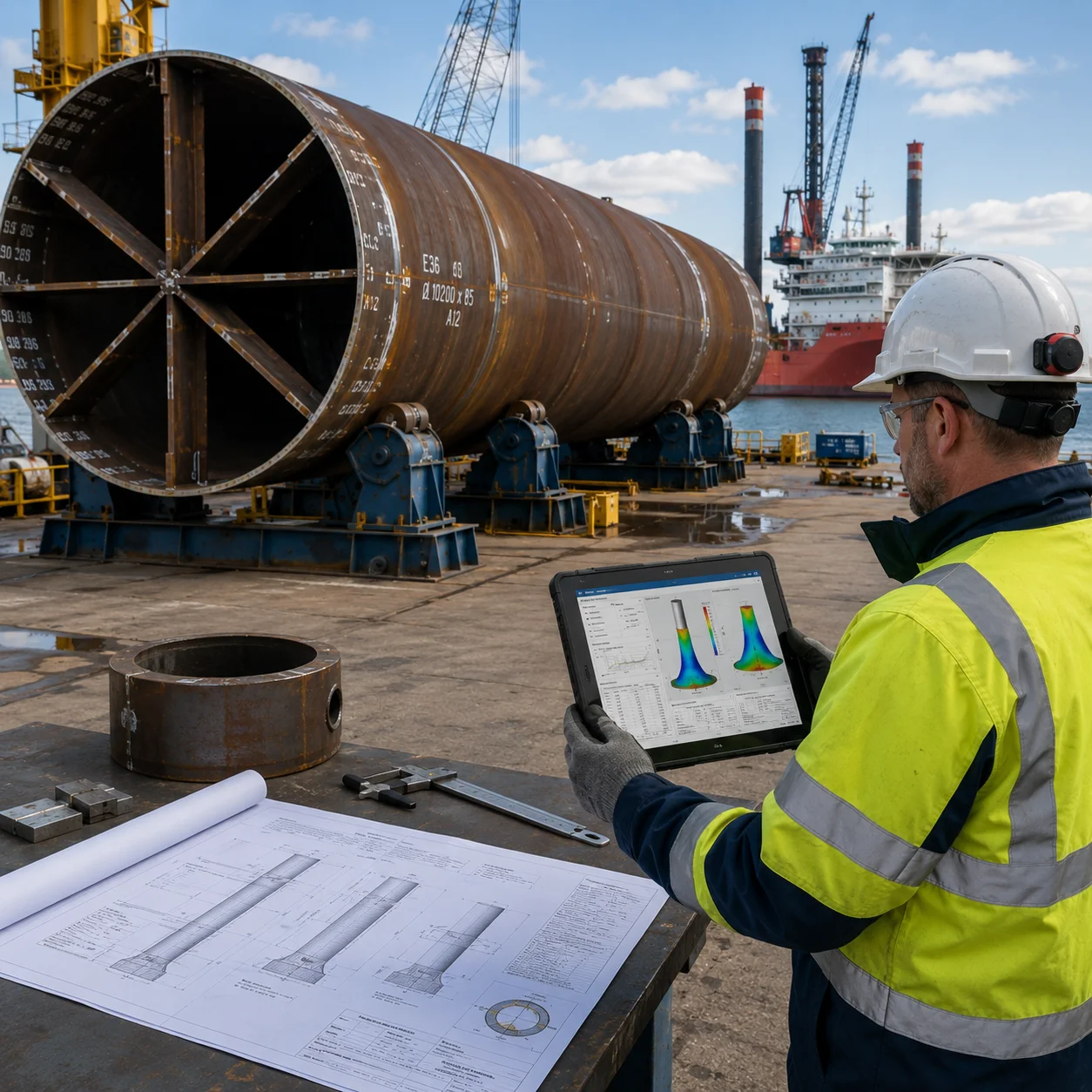
Visualisatie & Besluitvormingsondersteuning
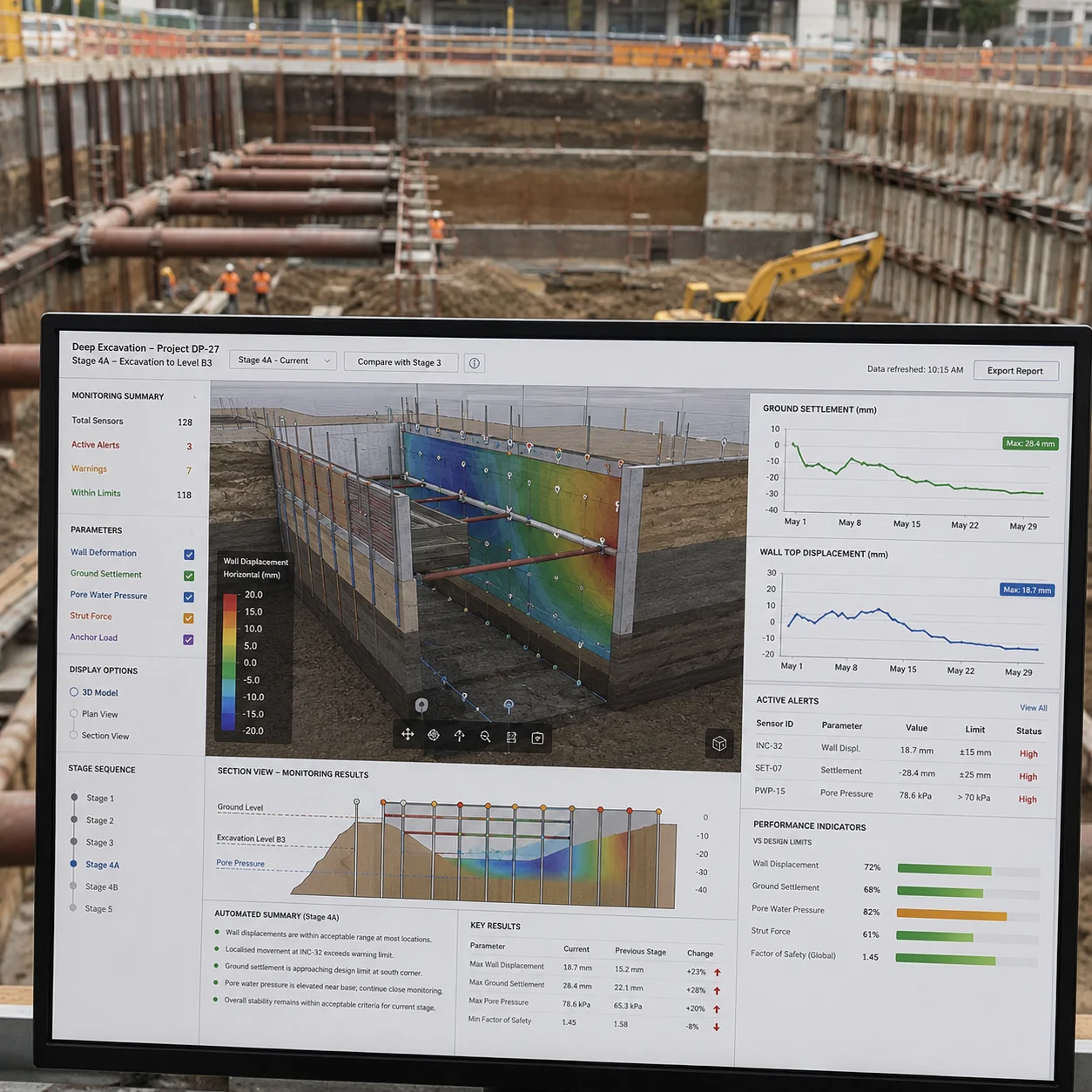
Integratie & Digitale Engineering
Vergelijkbare projecten
Ontdek meer innovatieve projecten:



Geweldige
Oplossingen
Beginnen Met Een GesprekGeweldige Oplossingen Beginnen Met Een Gesprek
Wilt u ontdekken hoe onze diensten uw bedrijf kunnen laten groeien?
Ingenieursimulatiediensten voor de civiele techniek
Een normvoorschrift vertelt een constructeur wat in het verleden heeft gefunctioneerd. Het biedt echter weinig houvast bij een gekromd viaduct op slappe klei of een 60 verdiepingen tellende toren in een orkaangevoelig gebied. Ingenieursimulatiediensten voor de civiele techniek dichten deze kloof: numerieke modellen simuleren de fysica van een kunstwerk en de bijbehorende bodemgesteldheid alvorens de bouw van start gaat. NEXATEK levert deze geavanceerde analyses als integraal onderdeel van programma's voor digitale transformatie in de grond-, weg- en waterbouw.
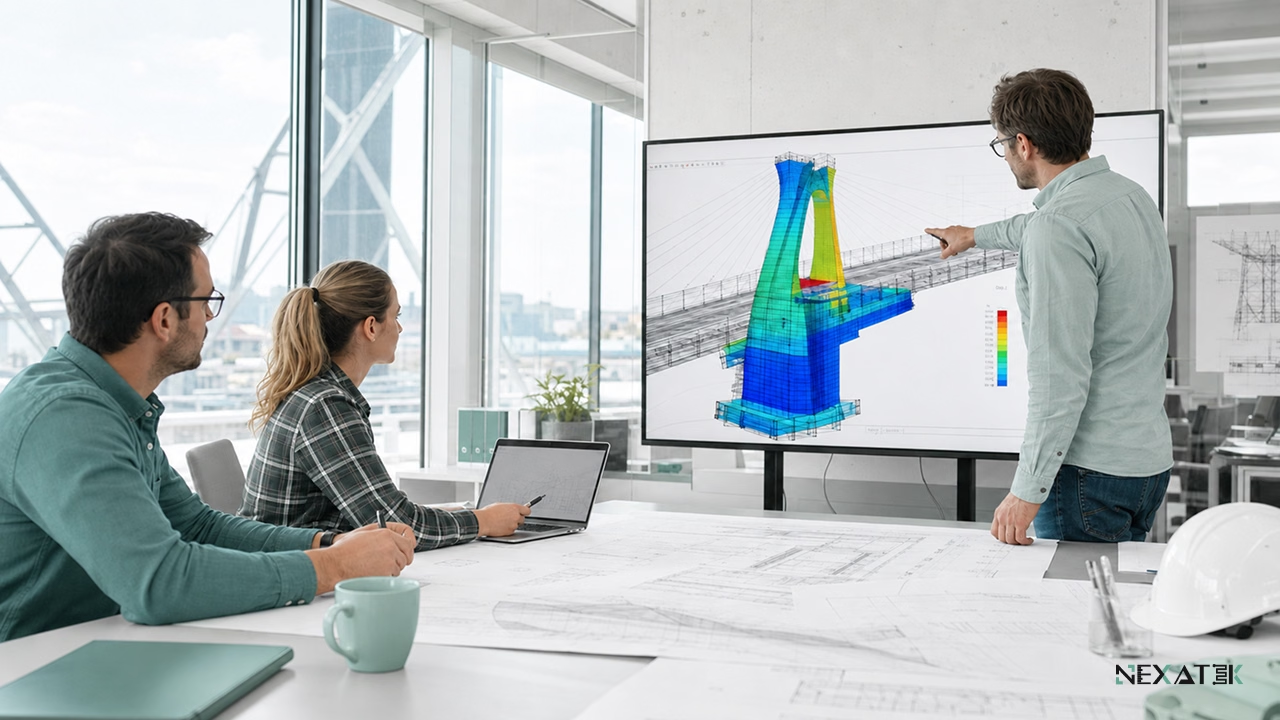
Simulatie stelt ingenieursteams in staat complex gedrag van infrastructuur voorafgaand aan de uitvoering te analyseren.
Simulaties vervangen het ingenieursinzicht niet. Ze verruimen dat inzicht juist naar situaties waarin handmatige berekeningen hun betrouwbaarheid verliezen: niet-lineaire materialen, driedimensionale krachtswerking, grond-structuurinteractie en fasenafhankelijke bouwtoestanden. Een rekenmodel voorspelt het constructieve gedrag van een brugdek of diepe bouwkuip al geruime tijd voordat er meetdata uit monitoring beschikbaar is.
Wat ingenieursimulatie inhoudt binnen de civiele techniek
Binnen de civiele techniek dient simulatie om constructief en geotechnisch gedrag numeriek op te lossen wanneer analytische formules het vraagstuk ontoelaatbaar vereenvoudigen. Numerieke modellering verdeelt het fysische domein in eindige elementen en berekent spanningen, rekken, vervormingen of warmtestromen. Gesloten analytische formules volstaan enkel bij eenvoudige geometrieën en lineair elastisch gedrag – de werkelijke civiele praktijk kent doorgaans geen van beide.
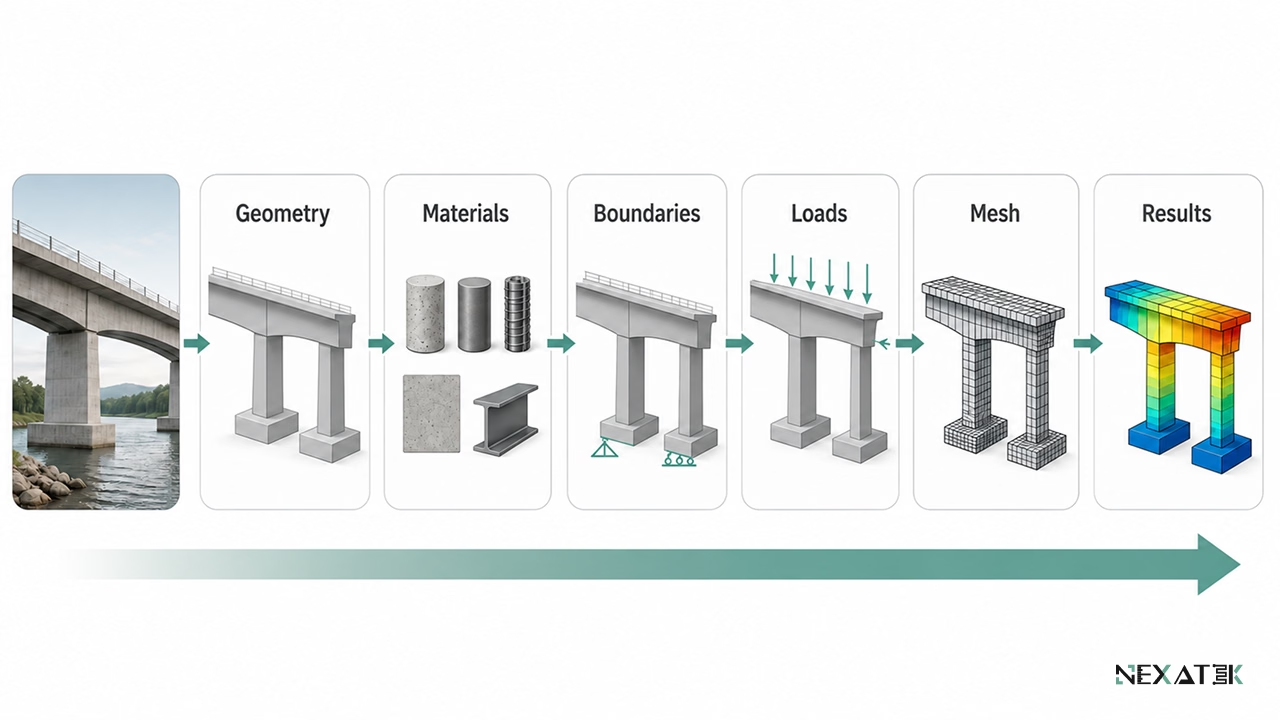 Een simulatiemodel vertaalt werkelijke geometrie, materialen, belastingen en randvoorwaarden naar numerieke resultaten voor ingenieursbeoordeling.
Constructieve modellering reikt bovendien veel verder dan een enkele belastingcombinatie. Een integraal model integreert fysische niet-lineariteiten, uitvoeringsfasen, zettingen van steunpunten en geometrische maatafwijkingen. Doordat maaswijdte en materiaalwetten onder directe controle van de constructeur blijven, blijft de rekenmethode volledig toetsbaar. Dit ondersteunt prestatiegerichte ontwerpberekeningen over talloze realistische scenario's – zoals het evalueren van honderd aardbevingsversnellingen in plaats van een enkele statische rekenwaarde.
Waarom ingenieursimulatie wordt toegepast in civiele projecten
Systeemmargets worden steeds krapper. Grote overspanningen en strakke materiaalbudgetten maken overmatige conservatieve aannames economisch onverantwoord. Infrastructuursimulaties maken tegenwoordig vast deel uit van ontwerp en uitvoering, omdat gekwantificeerd gedrag de werkelijke veiligheidsmarge aantoont.
Complexiteit van draagstructuren en infrastructurele systemen
Een knooppunt met meerdere niveaus en gekromde stalen kokerliggers draagt belastingen driedimensionaal af. Wringingsmomenten en de dwarskrachtverdeling over het brugdek bepalen het ontwerp; een tweedimensionale raamwerkberekening ziet beide over het hoofd. Onder deze omstandigheden ontrafelen 3D-eindige-elementensimulaties voor infrastructuurprojecten de interne krachtsverdeling element voor element.
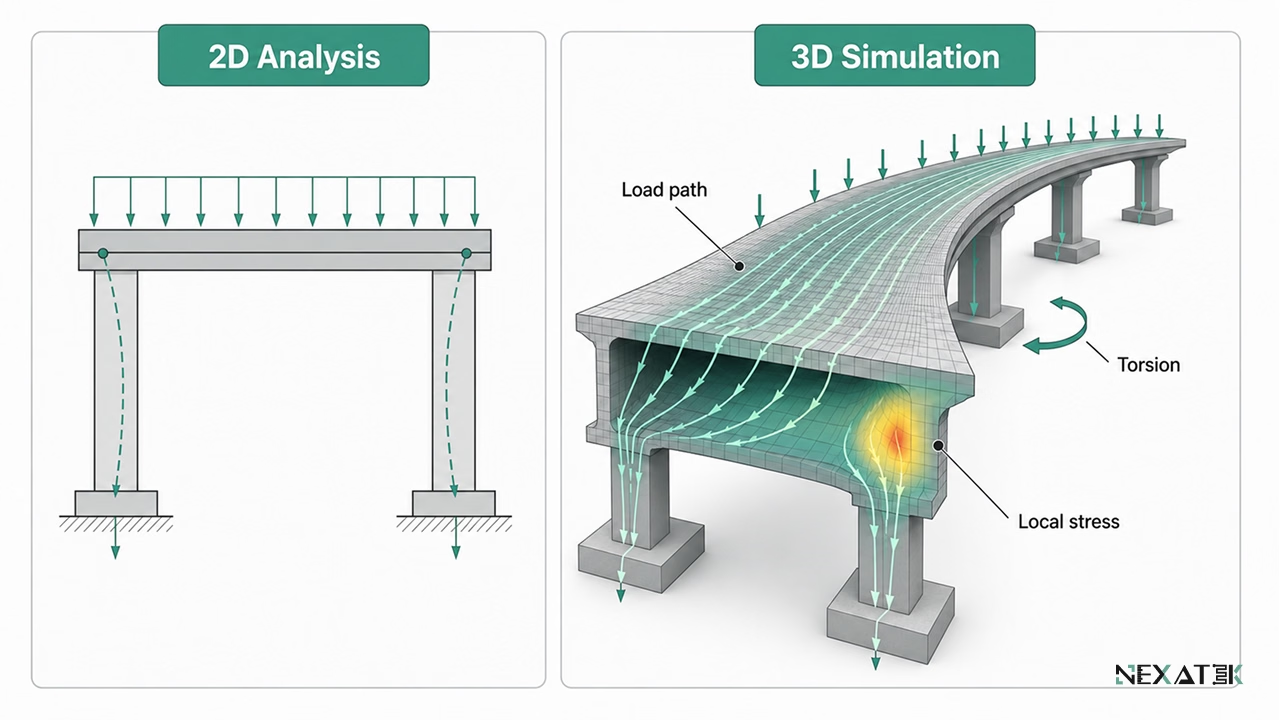 Driedimensionale simulatie brengt wringing, lokale spanningspieken en krachtswerking aan het licht die 2D-berekeningen missen.
Een renovatieproject van een stalen brug toont de risico's: Vermoeidheidsscheuren traden op door lokale trillingsvormen in secundaire elementen, terwijl de hoofdbelasting ruim binnen de normgrenzen bleef. Statische handberekeningen misten dit dynamische fenomeen volledig; een dynamisch FE-model achterhaalde de oorzaak binnen enkele dagen.
Beperkingen van vereenvoudigde rekenmethoden
Vereenvoudigde methoden gaan uit van lineaire elasticiteit, kleine vervormingen en homogene materiaaleigenschappen. Een massieve betonnen stuwdam die onderhevig is aan een alkali-silicareactie (ASR) schendt alle drie de uitgangspunten gelijktijdig: De expansie is inhomogeen en tijdsafhankelijk, en geen enkele standaardformule kan voorspellen of de inwendige spanningen over een periode van twintig jaar tot afschuiving leiden. Tijdstapafhankelijke numerieke simulatiemodellen lossen exact dit type complexe schadefenomenen op.
De uitkomsten van geavanceerde modellen kunnen bovendien terugvloeien naar de dagelijkse ontwerppraktijk: NEXATEK ontwikkelt formule- en rekenregels die gevalideerde simulatieresultaten vertalen naar specifieke, hanteerbare ontwerpregels. Ingenieursteams passen deze regels vervolgens toe via technische online rekentools, zonder dat voor elke geometrische variant het complete eindige-elementenmodel opnieuw doorgerekend hoeft te worden.
Vormen van ingenieursimulatie in de civiele techniek
Constructieve vraagstukken staan zelden op zichzelf. Een hoogbouwtoren reageert op de ondergrond en windbelastingen; daarom combineren de meeste projecten meerdere modeltypen.
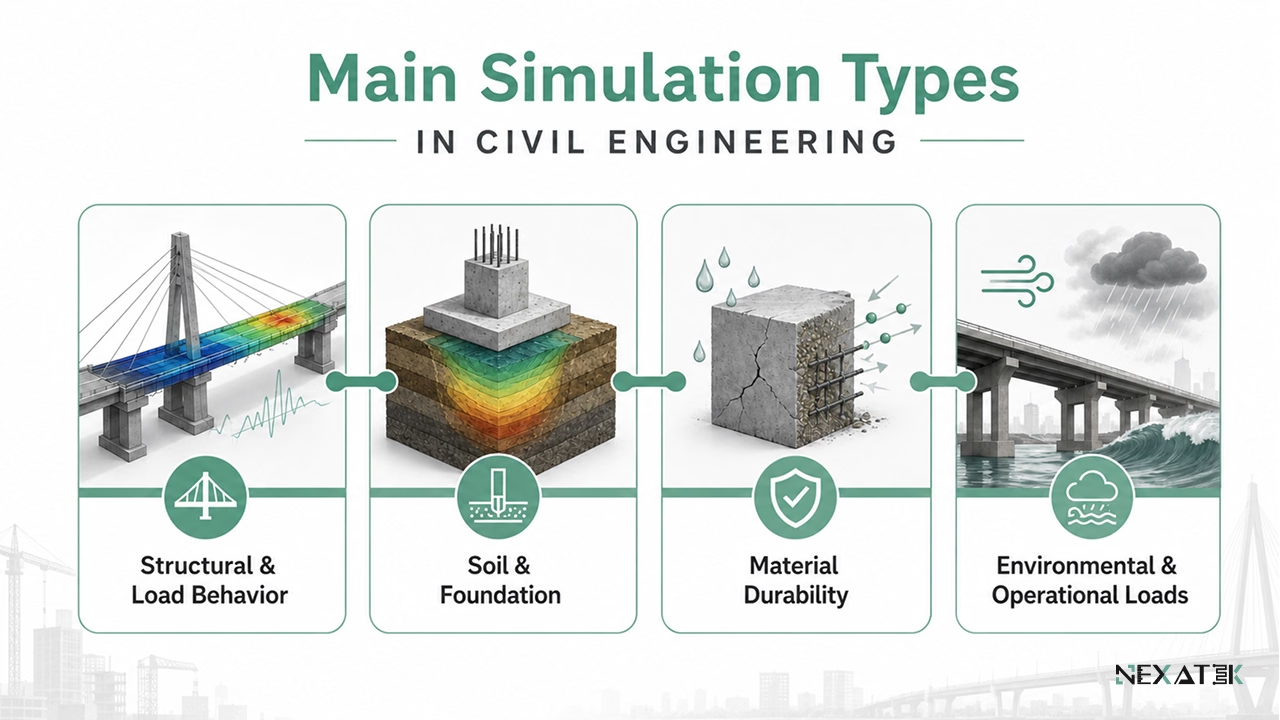 Civieltechnische simulatie combineert doorgaans constructiemechanica, geotechniek, materiaalduurzaamheid en omgevingsbelastingen.
Constructieve en mechanische belastingsimulaties
De eindige-elementenmethode (EEM / FEM) vormt de kern van constructieve simulaties. Modellen analyseren eigen gewicht, wind, aardbevingen en bijzondere belastingen, inclusief geometrische niet-lineariteiten (2e-orde- en P-Delta-effecten) en plastische scharniervorming. Bij slanke hoogbouwconstructies kunnen 2e-orde uitbuigingsmomenten het stabiliteitssysteem domineren – een 1e-ordeberekening onderschat deze krachten naarmate de stijfheid afneemt.
Seismische beoordelingen steunen op dezelfde methodiek. Een niet-lineaire pushover-analyse volgt de ontwikkeling van plastische scharnieren door de draagstructuur en toont exact aan welke elementen als eerste bezwijken – informatie die een lineaire responsspectrumanalyse niet kan leveren.
Geotechnische en grond-structuursimulaties
Grond is het meest heterogene en onvoorspelbare materiaal op de bouwlocatie. Geotechnische simulaties modelleren diepe bouwputontgravingen en langdurige funderingszettingen. Bij binnenstedelijke ontgravingen berekent het model de vervorming van damwanden en zettingen van het maaiveld, waarbij belendende bebouwing de toelaatbare grenswaarden dicteert.
Consolidatieprocessen in slappe kleilagen illustreren het tijdsaspect: Een consolidatiemodel volgt zettingsverlopen over decennia heen, in plaats van enkel de bezwijklast in de eindtoestand te toetsen. Differentiële zettingen planten zich direct voort naar de bovenbouw, wat scheurvorming verklaart die pas jaren na de oplevering aan het licht komt.
Materiaalprestatie en duurzaamheidsmodellering
Duurzaamheidstoetsingen zijn chemisch én mechanisch van aard. Numerieke modellen simuleren carbonatatiediepte en chloride-indringing door de betondekking over een ontwerplevensduur van 50 tot 100 jaar. De hydratatiewarmteontwikkeling tijdens de uitvoering vergt een vergelijkbare aanpak.
Een drie meter dikke funderingsplaat is het schoolvoorbeeld: Tijdens het uitharden kan de hydratatiewarmte de kerntemperatuur tientallen graden boven de oppervlaktetemperatuur laten stijgen. De optredende temperatuurgradiënt veroorzaakt scheurvorming van binnenuit. Door de stort thermomechanisch te simuleren, bepalen constructeurs de koelleidingpatronen en de stortvolgorde ruim voordat de betoncentrale wordt ingeschakeld.
Omgevings- en dynamische gebruikslasten
Wind en verkeersbelastingen belasten civiele constructies onafgebroken. Computational Fluid Dynamics (CFD) analyseert winddrukken op afwijkende gevelvormen en toetst de aero-elastische stabiliteit van tuibruggen. Dynamische belastingsimulaties analyseren tevens operationele trillingsbronnen, zoals hoogfrequente resonanties veroorzaakt door hogesnelheidstreinen, die spoorbevestigingen kunnen vermoeien nog voordat er visuele schade zichtbaar is.
Temperatuureffecten vallen in dezelfde categorie: Een stalen brugdek dat dagelijks uitzet tegen stijve inklemmingen bouwt spanningscycli op die een standaard zomer-wintertoets nooit inzichtelijk maakt.
Ingenieursimulatie vs. traditionele berekeningen
Beide methoden verschillen fundamenteel in reikwijdte. Klassieke normberekeningen verwerken standaardconstructies snel en efficiënt; complexe geometrieën en risicovolle renovaties vallen buiten hun aannamekader. In de praktijk vullen ze elkaar aan: normtoetsen borgen de basisveiligheid, terwijl simulaties de vragen beantwoorden die normen openlaten.
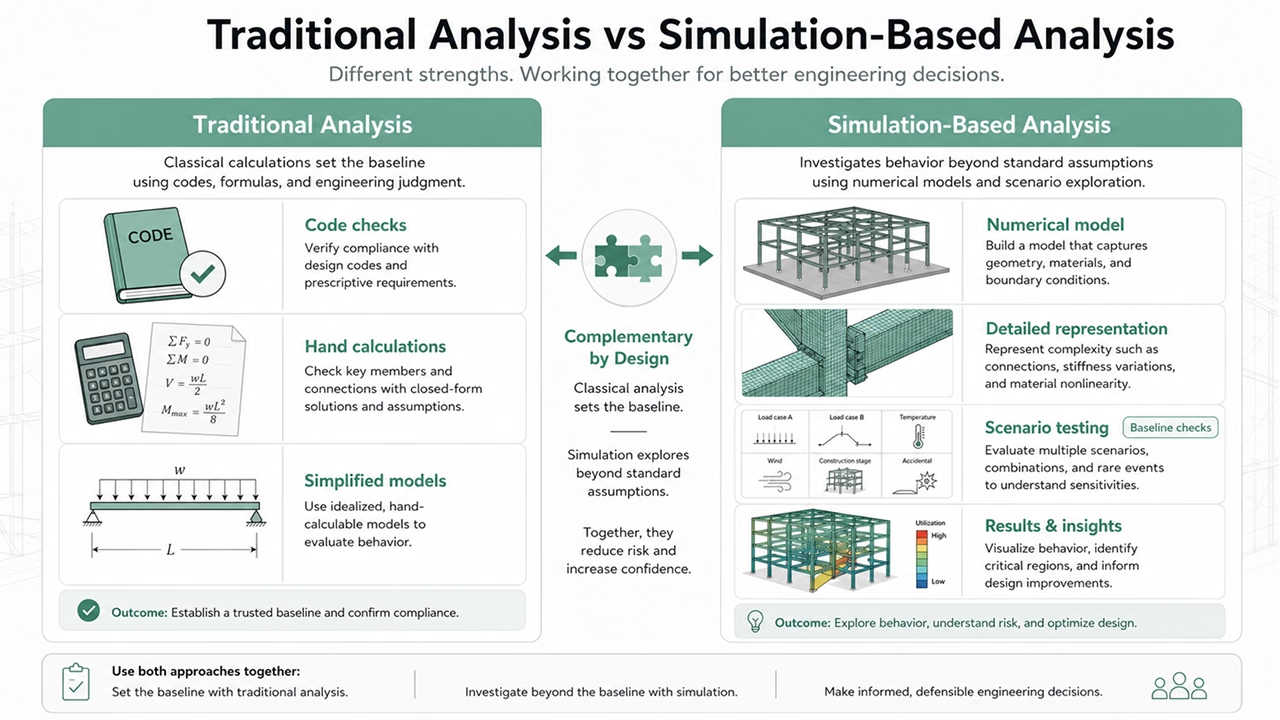 Klassieke berekeningen bepalen de basis, terwijl simulaties gedrag buiten de standaardnormen onderzoeken.
De rol van klassieke berekeningen en ontwerpnormen
Ontwerpnormen zijn gecodificeerde ervaringen. Ze beschrijven gangbare constructievormen, waarbij ingebouwde veiligheidsfactoren het gebrek aan fijnmazige data compenseren. Bij afwijkende constructies leidt dit conservatisme vaak tot 15 tot 20 procent extra materiaalgebruik. Normen lopen bovendien jaren achter op materiaalontwikkelingen; voor innovatieve vezelversterkte mengsels ontbreken vaak nog normatieve rekenregels.
Klassieke handberekeningen blijven desalniettemin onmisbaar als referentie: Elk simulatieresultaat vereist een onafhankelijke statische controleberekening ter plausibiliteitsbeoordeling.
Meerwaarde van simulatiegebaseerde constructieberekeningen
Simulaties verkleinen het gat tussen het theoretische rekenmodel en de werkelijk gerealiseerde constructie (As-Built). De modelontwikkeling van NEXATEK start vanuit dat principe: Elke reductie in modelonzekerheid vertaalt zich direct in benutbare draagkracht of materiaalbesparing. Het nauwkeurig lokaliseren van laagbelaste zones in grote overspanningen kan honderden tonnen staal besparen.
Scenarioanalyses voegen een extra dimensie toe: Een model kan brand in een tunnel of het plotselinge bezwijken van een brugpijler simulereen – calamiteiten die fysiek niet veilig beproefd kunnen worden. Bij bestaande assets ondersteunt simulatie restlevensduur- en restcapaciteitsbeoordelingen: een brug die op de nominatie staat voor vervanging kan vaak met gerichte versterkingen behouden blijven, afhankelijk van wat het geijkte model en inspectiedata uitwijzen.
De workflow van ingenieursimulaties in projecten
Black-box-modellering vormt het grootste risico bij ingenieursimulaties. Een kleurrijk spanningsdiagram heeft pas waarde als de invoer en randvoorwaarden kritisch zijn gevalideerd. Elke stap in het werkproces kent daarom een verificatie om de betrouwbaarheid te borgen.
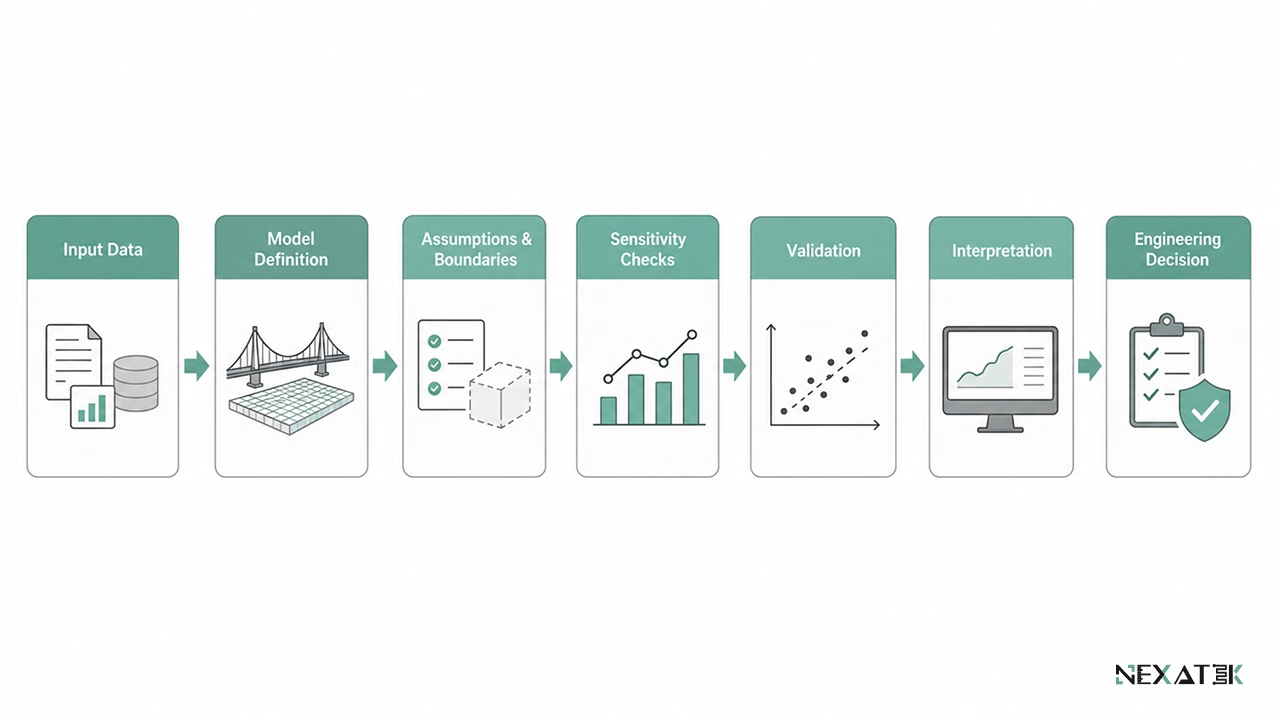 Een betrouwbare simulatieworkflow verbindt projectdata, aannames, validatie, interpretatie en besluitvorming.
Modeldefinitie en invoerparameters
Elk model start met fysische keuzes: lineair-elastisch versus plastisch vloeigedrag, of gedraineerd versus ongedraineerd grondgedrag. De kwaliteit van de invoerdata is doorslaggevend: Een elasticiteitsmodulus uit een tekstboek versus een gemeten waarde uit proefkernen kan tot volstrekt verschillende constructieve beslissingen leiden. Locatiespecifieke gegevens hebben altijd voorrang – een summier bodemonderzoek zadelt het model direct op met fundamentele onzekerheid.
Gevoeligheidsanalyses ronden deze stap af: Door parameters stapsgewijs te variëren, wordt inzichtelijk welke invoerwaarden de resultaten domineren en waar aanvullend laboratoriumonderzoek rendeert. NEXATEK legt parameters en revisies vast in gestructureerde datamanagementsystemen, waardoor elk rekenresultaat herleidbaar blijft naar de brondata.
Aannames, randvoorwaarden en validatie
Randvoorwaarden sturen uitkomsten dikwijls sterker dan de keuze van de elementtypes. Modelleer een landhoofd als een zuivere scharnieroplegging terwijl er sprake is van aanzienlijke inklemmingsstijfheid, en de berekende momentenlijn klopt niet. Elke versimpeling vereist daarom een expliciet gedocumenteerde verantwoording.
Validatie sluit de keten: Rekenvoorspellingen worden vergeleken met proefbelastingen en monitoringsdata uit het werk. Het model wordt gekalibreerd totdat de berekende en gemeten respons binnen vooraf vastgelegde toleranties overeenstemmen.
Interpretatie van simulatieresultaten
Een spanningscontourplot is data, nog geen besluit. De beoordelend constructeur scheidt numerieke singulariteiten – zoals spanningsconcentraties bij scherpe hoeken in het net – van werkelijke vermoeiingsgevoelige details. Interpretatie vertaalt de simulatie naar de praktijk: een aangepast wapeningsdetail, een herziene staalverbinding of een gewijzigde bouwfasering.
Rapportage moet transparant zijn: Iedere bevinding dient direct gekoppeld te zijn aan de onderliggende belastingcombinatie en de gehanteerde uitgangspunten.
Toepassingen binnen de civieltechnische keten
Verschillende marktpartijen zetten simulaties in vanuit uiteenlopende perspectieven:
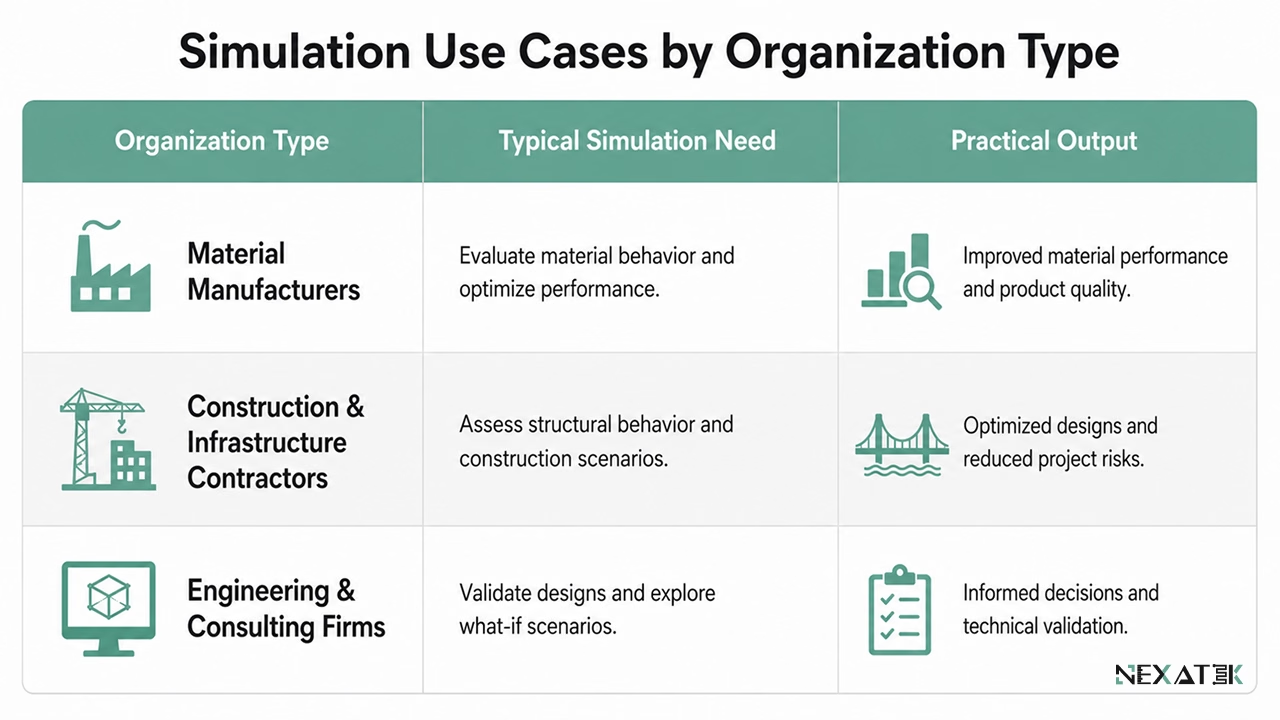
Materiaalproducenten en prestatietoetsing
Fysieke beproevingen zijn tijdrovend en laboratoriumcapaciteit is kostbaar. Producenten optimaliseren innovaties daarom eerst virtueel. Een composiet wapeningsstaaf of een vezelversterkt betonmengsel kan duizenden gesimuleerde belastingsituaties doorlopen alvorens er proefstukken worden gestort. Gekalibreerde modellen leveren vervolgens de basis voor productspecifieke rekenregels in technische datasheets.
Veel van deze trajecten verlopen via toegepast ingenieursonderzoek, waarin laboratoriummetingen direct gekoppeld worden aan modelkalibratie.
Aannemers en infrabouwers
Tijdelijke bouwtoestanden vormen dikwijls de meest kritieke fase in het bestaan van een constructie. Bouwplaatssimulaties richten zich op zware hijswerkzaamheden en het stapsgewijs inschuiven van brugconstructies (incremental launching). Stempeldrukken van kranen moeten binnen de draagkracht van de ondergrond blijven, en een stalen brugdek is kwetsbaar voor instabiliteit halverwege de overspanning. Toont het model een risico op kipperschijnselen, dan past de aannemer de schoorconstructie aan nog vóór het staal op de bouwplaats arriveert.
Ingenieurs- en adviesbureaus
Adviesbureaus zetten simulaties in waar normen en standaarden tekortschieten: bij onafhankelijke second opinions en complexe schade-expertises. Een constructie zonder historisch precedent kan niet enkel op basis van tabellenboeken worden ontworpen; het model levert de kwantitatieve onderbouwing voor toetsende instanties. De centrale vraag is identiek aan die van de ontwerper: hoe gedraagt de constructie zich onder extreme omstandigheden waarin de normen niet voorzien?