
R&D-advies in de civiele techniek
Bouw een sterke wetenschappelijke en technische basis om de oplossingen van uw bedrijf te ondersteunen.
Modellering & Simulatie
Data Science, Inzichten en Vergelijkingsontwikkeling

Wetenschappelijke Communicatie

Wetenschappelijke Database
Veelgestelde Vragen
Het R&D-advies van NEXATEK is een dienst die is ontworpen om civieltechnische bedrijven te voorzien van een sterke wetenschappelijke en technische basis voor het ontwikkelen van betrouwbare ontwerpmodellen en oplossingen. Het omvat de toepassing van verschillende methoden, zoals modellering & simulatie, data science, wiskundige modelontwikkeling, wetenschappelijke communicatie, publicaties en aanwezigheid op conferenties.
Met behulp van numerieke, empirische en analytische modellen bouwt NEXATEK computergebaseerde simulaties en theoretische oplossingen om complexe civieltechnische systemen te analyseren. Dit helpt bij het voorspellen van gedrag, het optimaliseren van ontwerpen en het verminderen van risico's.
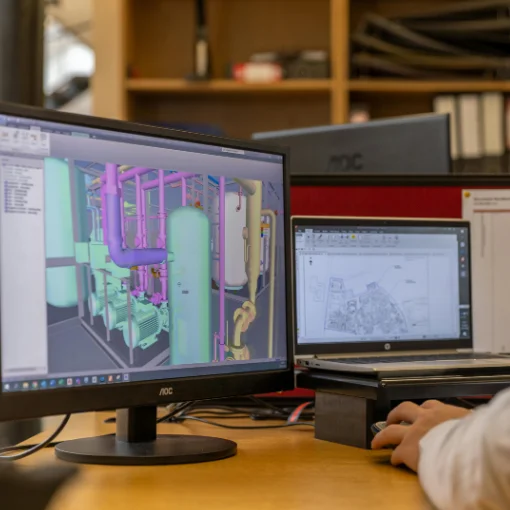
NEXATEK verwerkt en analyseert gegevens (verzamelen, opschonen, evalueren) om zinvolle patronen te extraheren. Vervolgens interpreteren zij deze gegevens om ze om te zetten in bruikbare inzichten, de besluitvorming te ondersteunen en wiskundige modellen te ontwikkelen die zijn afgestemd op civieltechnische uitdagingen.
NEXATEK ontwerpt wiskundige kaders die civieltechnische processen uit de praktijk in kaart brengen, waardoor klanten systeemgedrag kunnen voorspellen, 'wat-als'-scenario's kunnen testen en technische oplossingen kunnen optimaliseren.
Ja. NEXATEK werkt samen met verschillende internationaal erkende onderzoeksinstituten en universiteiten om geavanceerd wetenschappelijk onderzoek te doen op het gebied van civiele techniek. Via deze partnerschappen zorgt NEXATEK ervoor dat hoogwaardige, op bewijs gebaseerde en sectorrelevante resultaten worden ontwikkeld.
Vergelijkbare projecten
Ontdek meer innovatieve projecten:

Geweldige
Oplossingen
Beginnen Met Een GesprekGeweldige Oplossingen Beginnen Met Een Gesprek
Wilt u ontdekken hoe onze diensten uw bedrijf kunnen laten groeien?
R&D in de civiele techniek: Onderzoek en ontwikkeling voor infrastructuur, materialen en uitvoering
Sommige projecten lopen tegen de grenzen van de geldende normen aan: een brugdek dat blootstaat aan 50 winters met dooizouten, of een torengeometrie die door geen enkel vigerend voorschrift wordt gedekt. R&D in de civiele techniek dicht deze kloof. Het betreft het systematisch onderzoeken van materialen, constructief gedrag en uitvoeringsmethoden voordat een oplossing op de bouwplaats wordt toegepast. Het doel is het aantonen van constructieve veiligheid en prestatie-eisen daar waar gevestigde rekenregels geen uitsluitsel bieden.
NEXATEK benadert dit werk als een praktische ingenieursfunctie in plaats van een academische exercitie. De output van een onderzoekstraject is geen theoretisch artikel, maar een set geverifieerde ontwerp- en rekenwaarden waarmee een projectteam daadwerkelijk kan bouwen.
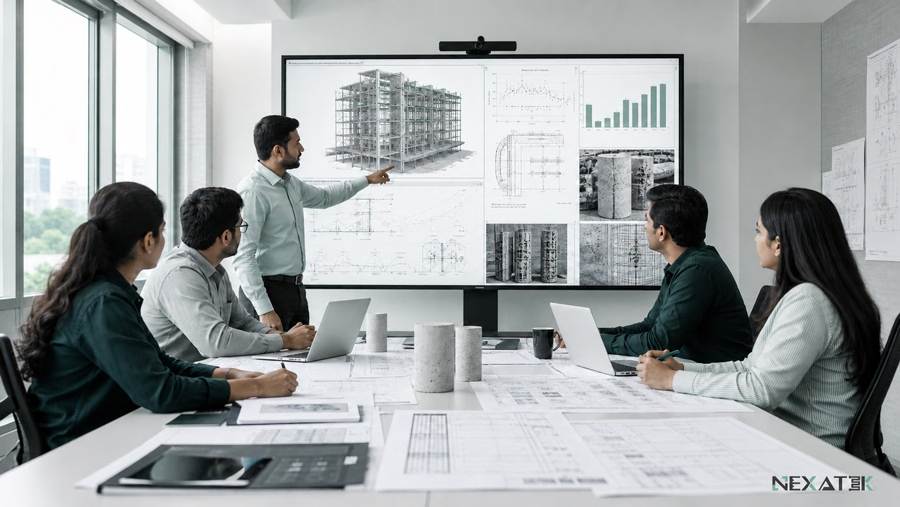
Toegepaste R&D stelt ingenieursteams in staat onopgeloste technische knelpunten om te zetten in geverifieerde rekenwaarden.
Wat betekent R&D in de civiele techniek?
Academisch onderzoek zoekt naar algemene natuurkundige principes. Toegepast ingenieursonderzoek richt zich daarentegen op één specifieke randvoorwaarde binnen één concreet project. Een universiteit bestudeert hoe chloriden zich door beton verplaatsen. Het projectteam moet daarentegen exact weten of één specifiek mengselontwerp de wapening van een pijler in de getijdenzone gedurende 100 jaar beschermt. Beide trajecten leunen op dezelfde natuurwetenschap, maar alleen de tweede vraag levert een rekenwaarde op waar een constructeur zijn handtekening onder kan zetten.
In de praktijk betekent civieltechnische R&D het gestructureerd beproeven en valideren aan de hand van vooraf vastgestelde acceptatiecriteria. Een team valideert bijvoorbeeld een innovatief knooppuntdetail, of meet hoe een materiaal reageert onder een belastingcombinatie die de leverancier nooit heeft gedocumenteerd. De deliverable bestaat uit ontwerpdata: een karakteristieke sterkte of een diffusiecoëfficiënt. Onzekerheid transformeert hiermee naar een gekwantificeerd, beheersbaar risico.
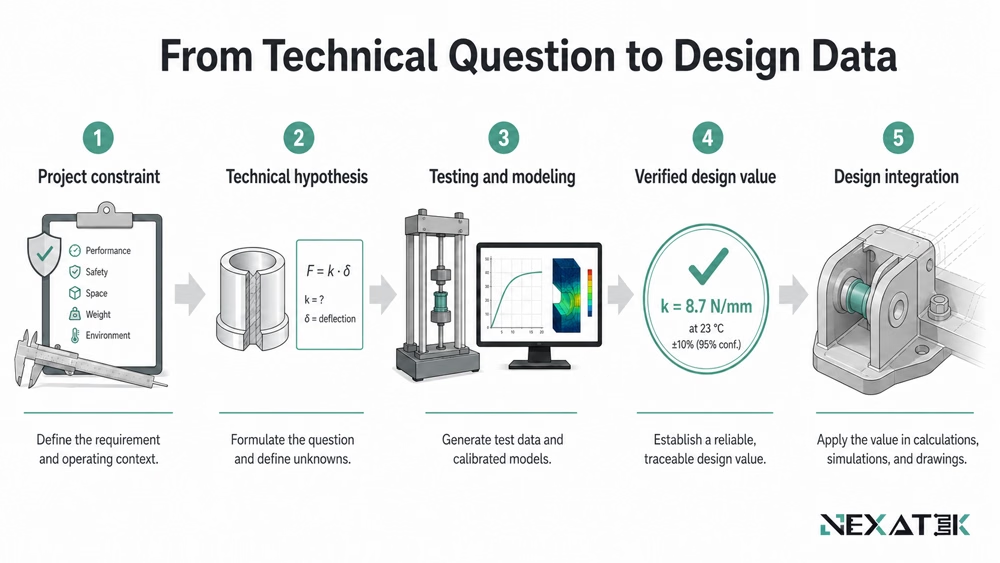
Toegepast onderzoek vertaalt projectgebonden onzekerheden naar meetbare waarden voor de constructieve berekening.
De rol van onderzoek en ontwikkeling in de moderne civiele techniek
De bouw- en infrasector opereert met smalle marges en aanzienlijke aansprakelijkheidsrisico's; nieuwe methoden worden dan ook behoedzaam omarmd. Die terughoudendheid is rationeel: Een softwarefout wordt binnen een week verholpen met een patch, maar een gebrekkige brugoplegging blijft decennialang in functie in het kunstwerk.
Toegepast onderzoek binnen ingenieursbureaus dient om innovaties aantoonbaar en toetsbaar te maken. Een R&D-adviseur valideert de prestaties voordat een methodiek in een aanbesteding wordt opgenomen: lichte ophoogmaterialen op zettingsgevoelige ondergrond, of een corrosiebestendig wapeningsdetail voor een havenkade. Geverifieerde proefresultaten maken van een veelbelovend concept een onderbouwde methode die controlerende instanties kunnen beoordelen en accorderen. Vroegtijdige validatie voorkomt bovendien kostbare herstelwerkzaamheden die optreden wanneer constructieve tekortkomingen pas tijdens de uitvoering aan het licht komen.
R&D versus traditioneel constructief ontwerp
Traditioneel ontwerpen is deductief: De constructeur voert bekende uitgangspunten in gevestigde rekenregels in en leest een veilige profielafmeting af. Elke stap is normatief geregeld en toetsbaar.
Onderzoek is daarentegen inductief en iteratief: Het treedt in werking zodra normen en richtlijnen zwijgen. Vereist een project bijvoorbeeld een composietdek waarvoor geen getabelleerde rekenwaarden bestaan, dan stagneert het reguliere ontwerpproces. Een proefprogramma stelt vervolgens de bezwijkgrenzen vast, waarna deze grenswaarden worden omgezet in toelaatbare rekenwaarden. Na deze overdracht keert het proces terug naar de reguliere ontwerpfase. R&D levert de parameters – de constructeur past ze toe.
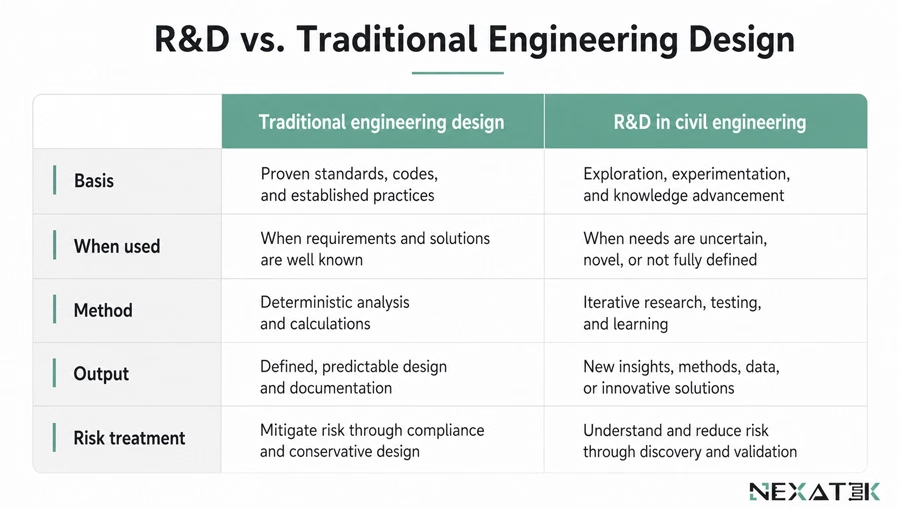
Deze tabel vergelijkt deductief ontwerpen met iteratief onderzoek en toont wanneer elke aanpak wordt benut en wat deze oplevert.
Kerngebieden van R&D in de civiele techniek
R&D voor de bouw- en infrasector beslaat alle schaalniveaus – van bindmiddelchemie tot het aerodynamisch gedrag van grote overspanningen. Vier domeinen vertegenwoordigen het leeuwendeel van de ontwikkelingen.
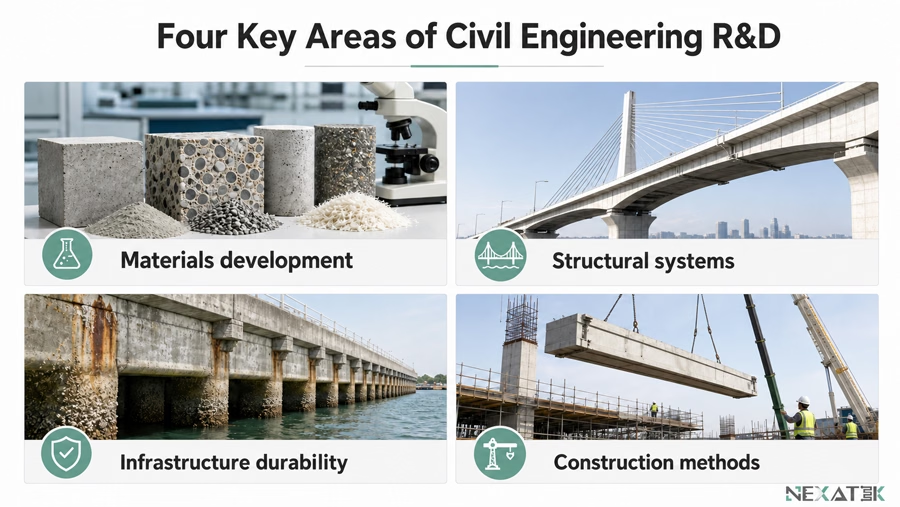 Civieltechnische R&D richt zich op bouwmaterialen, draagstructuren, infrastructurele duurzaamheid en innovatieve uitvoeringsmethoden.
Materialen en bouwstoffentechnologie
Beton blijft mondiaal het meest toegepaste bouwmateriaal en wordt continu doorontwikkeld. Veel hedendaags onderzoek richt zich op klinkervervangers zoals vliegas, gegranuleerde hoogovenslak, gecalcineerde klei en microsilica. Een bindmiddel dat het klinkergehalte met 30 procent verlaagt, reduceert zowel kosten als CO2-uitstoot, waardoor mengseloptimalisatie tegenwoordig hand in hand gaat met CO2-tracking.
Materiaalonderzoek reikt aanzienlijk verder dan bindmiddelchemie: Zelfverdichtend beton (ZVB) en ultrahogesterktebeton (UHSB) zijn voortgekomen uit intensieve R&D-trajecten en maken vandaag de dag slankere doorsneden en grotere overspanningen mogelijk. Onderzoek naar zelfherstellend beton, dat microscheuren dicht met behulp van bacteriën of ingekapselde mineralen, bevindt sich in de validatiefase. Geotechnische teams onderzoeken polymeerinjecties om de draagkracht van slappe bodems te verhogen zonder grootschalig grondverzet.
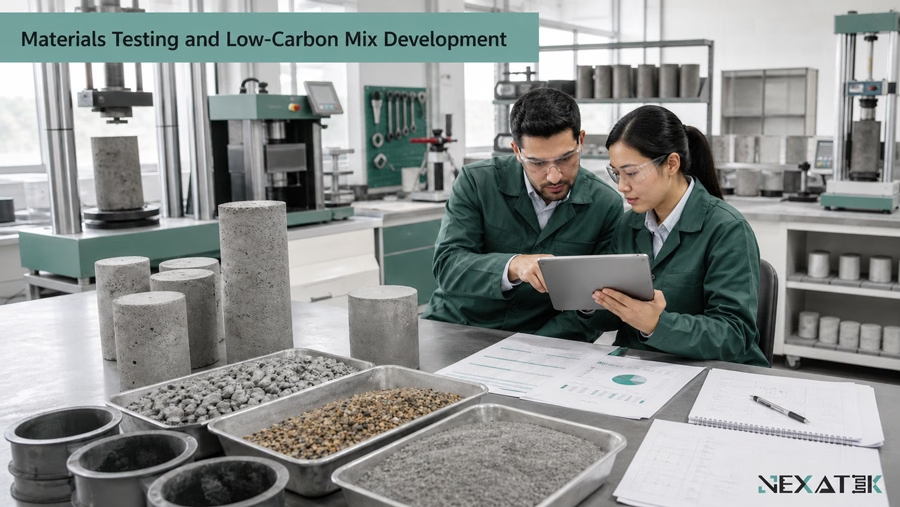
Materiaal-R&D verbindt laboratoriumtesten rechtstreeks met doelen rondom kosten, CO2-reductie, levensduur en maakbaarheid.
Constructieve systemen en mechanische prestatieoptimalisatie
Constructieve optimalisatiemethoden plaatsen materiaal uitsluitend daar waar het spanningsverloop dat eist. Topologie-optimalisatie verwijdert materiaal uit laagbelaste zones en resulteert in organische, lichte constructievormen. De uitdaging schuilt in de maakbaarheid: elk geoptimaliseerd knooppunt moet immers nog steeds gestort of gelast kunnen worden, en verbindingen moeten via proeven worden aangetoond.
Windtechnologie (wind engineering) is een tweede actief deelgebied: Bij slanke hoogbouwtorens levert windtunnelonderzoek locatiegebonden lastaannames op die algemene normen niet kunnen voorspellen – waaronder dwarswindtrillingen en gebruikseisen ten aanzien van trillingscomfort.
Infrastructurele netwerken en langdurige duurzaamheid
Bruggen, viaducten en tunnels verouderen sneller dan renovatiebudgetten stijgen. Infrastructuuronderzoek concentreert zich daarom sterk op Structural Health Monitoring (SHM): meetnetwerken die trillingen, vervormingen en corrosiesnelheden real-time monitoren. Degradatiemodellen vertalen deze meetdata naar een resterende levensduur voor chloridbelast beton, zodat assetmanagers instandhoudingsmaatregelen jaren vóór bezwijken kunnen inplannen.
NEXATEK zet deze diagnostiek in om de exploitatietermijn van bestaande kunstwerken te verlengen. Het voorkomen van een enkele vroegtijdige brugvervanging weegt doorgaans ruimschoots op tegen de kosten van een integraal monitoringsprogramma.
Uitvoeringsmethoden en procesinnovatie
De bouwuitvoering vormt het vierde aandachtsgebied: Modulair bouwen leunt op gedegen tolerantiebeheer, aangezien componenten die 1.000 km van de bouwplaats zijn geproduceerd tijdens de montage op de millimeter nauwkeurig moeten aansluiten. Bouw-R&D omvat daarnaast metselrobots, geautomatiseerd wapeningsvlechten, landmeten met drones en 3D-betonprinten. Bij geprinte wanden bepaalt de hechtsterkte tussen de lagen of het element zich constructief als één monolithisch geheel gedraagt.
R&D-processen in civieltechnische projecten
Uitkomsten in de civiele techniek brengen aansprakelijkheid met zich mee. R&D moet daarom te allen tijde standhouden voor een onafhankelijke toetser, wat de reden is dat het innovatieproces de wetenschappelijke methode volgt binnen de kaders van een bouwproject.
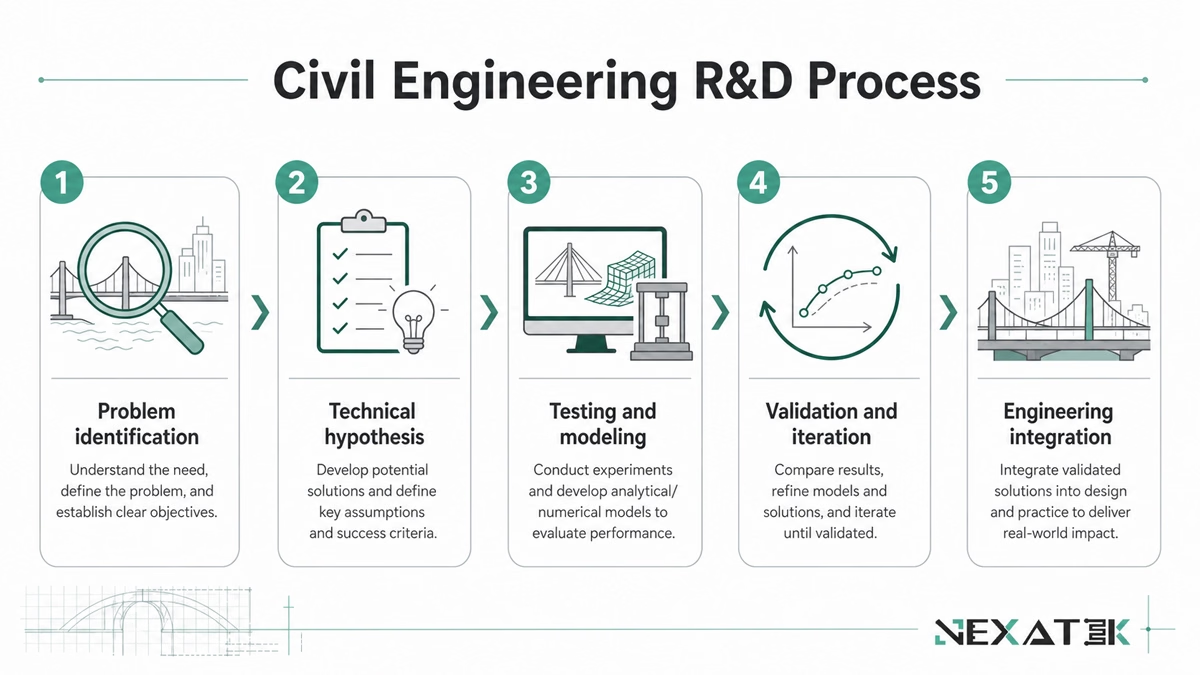
Een gestructureerd R&D-proces borgt dat beproevingen, rekenmodellen, iteraties en technische integratie toetsbaar blijven.
Probleemidentificatie en technische hypothese
Vage doelstellingen leiden tot inefficiënt budgetgebruik. Een werkbare onderzoeksvraag is scherp geformuleerd: behoudt dit betonmengsel met gerecycled granulaat voldoende vorst-dooibestandheid voor een brugdek in een nat en koud klimaat? Het team stelt vervolgens een technische hypothese op die de uitkomst mechanisch voorspelt. Acceptatiecriteria worden vastgelegd voordat het eerste proefstuk wordt gestort, en de hypothese filtert niet-relevante variabelen weg om de testmatrix beheersbaar te houden.
Beproeving, modellering en validatie
Fysieke beproevingen leveren de ijkpunten op: Laboranten beproeven betonkubussen op 7 en 28 dagen, of onderwerpen proefstukken aan 300 versnelde vorst-dooicycli. Parallel daaraan simuleren eindige-elementenmodellen condities die fysiek te kostbaar zijn om na te bootsen – zoals een volledig niet-lineair aardbevingsverloop op een compleet portaal.
Kalibratie brengt beide trajecten samen: Wanneer een ligger in het laboratorium bezwijkt bij 500 kN en het rekenmodel 502 kN voorspelde, geldt het model als gevalideerd en kan het worden ingezet om niet-geteste belastingcombinaties te beoordelen. Teams die geregeld parameterstudies uitvoeren, vatten dergelijke rekenmodellen vaak samen in maatwerk ingenieurssoftware, waardoor een constructeur tientallen ontwerpvarianten per dag kan evalueren.
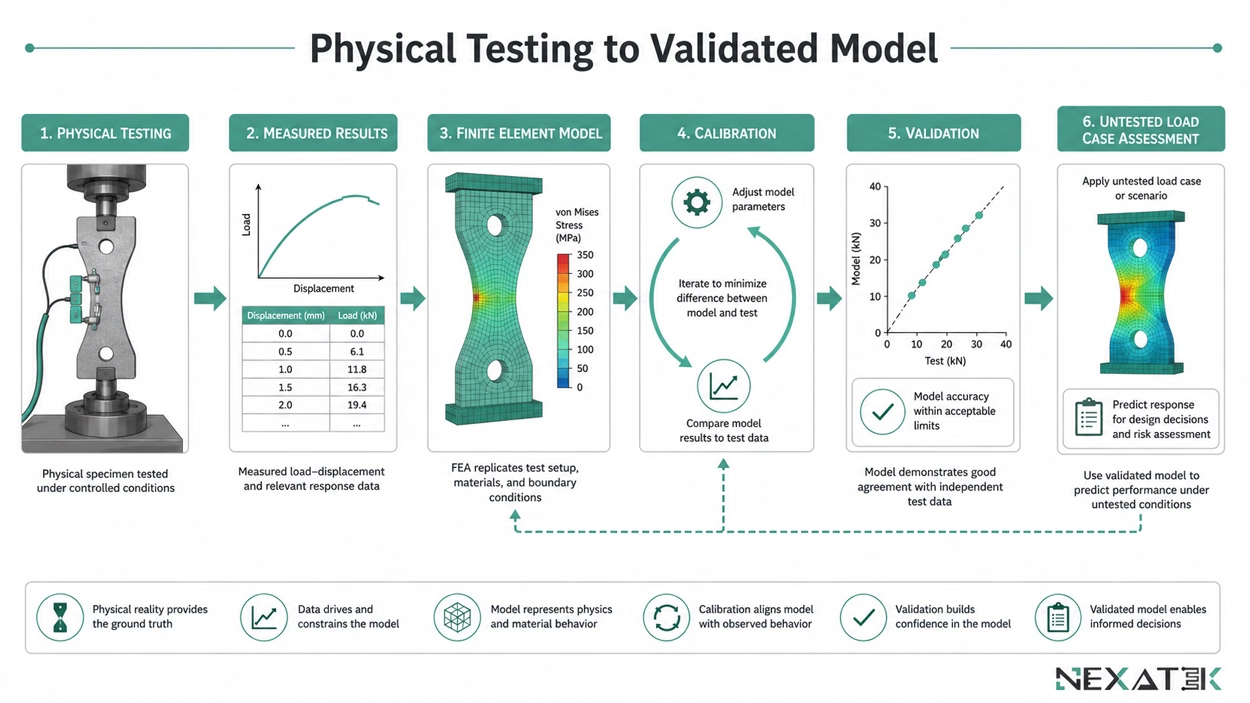
Beproevingen kalibreren numerieke rekenmodellen, waardoor constructeurs lastgevallen kunnen analyseren die fysiek nauwelijks beproefd kunnen worden.
Iteratie en constructieve integratie
Eerste prototypes voldoen zelden direct aan alle eisen. Wanneer een proefstuk de vereiste veiligheidsfactor mist, onderzoekt het team het bezwijkmechanisme en past één variabele aan – bijvoorbeeld de dosering van hulpstoffen of de detaillering van de aansluiting – waarna een hertest volgt. Deze iteratieslag stopt zodra aan alle acceptatiecriteria is voldaan.
Vastlegging completeert het traject: De bevindingen worden vervat in een technisch rapport of een intern ontwerpprotocol, en de gevalideerde rekenwaarden vloeien direct door naar de reguliere werkvoorbereiding en detailengineering. Vanaf dat moment is de innovatie niet langer experimenteel, maar beproefde praktijk.
Praktische toepassingen van R&D in de bouw- en infrasector
Onderzoeksactiviteiten vinden plaats in de gehele bouwkolom en blijven niet beperkt tot testlaboratoria. Drie marktpartijen hanteren elk hun eigen invalshoek:
Toepassing bij toeleveranciers en materiaalproducenten
Fabrikanten van bouwmaterialen voeren doorlopende ontwikkelprogramma's uit. Een cementproducent onderzoekt lagere oventemperaturen om de energiekosten per ton klinker te verminderen. Staalwalserijen ontwikkelen legeringen die een hogere vloeigrens combineren met een uitstekende lasbaarheid. In beide gevallen is de deliverable het technische productblad: onafhankelijk getoetste parameters waarmee een constructeur het product met vertrouwen kan voorschrijven.
Toepassing bij aannemers en uitvoerende bouwbedrijven
Aannemers richten hun onderzoek primair op methoden in plaats van producten: Een voorbeeld is een maatwerk bekistingssysteem dat de cyclus voor het storten van een hoogbouwkern verkort van zes naar vier dagen. Schaalmodellen en 1:1 proefopstellingen (mock-ups) vormen hierbij het aangewezen verificatiemiddel om aan te tonen dat een hijs- of montagemethode veilig en beheersbaar is voordat deze op hoogte wordt toegepast.
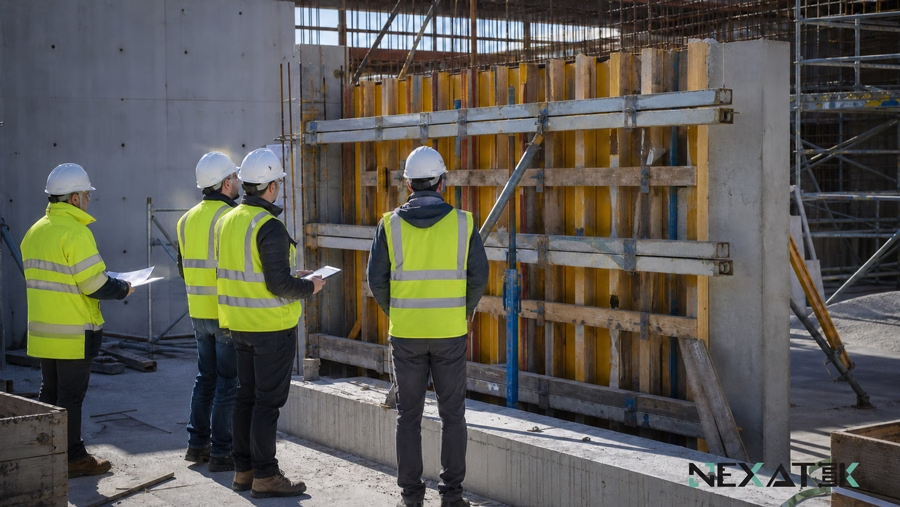
Mock-ups op ware grootte stellen aannemers in staat veiligheid, montagevolgorde en maakbaarheid te verifiëren voordat een methode buiten wordt toegepast.
Toepassing bij ingenieurs- en adviesbureaus
Adviesbureaus lossen vraagstukken op waarvoor nog geen standaardrekenregels bestaan: De renovatie van een monumentale constructie kan vragen om versterkingsmaatregelen die het historische gevelaanzicht onaangetast laten. Het bureau onderzoekt en toetst daartoe compatibele restauratiemortels en schadearme ankersystemen. NEXATEK structureert deze R&D-diensten als gerichte projectopdrachten: een afgebakende probleemstelling, een testprotocol, ruwe meetdata en een toetsbare rapportage die de controlerend ingenieur formeel kan fiatteren.
R&D als strategische capaciteit binnen civieltechnische organisaties
Het opbouwen van een R&D-capaciteit is allereerst een organisatorisch besluit alvorens het een technisch vraagstuk is. Twee modellen domineren de markt, afgestemd op de schaalgrootte van de organisatie:
Centrale R&D-afdeling versus projectgebonden R&D
Een zelfstandige interne R&D-afdeling past bij grote organisaties: Zij werkt aan meerjarige strategische doelen – zoals een eigen circulair bouwsysteem of een concernbrede digitale transformatie in de civiele techniek – los van individuele projectdeadlines.
Projectgebonden onderzoek is daarentegen pragmatisch en doelgericht: Een team formeert zich rondom een technisch knelpunt en valt na afronding weer uiteen. Middelgrote bureaus hanteren dit model om budgettaire redenen, maar lopen het risico dat opgedane kennis vervliegt na oplevering. Organisaties die uitkomsten vastleggen in een gestructureerde civieltechnische database houden daarentegen elk beproefd mengselontwerp en elk testrapport doorzoekbaar voor volgende tenders.
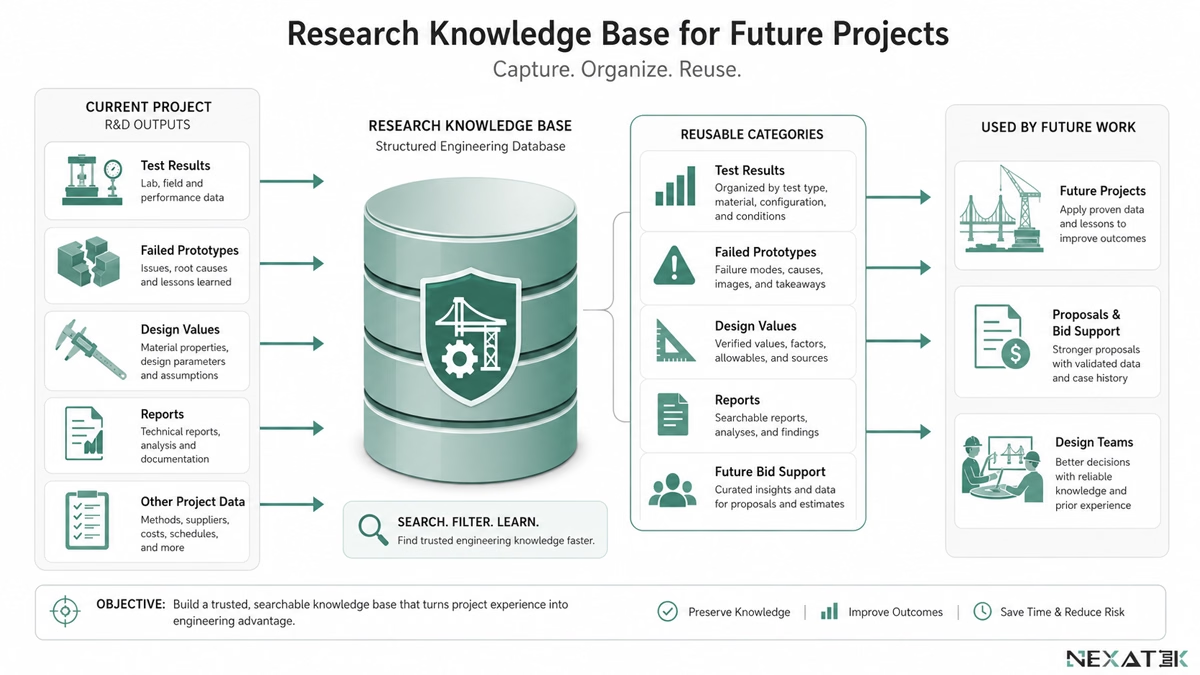
Gestructureerde documentatie zorgt ervoor dat projectgebonden onderzoek transformeert naar herbruikbare bedrijfskennis.
Vereiste technische competenties en onderzoeksfaciliteiten
Kwalificatie van personeel is cruciaal: Een effectieve onderzoeksingenieur combineert diepgaande theoretische mechanica met praktische proefondervindelijke vaardigheden – het vermogen om een specifieke variabele in een testopstelling te isoleren en statistische spreidingen objectief te interpreteren.
De benodigde apparatuur volgt het gekozen zwaartepunt: Materiaalonderzoek vereist trekbanken, drukbanken en klimaatkamers, terwijl computationeel onderzoek vraagt om geavanceerde simulatiesoftware en forse rekenkracht. Veel ingenieursbureaus overbruggen facilitaire investeringen via structurele samenwerkingsverbanden met technische universiteiten en beproevingsinstituten (zoals TNO), waardoor de interne innovatiekracht scherp gericht blijft op commerciële en praktische toepasbaarheid.