
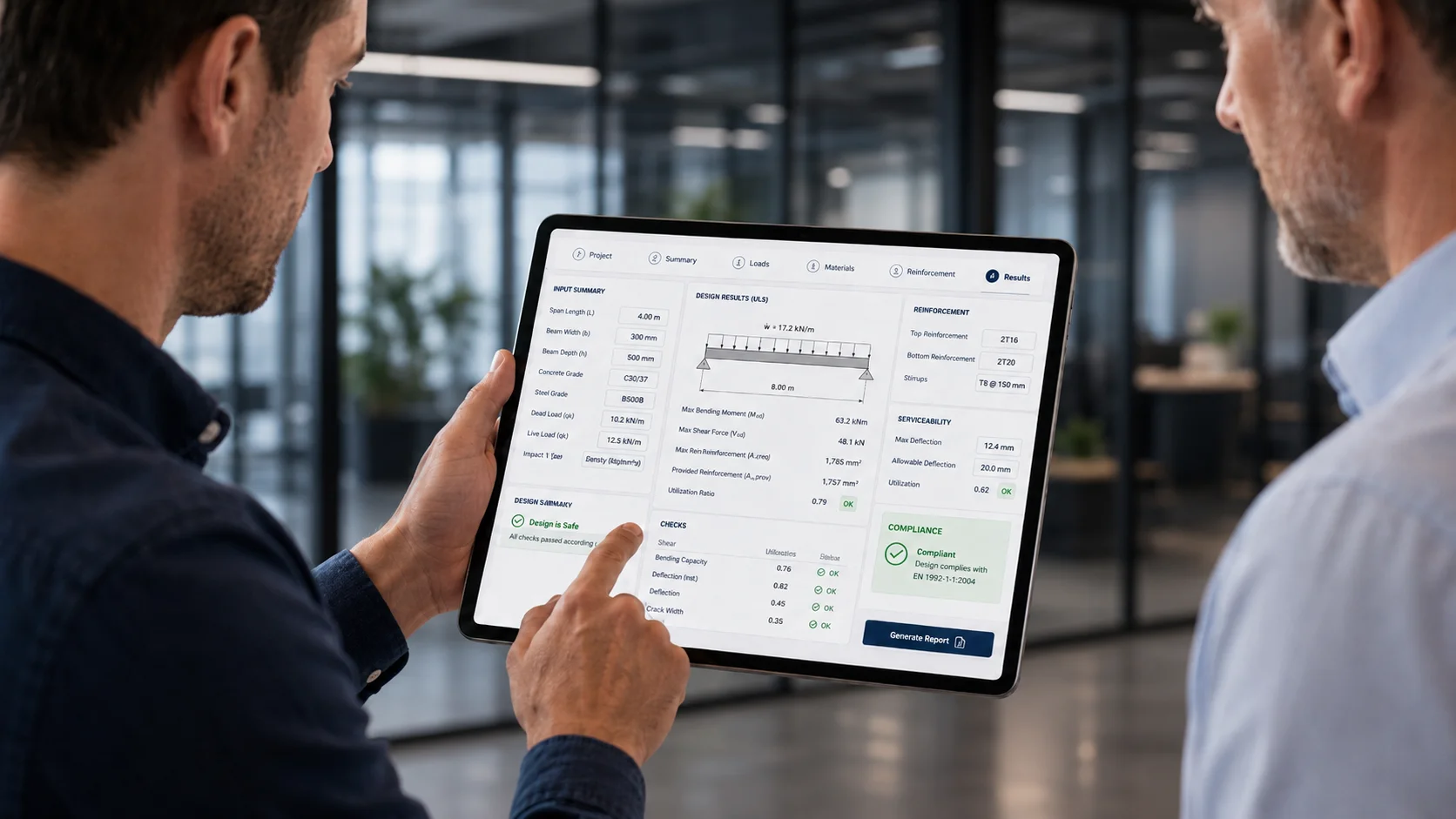
Online Beregnere til Anlægsteknik
Udvikl intelligente webbaserede beregnere til ingeniørarbejde, der forenkler komplekse beregninger, standardiserer designprocedurer og giver øjeblikkelige tekniske resultater.
Platforme til Ingeniørberegninger
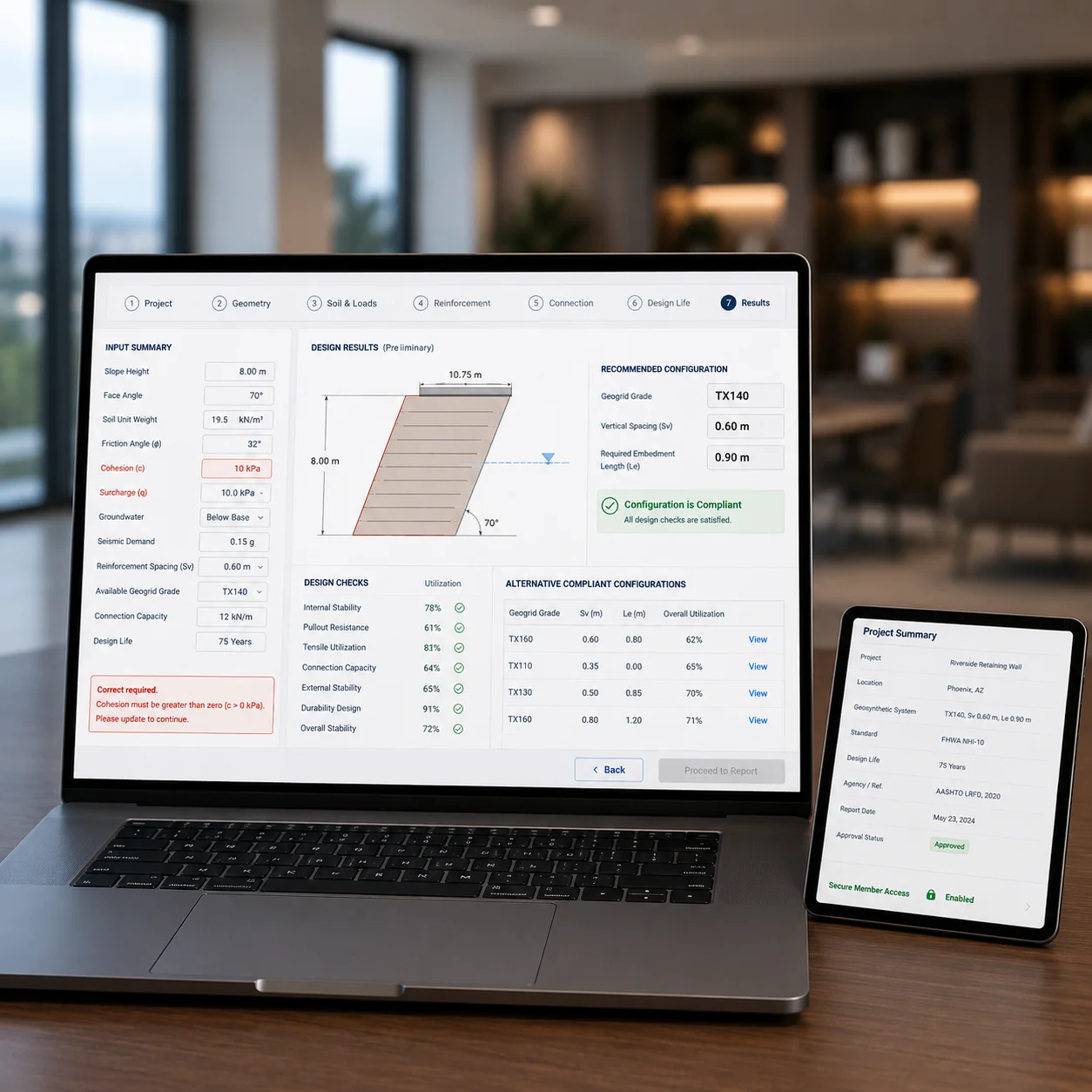
Automatisering og Ingeniørmæssig Intelligens
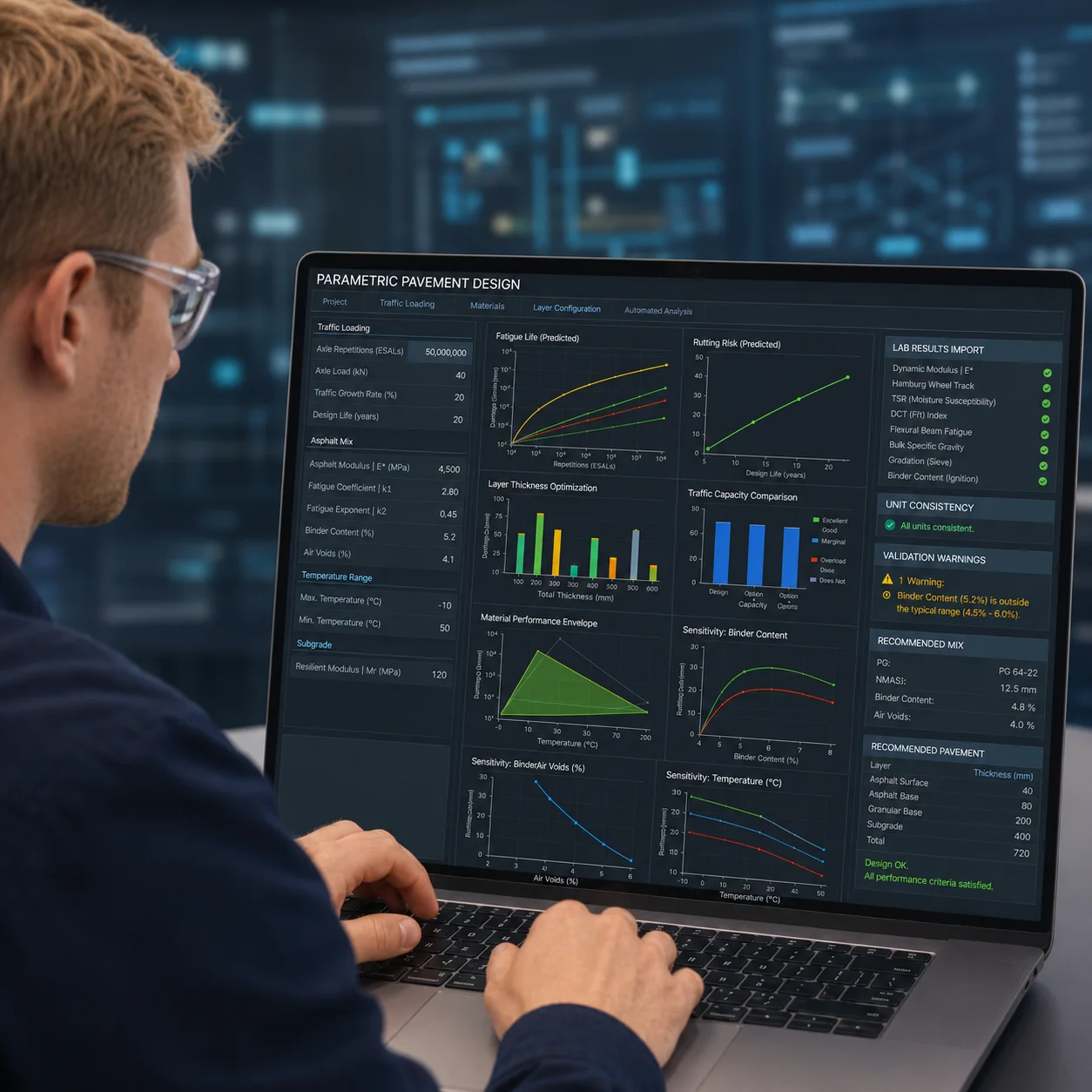
Rapportering og Datahåndtering
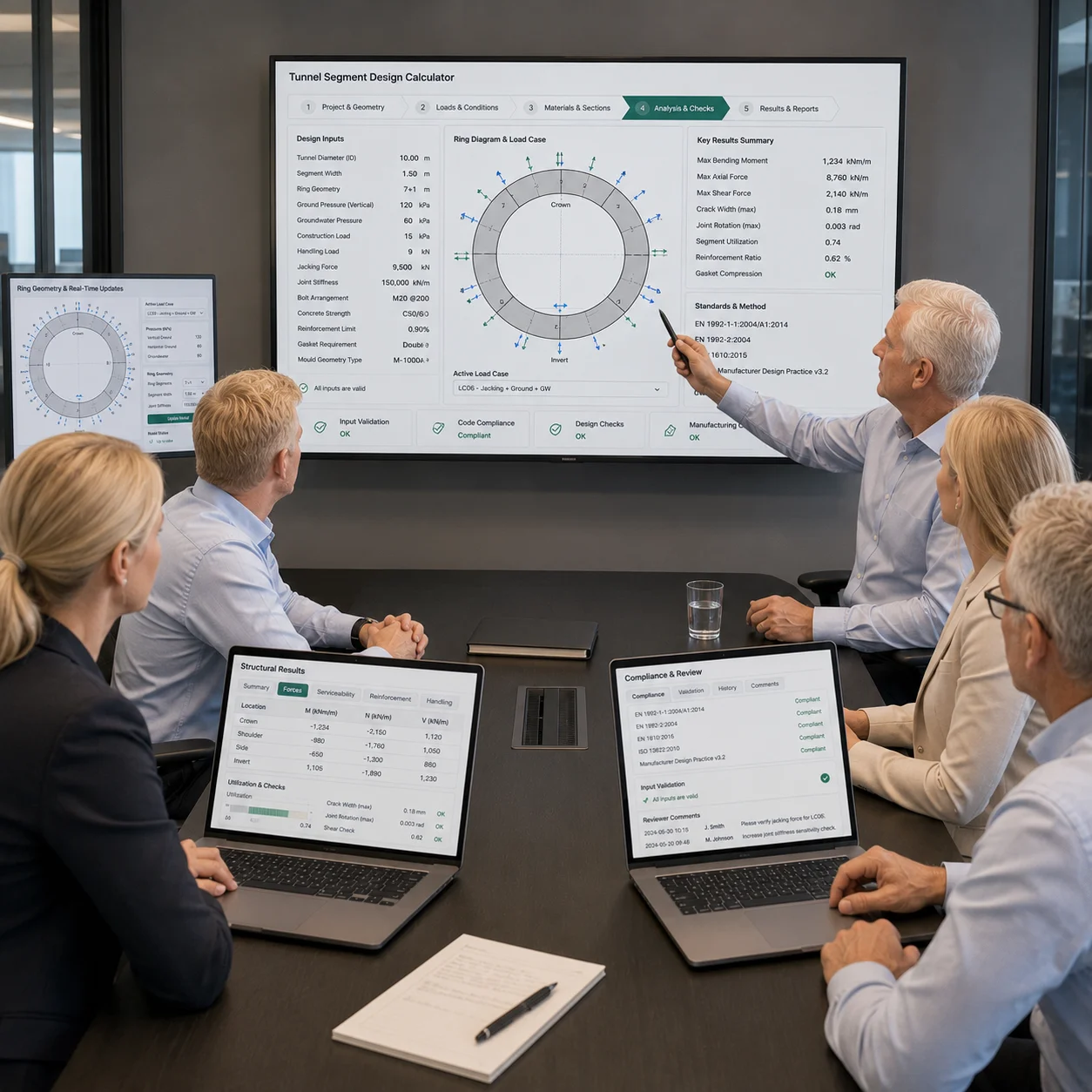
Virksomhedsintegration og Skalerbarhed
Lignende projekter
Opdag flere innovative projekter:





Gode
Løsninger
Starter Med En SamtaleGode Løsninger Starter Med En Samtale
Vil du udforske, hvordan vores tjenester kan få din virksomhed til at vokse?
Udvikling af online beregningsværktøjer til bygge- og anlægssektoren
Online beregningsværktøjer til anlægssektoren er browserbaserede værktøjer, der udfører definerede ingeniørberegninger ud fra strukturerede inputdata. Et estimat over en pælebæreevne, en mængdeberegning på beton eller en hydraulisk kapacitetskontrol af en rørledning: Hver enkelt opgave følger en dokumenteret formel og kan afvikles i en browser på få sekunder. Disse værktøjer understøtter indledende vurderinger og eftervisninger. De erstatter hverken den detaljerede projektering eller det ingeniørfaglige skøn.
NEXATEK udvikler beregningsværktøjer af denne type for rådgivere og entreprenører, ofte som et led i et bredere program for digital transformation. De følgende afsnit definerer værktøjskategorien og beskriver dens anvendelse fra tidlig projektering til udførelse.
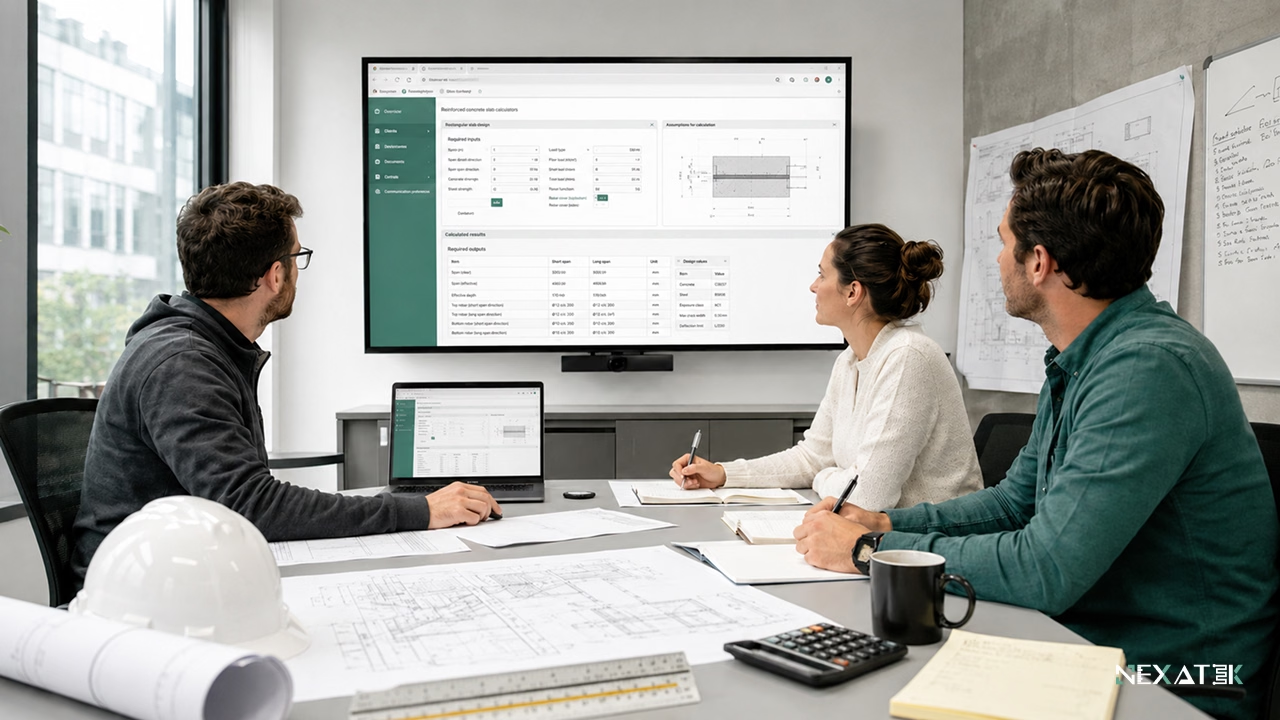 En målrettet beregningsbrugerflade hjælper ingeniørteams med at efterprøve definerede antagelser, før den detaljerede projektering påbegyndes.
Beregningers rolle i bygge- og anlægsprojekter
Et mellemstort infrastrukturprojekt genererer tusindvis af individuelle beregninger forud for udførelsen. Fundamenttryk, elementdimensioner, jordbalancer, afvandingskapaciteter: Hvert eneste mål på en arbejdstegning udspringer af et tal, som en ingeniør har beregnet, og en anden har kontrolleret.
Beregningers betydning for tekniske beslutninger
Beregninger bærer beslutninger. Et bæreevneestimat afgør, om en konstruktion kan direkte funderes eller kræver pælefundering. En afstrømningsberegning fastlægger dimensionen på samtlige nedstrøms ledningsstrækninger. Hvis en antaget rumvægt for jorden afviger med blot 10 procent, forplanter fejlen sig direkte til støttemursdimensioneringen og det dertilhørende anlægsbudget.
Fejl opdaget sent i forløbet er bekostelige. En mængdefejl konstateret efter licitationen udløser krav om ekstraarbejder. Samme fejl opdaget under kalkulationen koster blot få minutters kontrol.
Manuelle beregningsarbejdsgange i ingeniørpraksis
De fleste rådgivende ingeniørvirksomheder udfører fortsat beregninger via håndskrevne notater og regneark. I en typisk arbejdsgang udarbejder projekteringsingeniøren beregningen, en fagleder gransker den linje for linje, og det godkendte notat journaliseres i projektsagen. Metoden er gennemskuelig og fleksibel.
Regneark indeholder dog en velkendt faldgrube: En formelcelle overskrives ved et uheld, filen kopieres til det næste projekt, og regnefejlen føres videre. Versionsforskelle mellem en formelt gældende fil og en granskers lokale arbejdskopi er en daglig udfordring i mange virksomheder.
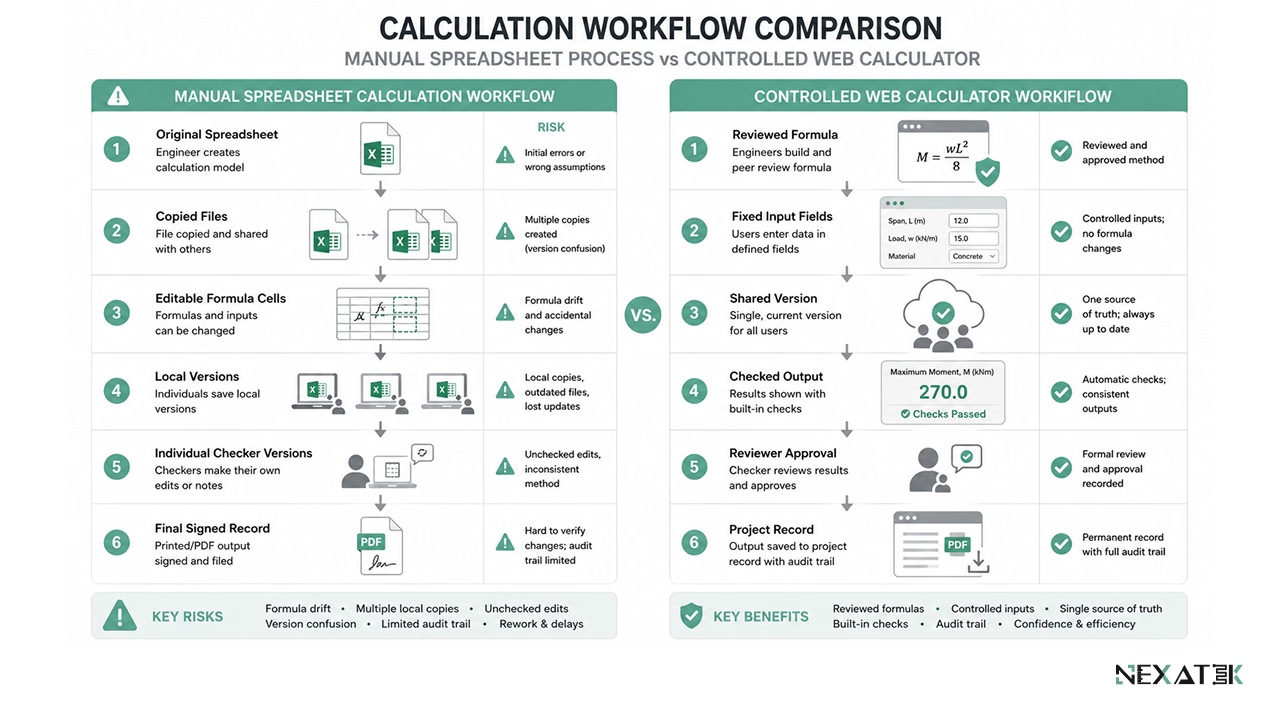 Arbejdsgangen viser, hvor formelforvanskning, lokale filkopier og ukontrollerede rettelser kan opstå i en manuel beregningsproces.
Hvad er online beregningsværktøjer til bygge og anlæg?
Et online ingeniørberegningsværktøj er en webapplikation med låst beregningslogik og enhedsdefinerede indtastningsfelter. Resultaterne leveres omgående. Anvendelsesområdet holdes bevidst afgrænset: Ét værktøj efterviser bjælkeudbøjning, et andet omregner data fra komprimeringskontroller. Det snævre fokus sikrer, at logikken kan testes fuldstændigt, og at resultaterne er entydigt reproducerbare.
Sådanne værktøjer adskiller sig fra store analyse- og dimensioneringsprogrammer. Fuldstændige FE-pakker modellerer hele konstruktionssystemer med mange samvirkende variable. Et online beregningsværktøj besvarer derimod ét specifikt teknisk spørgsmål, såsom feltmomentet for en simpelt understøttet bjælke.
Forskellen mellem formler, regneark og online værktøjer
En formel er teoretisk viden nedfældet på papir. Indsættes formlen i et regneark, bliver den til en lokal implementering, som enhver filbruger kan ændre. Et online beregningsværktøj er en centralt publiceret implementering: én kontrolleret version med validerede inputgrænser. Forskellen ligger i styringen: Ingen kan overskrive en formelcelle i et udrullet webværktøj.
Rådgivende virksomheder overfører i stigende grad deres interne regneark til browserbaserede ingeniørværktøjer. Mange opnår dette gennem skræddersyet webapplikationsudvikling tilpasset deres projekteringsrutiner. Beregningslogikken granskes én gang centralt og stilles derefter ensartet til rådighed for samtlige medarbejdere.
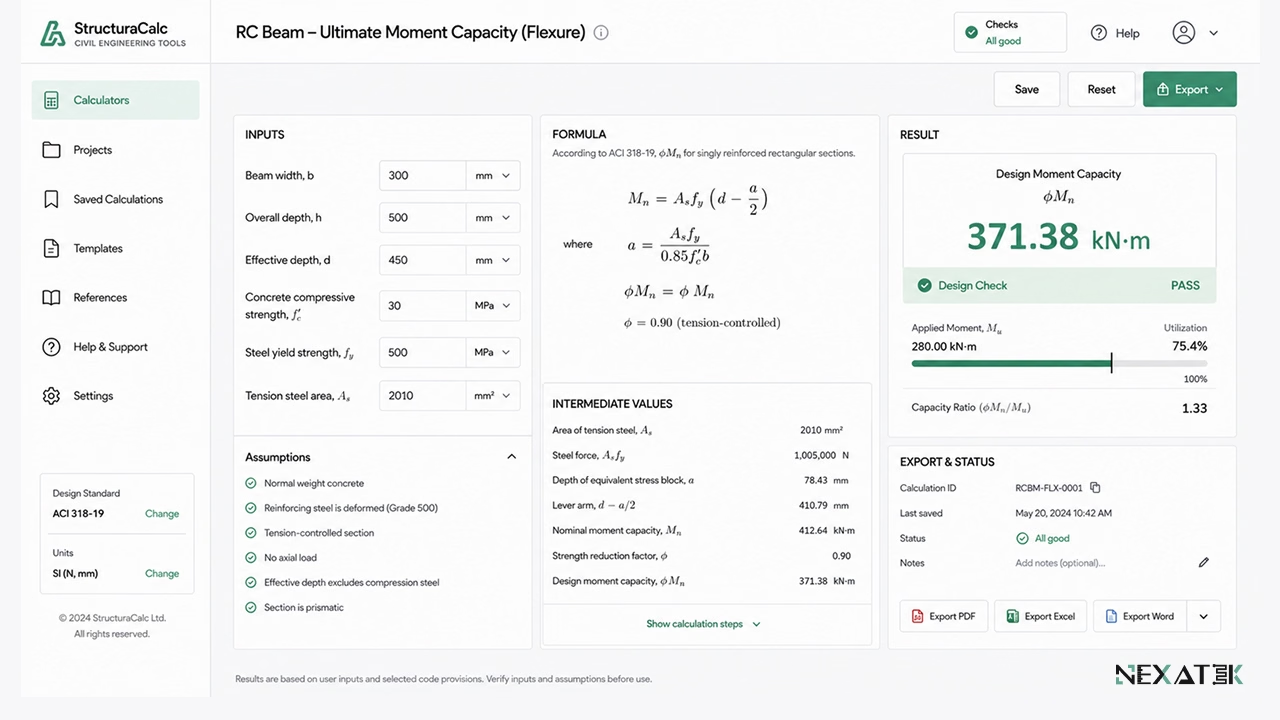 En valideret beregningsbrugerflade holder input, formler, forudsætninger og resultater synlige i ét styret værktøj.
Faglige sammenhænge hvor beregningsværktøjer anvendes
Tværfaglig granskning er et oplagt anvendelsesområde: En faggransker ønsker et uafhængigt kontroltal på under et minut, frem for at skulle genopbygge en hel beregningsmodel. Byggepladsmøder er et andet eksempel: Spørgsmål om et nødvendigt støbevolumen kan afklares direkte på telefonen, før drøftelsen fortsætter. Kalkulationsteams anvender mængdeværktøjer til at kontrollere underentreprenørers tilbud mod eget mængdeudtræk.
Kategorier af online beregningsværktøjer
Værktøjskategorierne følger byggeriets klassiske fagdiscipliner. Fire hovedgrupper dækker langt størstedelen af det daglige behov i anlægsprojekter.
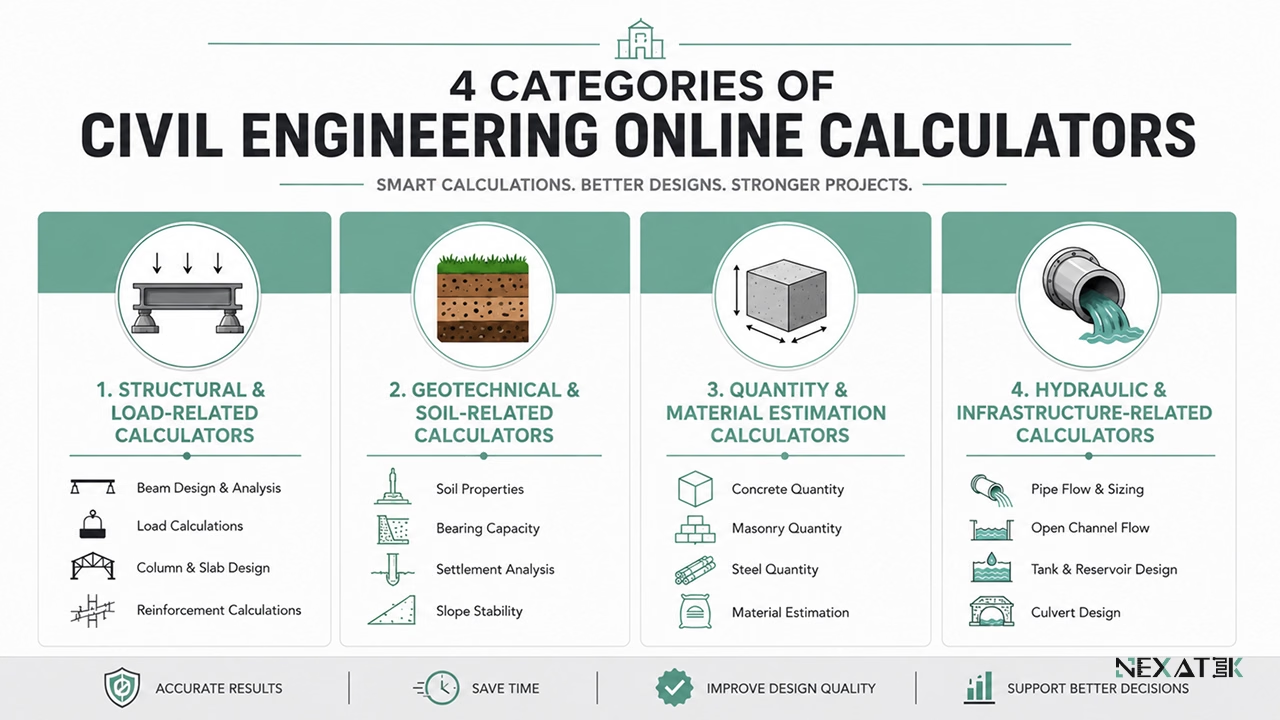 De fire værktøjsgrupper afspejler de primære tekniske problemstillinger på tværs af bygge- og anlægsprojekter.
Beregningsværktøjer til konstruktion og laster
Bærende konstruktionsværktøjer håndterer eftervisninger på elementniveau: bjælkeudbøjning, bøjningsmomenter, tværsnitsegenskaber og lastkombinationer. Omfanget kan let illustreres: En 6 meter simpelt understøttet bjælke under en jævnt fordelt last på 12 kN/m optager et maksimalt feltmoment på 54 kNm. Et beregningsværktøj returnerer denne værdi samt udbøjningskontrollen på få sekunder.
Geotekniske beregningsværktøjer
Jordparametre styrer geotekniske resultater. Værktøjer i denne gruppe estimerer bæreevne, jordtrykskoefficienter og sætninger ud fra brugerdefinerede jordegenskaber. Følsomheden er markant: En forøgelse af en antaget friktionsvinkel fra 30 til 32 grader ændrer jordtrykket i en grad, der direkte påvirker støttemurens dimensioner. Pålidelige geotekniske beregningsværktøjer deklarerer altid deres forudsatte jordmodel eksplicit.
Værktøjer til mængdeberegning og materialeforbrug
Mængdeværktøjer omsætter geometriske mål til konkrete materialebestillinger. Et dæk på 200 m² med en tykkelse på 0,3 m kræver 60 m³ beton eksklusive spild. Armeringsvægt, forskallingsareal, asfalttonnage og jordbalancer beregnes efter samme princip. Tilbudsberegnere overfører disse tal direkte til tilbudslisten.
Hydrauliske beregningsværktøjer til infrastruktur
Vand- og afløbsværktøjer estimerer rørkapacitet, overfladeafstrømning, dimensionering af bygværker og kapacitet i åbne profiler baseret på opland og faldforhold. Indledende vurdering af belægningstykkelser tilhører ligeledes denne kategori. Værktøjer af denne type understøtter den tidlige dimensionering, som går forud for egentlige hydrauliske ledningsnetmodeller.
Online beregningsværktøjer vs. manuelle ingeniørberegninger
Sammenligningen mellem online beregningsværktøjer og manuelle ingeniørberegninger handler i mindre grad om beregningsnøjagtighed og i højere grad om procesegnethed. Begge metoder rummer klare styrker og specifikke begrænsninger.
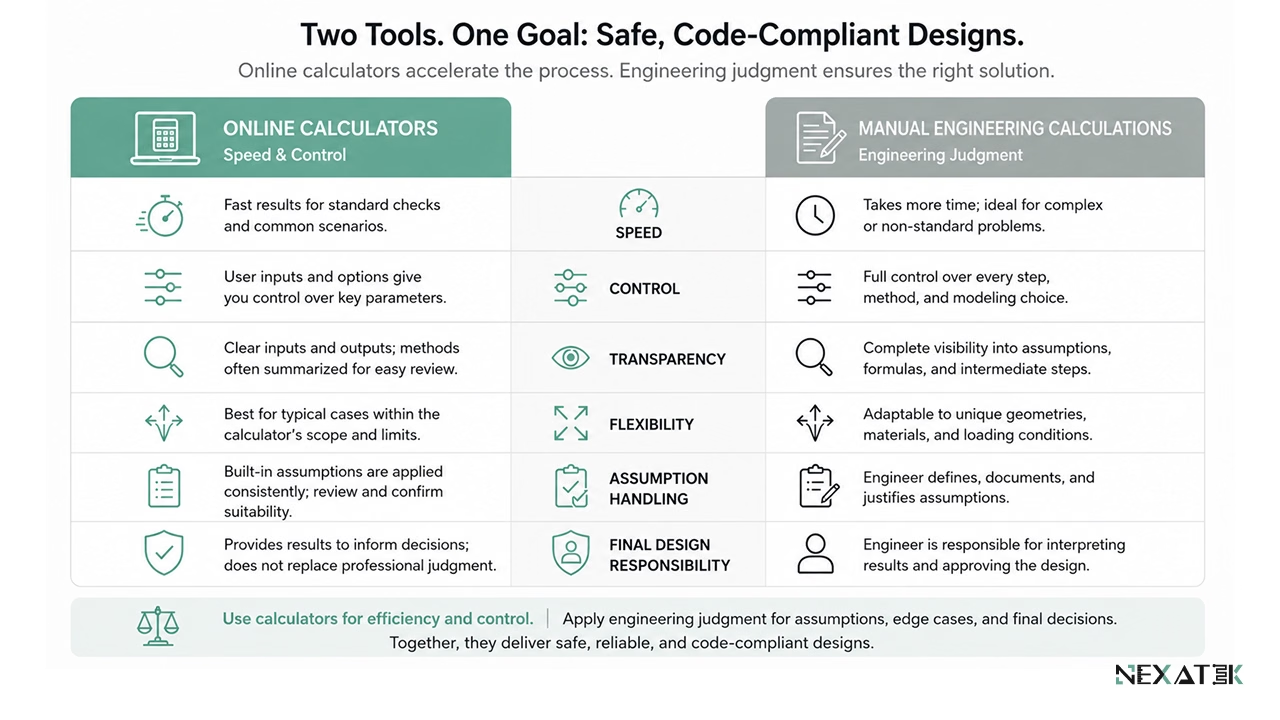 Sammenligningen viser, hvor online værktøjer understøtter hastighed og kontrol, og hvor det manuelle ingeniørskøn forbliver uundværligt.
Præcision og begrænsninger i faste forudsætninger
Et beregningsværktøj er præcis så nøjagtigt som sin underliggende formel og de indtastede data. Faste forudsætninger udgør begrænsningen: Et værktøj programmeret til jævnt fordelt last kan ikke håndtere en punktlast i en tredjedelspunkt, og et bæreevneværktøj, der forudsætter homogen jordbund, vil give misvisende svar ved lagdelt jord. Manuel beregning giver ingeniøren frihed til at tilpasse metoden til de faktiske forhold. Onlineværktøjet kan derimod ikke fravige sin programmerede logik.
Gennemskuelighed i beregningsgangen
Et traditionelt beregningsnotat viser hvert enkelt trin, hvilket er grunden til, at granskende ingeniører værdsætter det. Webværktøjer varierer markant på dette punkt: Nogle viser udelukkende et slutresultat. Andre synliggør den gældende formel og samtlige mellemregninger. Værktøjer i sidstnævnte gruppe kan efterprøves uafhængigt. Førstnævnte gruppe fordrer blind tillid, hvilket udgør en svaghed i ethvert kvalitetssikringsforløb.
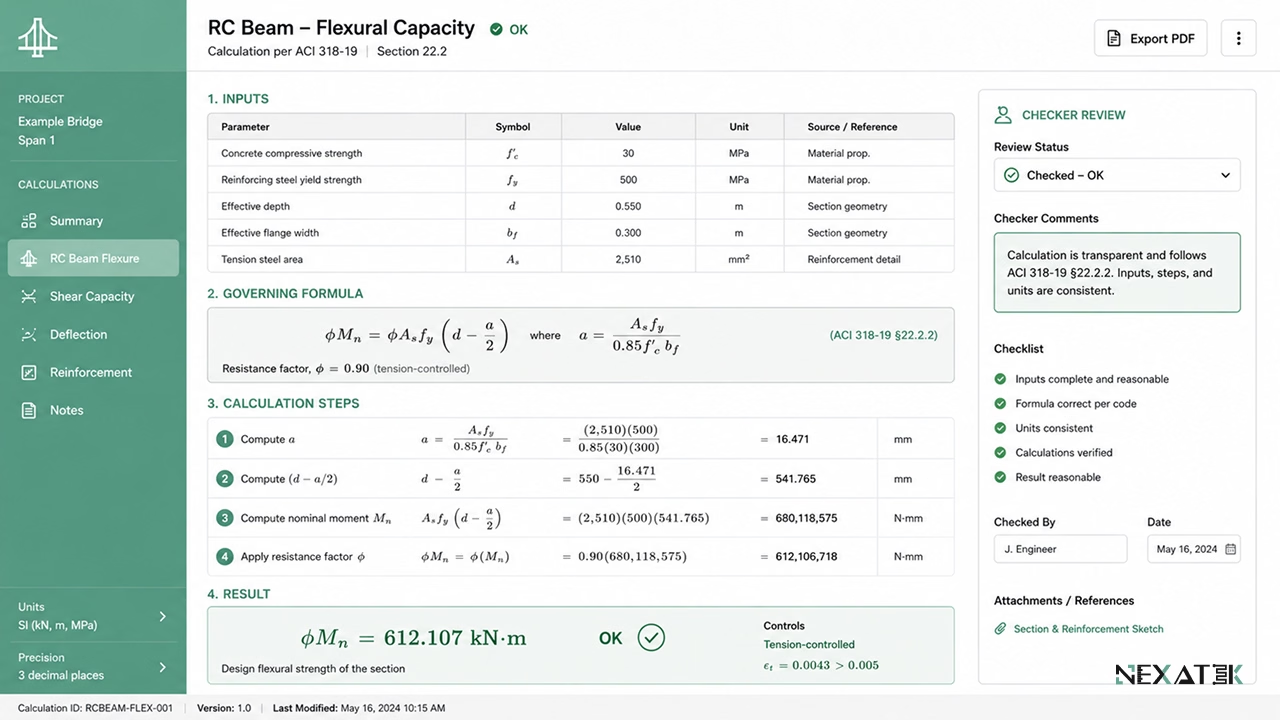 Visning af mellemregninger gør det væsentligt enklere for en gransker at efterprøve beregningen uafhængigt.
Korrekt anvendelse i ingeniørens arbejdsproces
Placeringen i arbejdsprocessen definerer den korrekte anvendelse: Forundersøgelser, overslagsberegninger og mængdeestimeringer hører naturligt hjemme i online beregningsværktøjer. Det samme gør uafhængig krydskontrol. Endelig detailprojektering og myndighedsdimensionering gør derimod ikke, da det juridiske ansvar for et projekt forudsætter fuld kontrol over beregningsmetode og randbetingelser. Mange rådgivningsvirksomheder formaliserer denne grænseflade, når de dokumenterer deres beregningsprocesser som led i arbejdsgangs- og procesoptimering.
Anvendelse af beregningsværktøjer gennem projektfaserne
Overslagsberegninger honorerer hastighed over detaljeringsgrad. I idé- og dispositionsfasen har et rådgiverteam, der sammenligner to funderingsprincipper, brug for dimensioner med en nøjagtighed på cirka 20 procent – ikke færdige armeringstegninger. Beregningsværktøjer reducerer en sådan sammenligning fra dage til en enkelt eftermiddag. Forudsætningerne forbliver synlige, fordi hvert enkelt inputfelt skal udfyldes bevidst.
Byggeplanlægning og kalkulation
Entreprenører anvender beregningsværktøjer i grænsefladen mellem mængder og logistik: Et støbevolumen på 61 m³ omsættes til otte betonkanoner à 8 m³, bestilt til et specifikt tidsrum. Forskallingsarealer styrer mandskabsplanlægningen, og jordbalancer fastlægger kørselsruterne. Beregningerne er matematiske basale, men fejl begået på byggepladsen koster penge med det samme.
Uafhængig kontrol og kvalitetssikring
Uafhængige krydskontroller fanger modelleringsfejl. Hvis et avanceret FE-analyseprogram returnerer et moment, der er ti gange større end et hurtigt uafhængigt estimat, peger afvigelsen oftest på en enhedsfejl i modellens inputdata. Et online værktøj giver granskeren dette referencegrundlag på under et minut. NEXATEK opbygger kontrolberegnere med eksplicit visning af delresultater til netop dette formål.
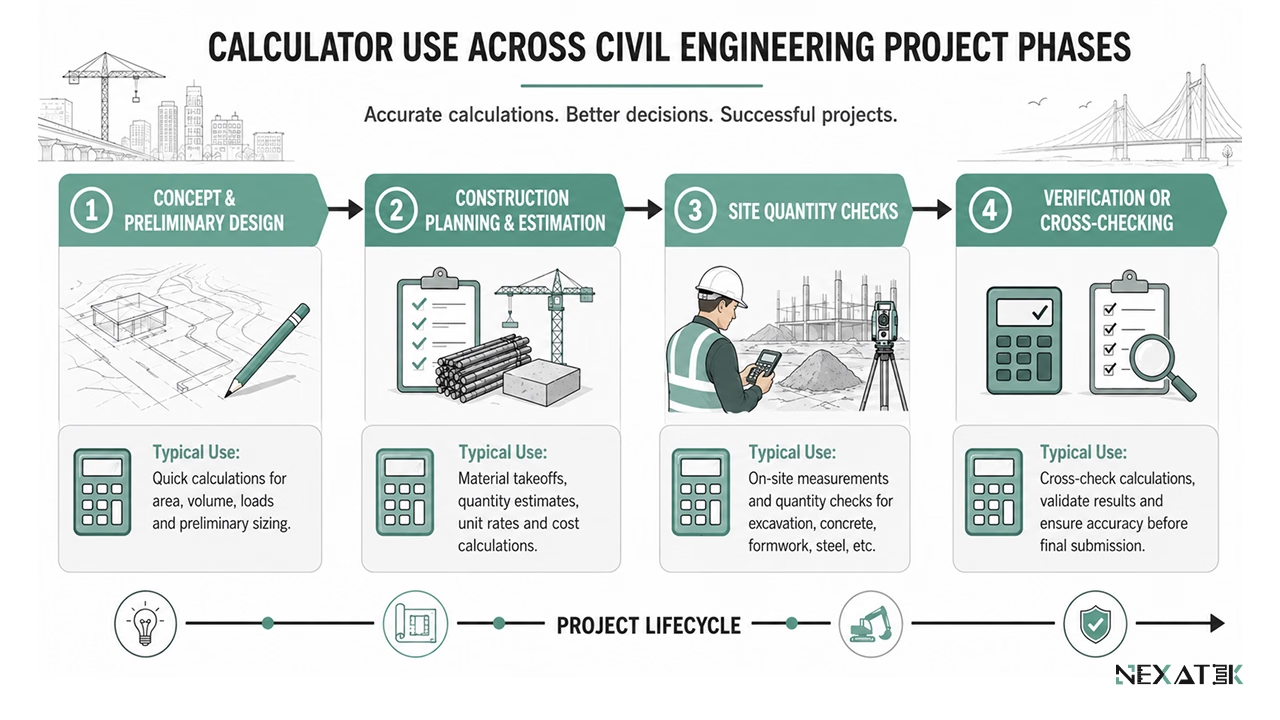 Beregningsværktøjer understøtter beslutninger i konceptfasen, under tilbudsberegning, i produktionsplanlægningen og ved kontrolgranskning.
Tilpasning til byggeriets virksomhedstyper
Producenter af betonelementer og rørsystemer modtager dagligt tekniske henvendelser fra rådgivere og entreprenører. Et produktspecifikt beregningsværktøj besvarer standardspørgsmål – såsom den nødvendige dækhøjde for et nedgravet rør – uden at en ingeniør skal udarbejde et manuelt svar hver gang. Udvikling af beregnere for producenter sker typisk inden for rammerne af skræddersyet softwareudvikling, da beregningslogikken integrerer proprietære produktdata.
Entreprenører og mængdeberegning
Kalkulationsafdelinger er afhængige af pålidelige mængdedata. Bauspecifikke beregningsværktøjer afkorter vejen fra projekttegning til position på tilbudslisten. Byggeledere i marken anvender samme værktøjer til daglige kontroller, eksempelvis for at verificere en betonbestilling mod de faktiske geometriopmålinger i tilsynsbogen.
Rådgivende ingeniørvirksomheder
Rådgivere møder beregningspresset tidligst, allerede i tilbuds- og forundersøgelsesfasen. Tilbudsafgivelse forudsætter ofte foreløbige dimensioneringer, før der foreligger et egentligt projekteringsbudget. Online ingeniørberegnere giver rådgiveren mulighed for at vurdere scenarier på dette stadie med sporbare input og dokumenterede antagelser. Hos NEXATEK tager beregningsprojekter for rådgivere som regel afsæt i virksomhedens egne validerede regneark og formelsamlinger.
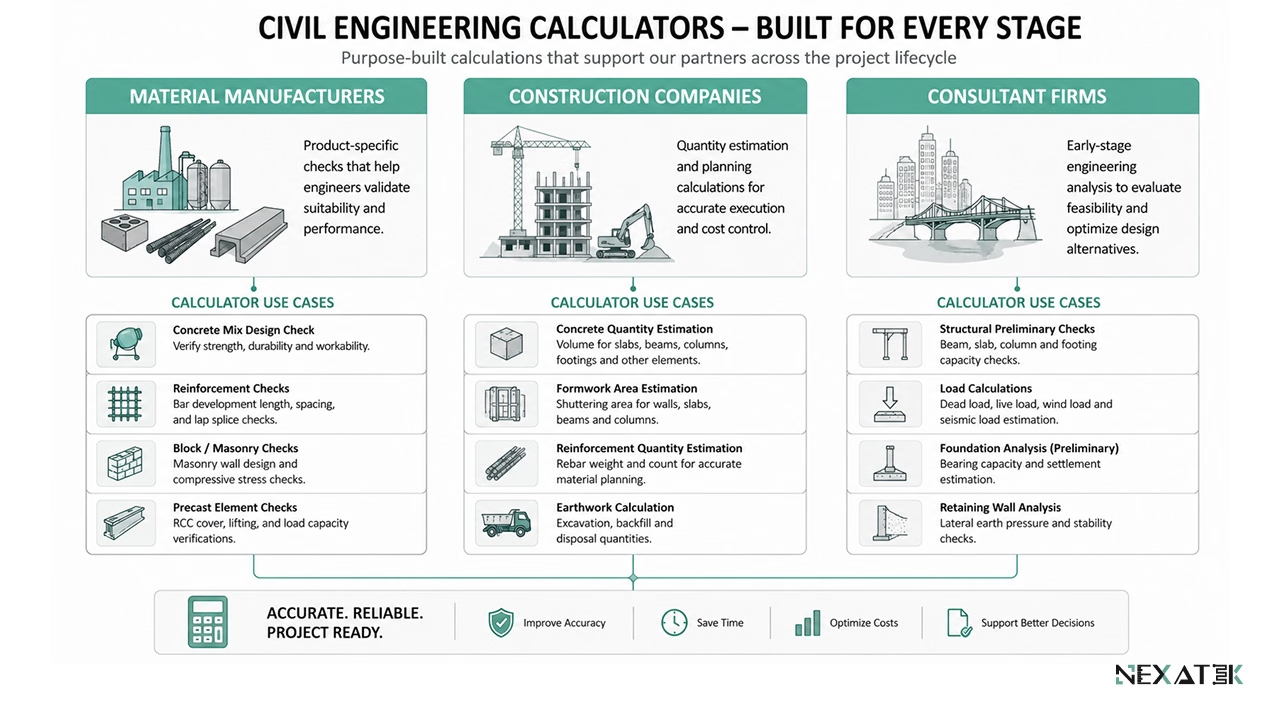 Producenter, entreprenører og rådgivere anvender beregningsværktøjer på forskellig vis, men fællesnævneren er sporbare input og kontrolleret beregningslogik.